

How much is a 1942 penny worth?
For ordinary 1942 wheat pennies graded MS63 RD, PCGS guide values range from $5 to $14; at MS65 RD, they range from $22 to $26. Match the mint mark, grade and copper color before choosing a price. Worn coins, proofs and confirmed varieties need separate comparisons. Values checked September 24, 2026.
Our HeriBase test identified a 1942-S-MS penny and displayed a $9.90 reference price. The case below shows how that result helps narrow the search to the right issue.
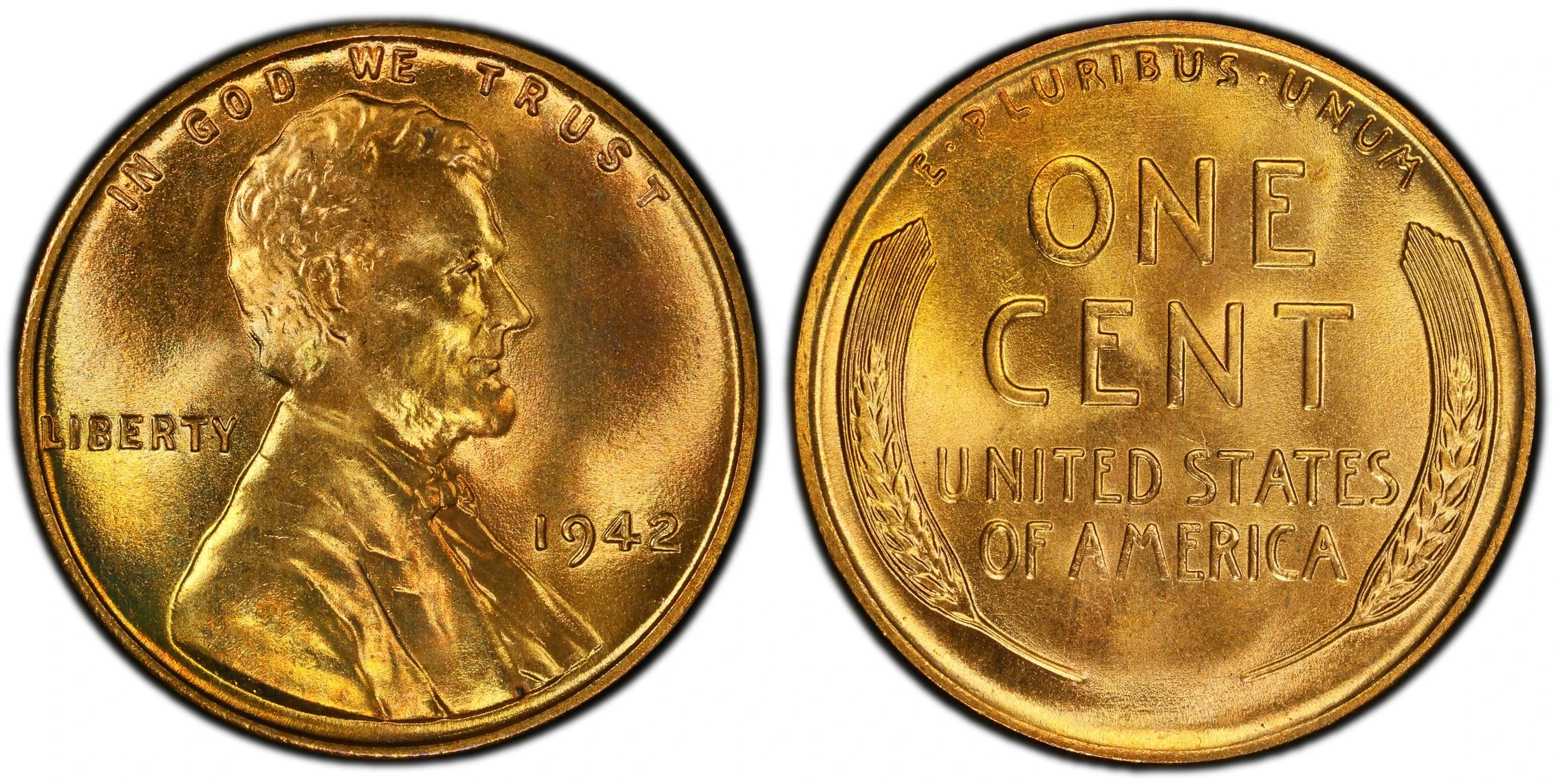
1942, 1942-D and 1942-S: which penny do you have?
Look on the front, directly beneath 1942. No letter means Philadelphia; D means Denver; S means San Francisco. A missing P is normal. All three regular issues show Lincoln on the front and two wheat ears around ONE CENT on the back.
| Date / mark | Mint | Regular-strike mintage |
|---|---|---|
| 1942 · no mark | Philadelphia | 657,796,000 |
| 1942-D | Denver | 206,698,000 |
| 1942-S | San Francisco | 85,590,000 |
San Francisco struck fewer coins, but that does not make every S-mint penny the most expensive. At MS65 RD, the guide values are close: $25 for Philadelphia, $22 for Denver and $26 for San Francisco. Preservation and demand matter alongside the original production total.
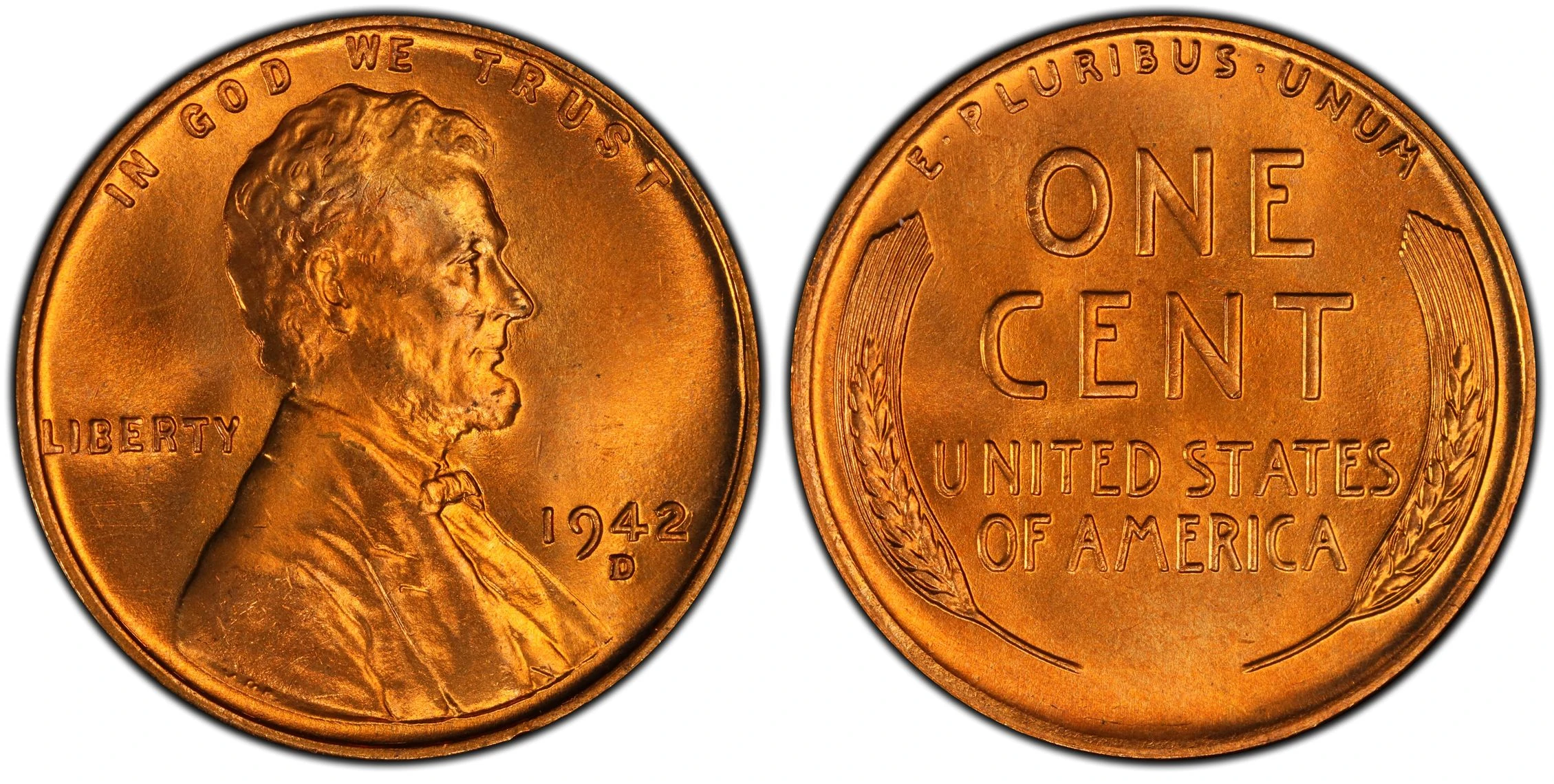
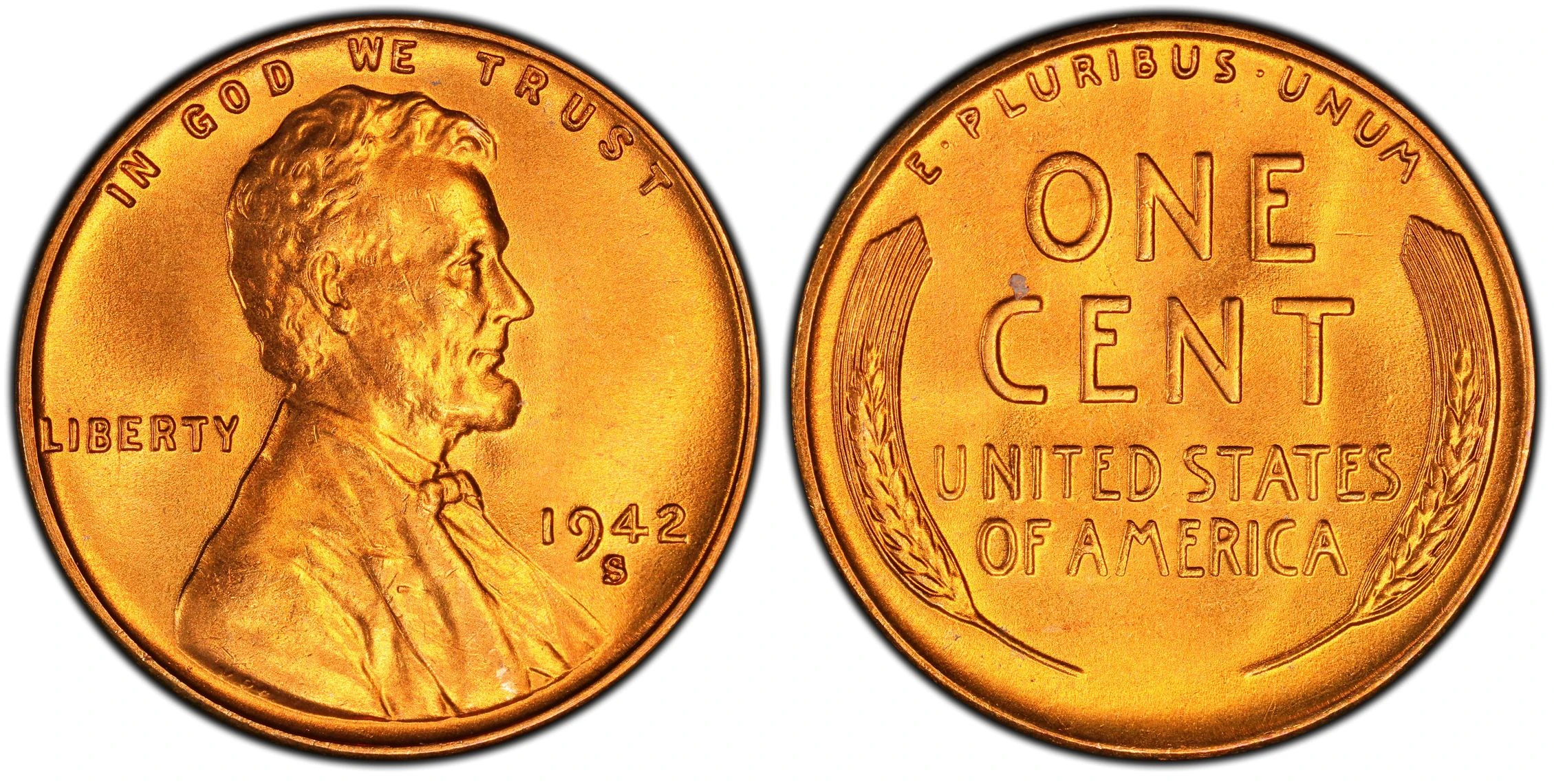
1942 penny value chart by mint and grade
This table covers ordinary regular strikes with the RD color designation. It excludes proofs, special varieties, plus grades and coins with surface problems. Use it after identifying the issue and condition, rather than choosing the highest number for a bright-looking coin.
| Issue · RD | MS63 | MS64 | MS65 | MS66 | MS67 |
|---|---|---|---|---|---|
| 1942 · no mark | $5 | $12 | $25 | $38 | $200 |
| 1942-D | $6 | $12 | $22 | $26 | $185 |
| 1942-S | $14 | $18 | $26 | $38 | $185 |
These are guide estimates, not purchase offers. PCGS notes that its values below $10 generally concern raw coins. Certification and selling costs can therefore be substantial relative to the value of an ordinary example.
What about a circulated brown 1942 penny?
Compare it with worn examples of the same mint, preferably recent completed sales or a dealer’s offer for a similar group. The Red Mint State table is not a circulated-price chart. A large asking price on an online listing does not establish what a common worn penny will sell for.
Why do RD, RB and BN change the comparison?
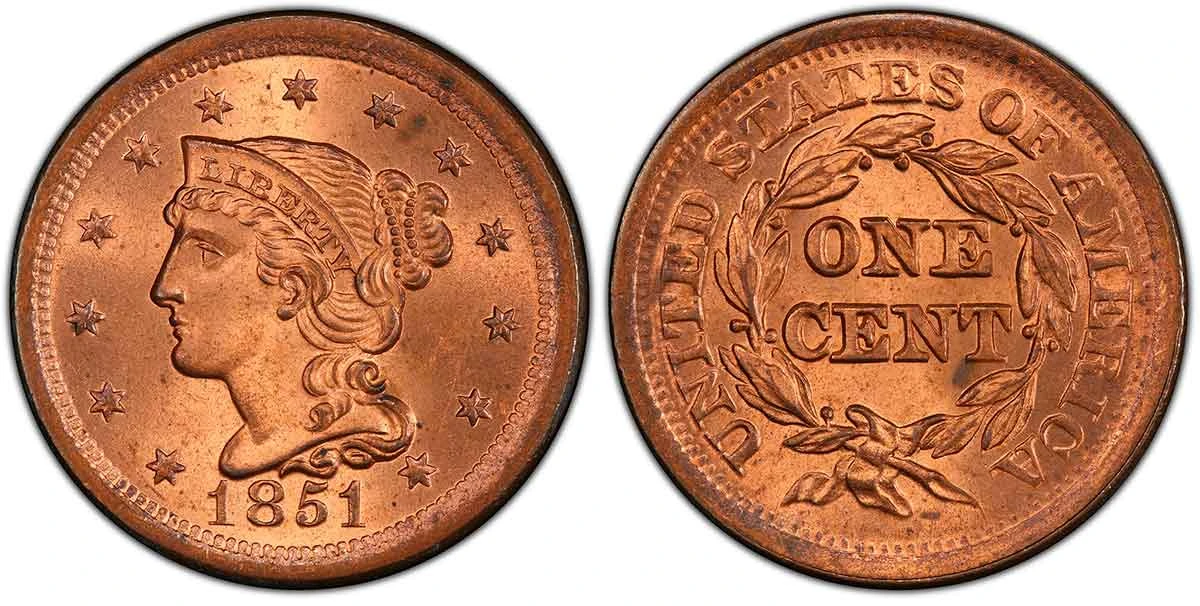
Copper changes color as it ages. A numerical grade describes preservation, while the color designation records how much original red remains. A brown coin can still be uncirculated; a polished orange coin has not recovered its original mint surface.
RD · Red
PCGS uses RD for qualifying coins retaining at least 95% original mint red. The price table above uses this category.
RB · Red-Brown
A mixture of original red and brown toning. Use RB comparisons rather than assuming a full Red price.
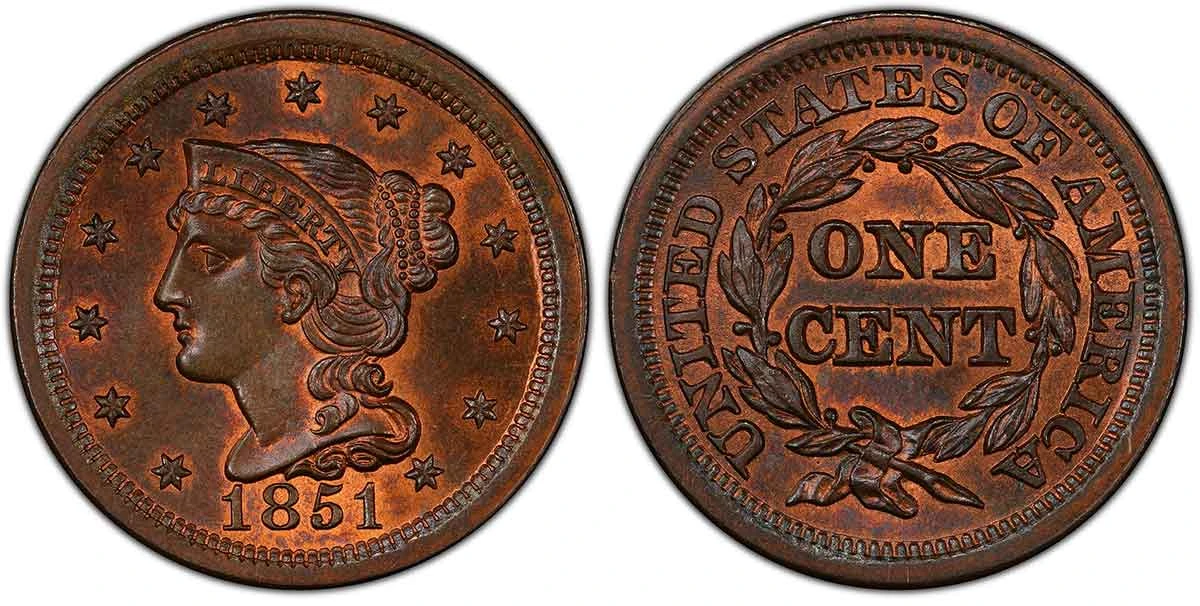
BN · Brown
Less than 5% original red under PCGS definitions. This describes color, not automatically circulation wear.
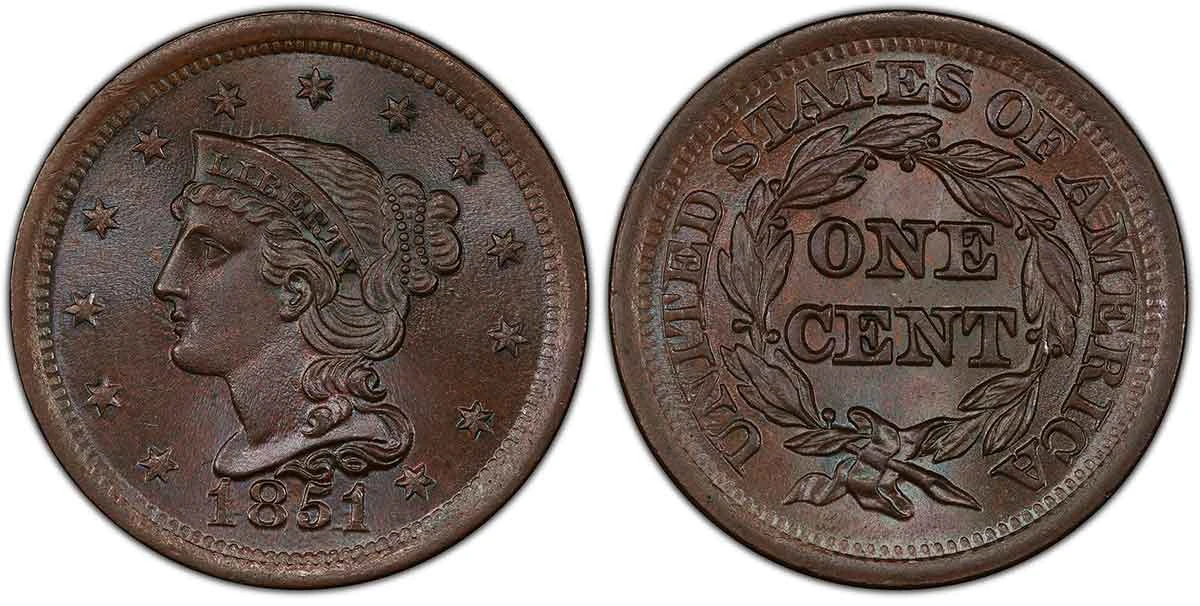
Wear and surface problems
Check Lincoln’s portrait and the wheat design under changing light. Scratches, corrosion and cleaning need their own market comparisons.
Photograph both sides without filters and leave the surfaces as found. If the coin is already certified, copy the complete label: MS65BN, MS65RB and MS65RD are different comparison groups. A photograph alone may not resolve subtle wear or altered color.
Is your 1942 penny a proof?
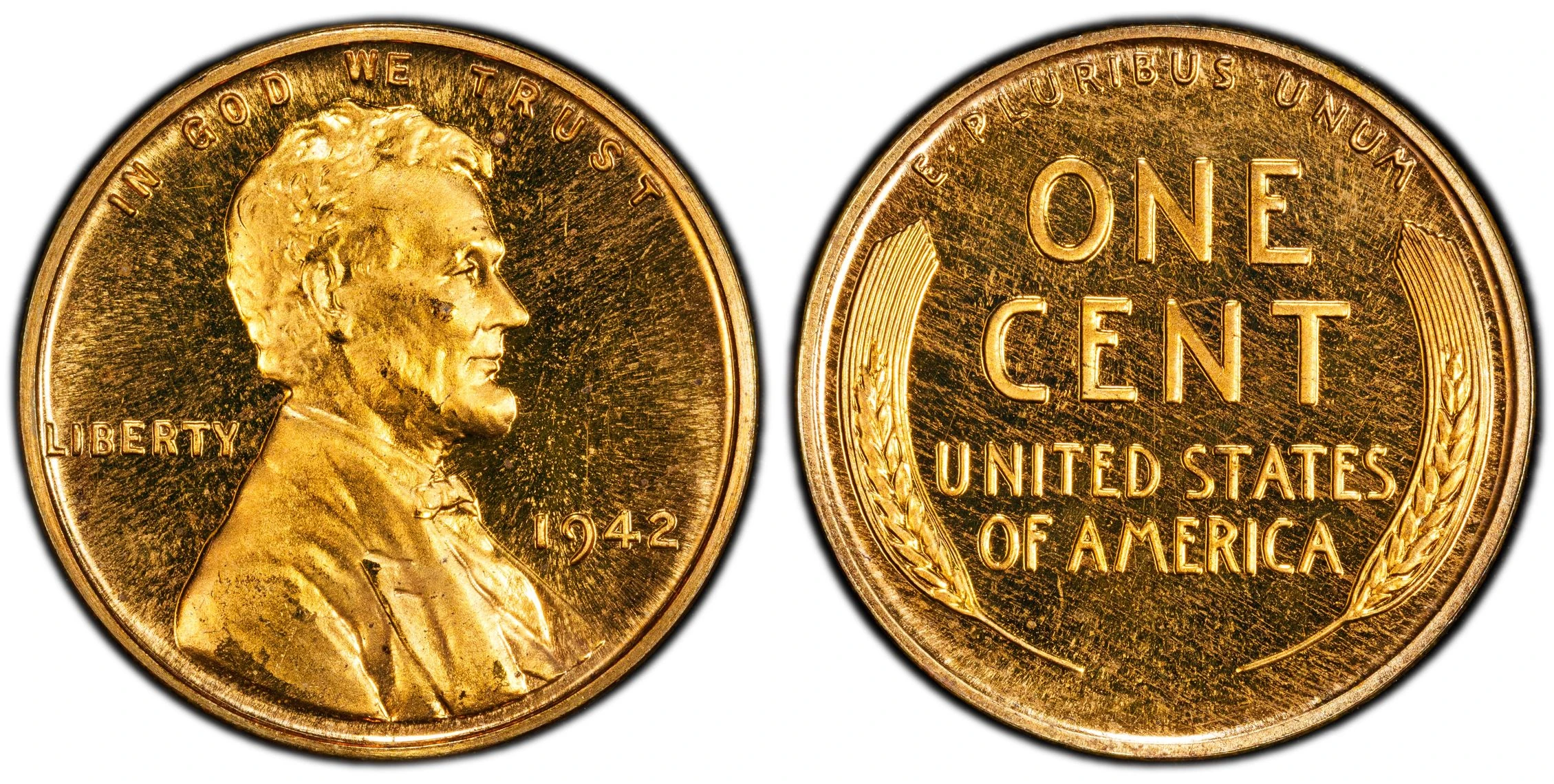
Philadelphia also made 32,600 proof cents in 1942. These collector strikes have no mint mark, just like regular Philadelphia cents. Proof describes how the coin was made, not simply how shiny it looks.
A confirmed proof should be compared by its proof grade and color designation. The PR67+RD auction example below belongs to that separate category. It cannot be used to value an ordinary polished cent or a regular-strike MS67 coin.
Which 1942 penny errors and varieties are worth checking?
Use a precise attribution rather than the broad description “error penny.” PCGS catalogs a 1942 Doubled Die Obverse FS-101 and a 1942-D/D repunched mint mark FS-502. These names identify repeatable die characteristics; they are not condition grades.
For a suspected doubled die, take close photographs of the date and lettering and compare them with the attributed reference. For a suspected repunched mark, focus on the D or S. A blurred photograph, reflected light or a damaged letter is not enough to establish a variety. Keep the attribution unconfirmed until the relevant features match.
Is a silver-colored 1942 penny rare?
Standard 1942 cents are 95% copper with the balance tin and zinc, with a specified weight of 3.11 grams and diameter of approximately 19 mm. The Mint’s regular zinc-coated steel cents came in 1943. Do not apply stories about rare 1943 copper cents to an ordinary copper 1942.
Record the actual date, weight and magnetic response of an unusual piece. A silver appearance alone cannot distinguish plating or alteration from a genuinely unusual composition. Experimental 1942 pieces also exist, including glass trials, but they are a separate specialist category. An unexpected result merits examination, not an automatic rare-error price.
What have individual 1942 pennies sold for?
These historical records show why the full grade and strike category matter. They are individual sales, not current offers for every coin bearing the date.
| Coin | Sale | Lot | Reported price |
|---|---|---|---|
| 1942-S · PCGS MS64RD | eBay · September 2018 | 142928442746 | $8.60 |
| 1942 · NGC MS68RD | Heritage · December 2021 | 3020 | $3,960 |
| 1942 proof · NGC PR67+RD, CAC | Heritage · September 2020 | 3037 | $4,080 |
The first record concerns an ordinary issue at a much more accessible grade. The other two concern exceptional preservation or a proof strike. Their prices do not measure an increase over time for the same kind of coin. When comparing a sale today, match mint, grade, color, strike and surface quality, then account for auction charges and selling fees.
Check your 1942 penny with HeriBase
Test result: 1942-S-MS and a $9.90 reference price
In this test, HeriBase returned “USA 1 cent Lincoln Wheat Penny 1942-S-MS” and a $9.90 reference price. The same screen shows a mintage of 85,590,000, matching the San Francisco issue total above. This gives the collector a specific mint and issue to investigate instead of searching only for “1942 penny.”
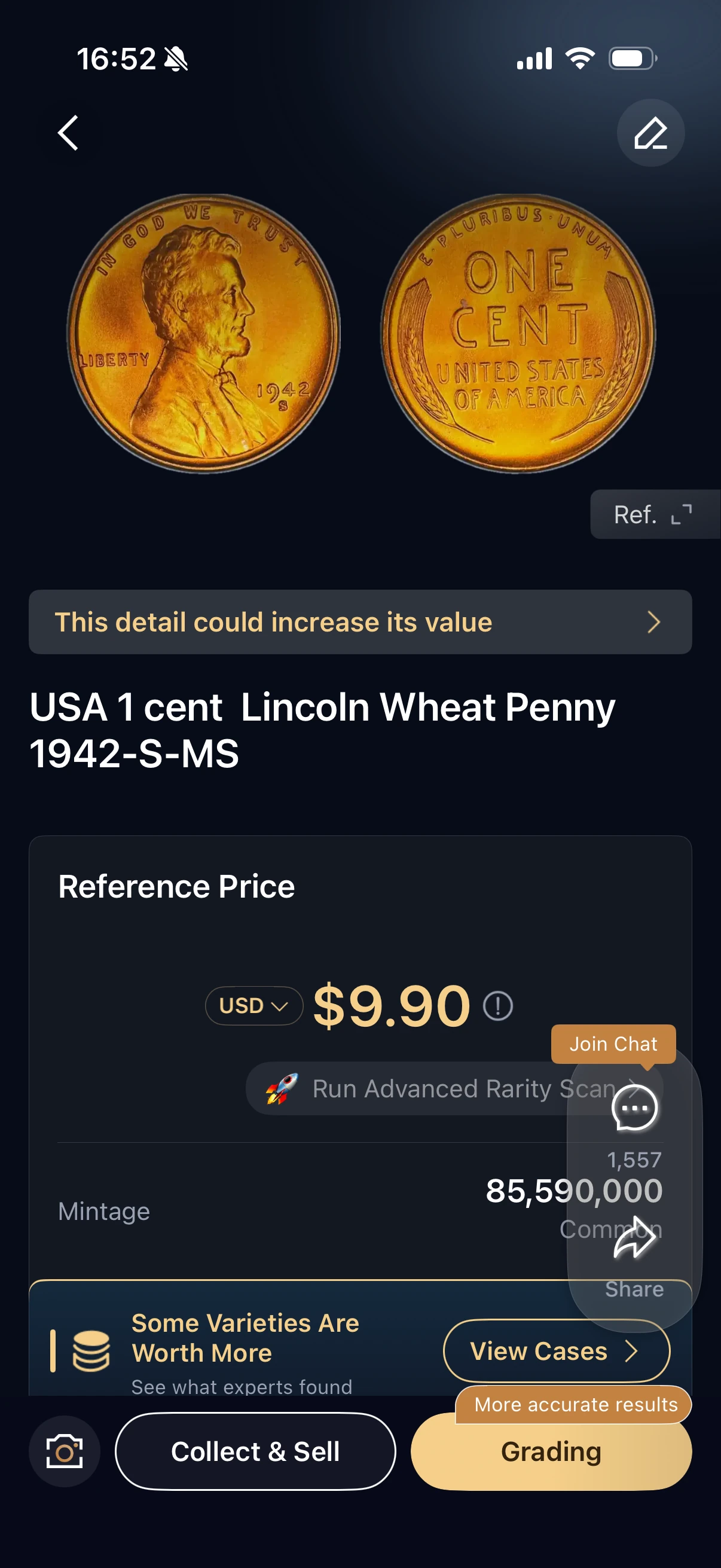
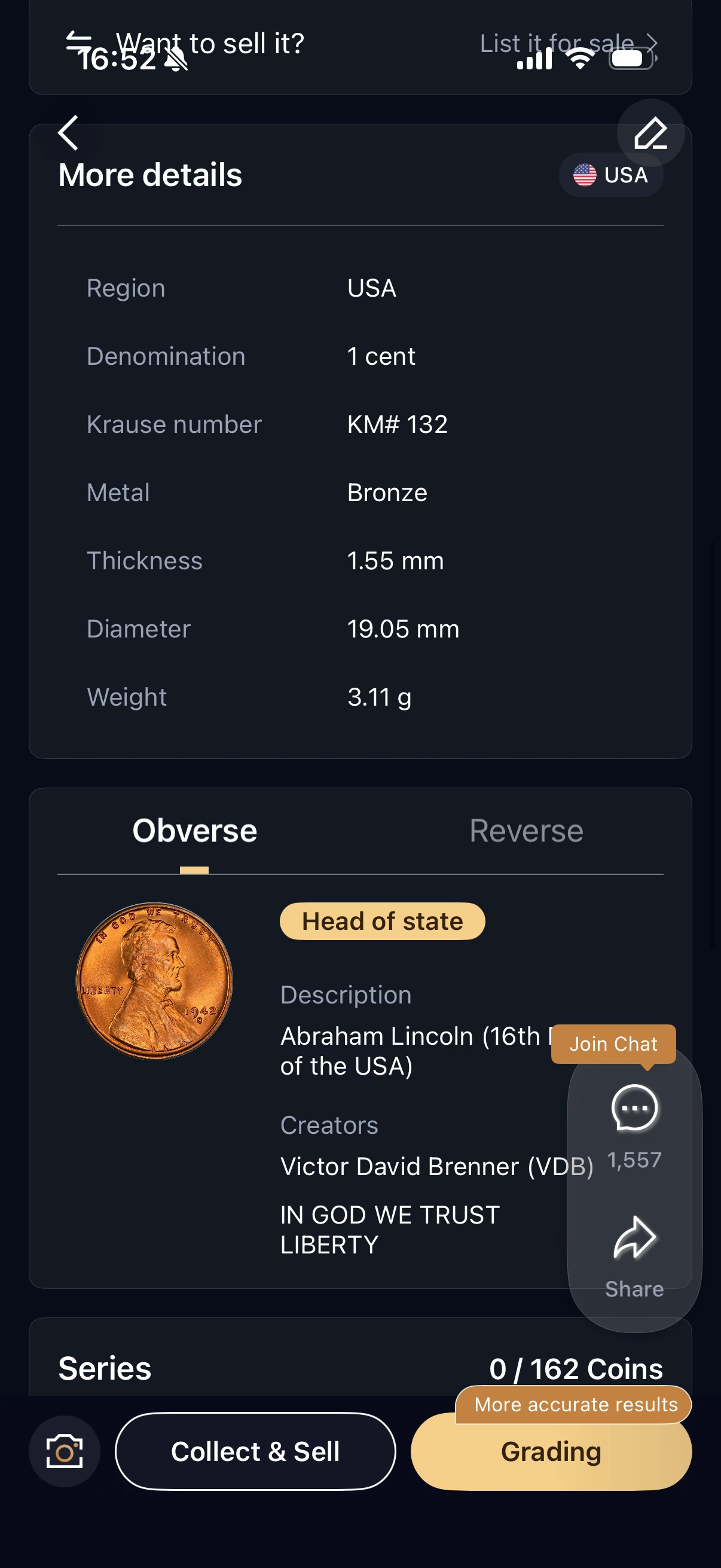
The details screen brings together the one-cent denomination, bronze composition, 3.11 g weight, 19.05 mm diameter and designer Victor David Brenner. Collect & Sell and Grading are available from the result. These screens bring identification, reference information and the next collection or grading action into one workflow.
To use the $9.90 estimate, start with the 1942-S row and check condition and copper color. The result says MS without a numerical grade or RD/RB/BN designation; those are the next details needed to select a specific guide column. The app amount is a starting reference, while the auction table records completed sales.
Build on the identification
- Record the identity. Photograph both sides and the area below 1942. Keep no-mark, D and S coins separate.
- Record condition before price. Note wear, copper color, spots and scratches. Copy any certification number and full grade exactly.
- Investigate a specific exception. A possible proof, doubled die or repunched mark needs the corresponding reference, not a generic error listing.
- Compare like-for-like sales. Save the date and source of the comparison. Keep an app reference value, an asking price and an actual offer as separate amounts.
- Choose a proportionate next step. For an ordinary example, organize it in your collection. For a plausible scarce variety or exceptional condition, seek an assessment before paying submission costs.
1942 penny value FAQ
Is a 1942 penny with no mint mark valuable?
No mint mark is the normal Philadelphia issue. Its value depends on preservation, color and whether it is a regular strike, proof or confirmed variety. The missing letter itself is not an error.
Is a 1942 copper penny rare?
Copper is the normal composition for a regular 1942 cent. The famous rare copper-cent story concerns 1943, when regular production used zinc-coated steel.
Is a 1942-S worth more than a 1942-D?
Compare the same grade and color. In the cited guide, S is higher at MS63 RD, but both are $185 at MS67 RD. The mint mark alone does not decide every comparison.
Should I clean it before getting a value?
Leave it as found. Cleaning or polishing can change the surfaces collectors evaluate. Good photographs and an honest description are more useful than artificial brightness.
Should I have an ordinary 1942 penny graded?
Compare the likely value with all submission and shipping costs first. A possible scarce variety or exceptionally preserved coin gives a stronger reason to seek expert assessment than the date alone.
Match the coin before choosing a price
Identify the mint, assess wear and copper color, then compare the same strike and variety. The HeriBase test provides a practical starting point: a 1942-S identification, $9.90 reference price and specifications. Refine that estimate with condition-matched sales, preserve the original surfaces, and seek expert assessment when a suspected variety or exceptional grade could change the value.
SourcesOpen references
Checked September 24, 2026. Guide values and historical auction results are distinct evidence.
- PCGS Lincoln Wheat Cent Price Guide
- PCGS price guide methodology
- 1942 Philadelphia specifications and photographs
- 1942-D specifications and photographs
- 1942-S specifications and photographs
- 1942 proof issue
- PCGS copper color designations
- 1942 Doubled Die FS-101
- 1942-D/D FS-502
- U.S. Mint penny history
- PCGS: experimental glass coin
- 1942-S MS64RD sale
- 1942 MS68RD sale
- 1942 PR67+RD sale