

How can you tell if a coin has been cleaned?
Look for disturbed surfaces, not brightness alone.Dense patches of fine scratches, an unnaturally polished finish or altered surface texture can indicate improper cleaning. Examine both sides under changing light: subtle hairlines may appear only at certain angles. Die-polish lines, ordinary contact marks and reflective collector finishes can look similar in photographs.
A photograph can identify an area worth inspecting; it cannot reliably clear every coin of cleaning. This guide uses examples identified by PCGS and NGC, with close-ups of the relevant surfaces. It concerns collectible coins, especially modern and classic milled coins; ancient coins require different conservation expertise.
Inspect the surface before judging the shine
- Keep the coin as it is.Do not rub away a mark to “check” it. Hold an unencapsulated coin by its edge over a soft surface; leave an encapsulated coin in its holder.
- Change the viewing angle.Slowly tilt the coin beneath a steady light. Inspect the open background, the portrait and the protected areas beside letters.
- Follow the lines.Look for repeated scratches across a patch, rather than treating one isolated mark as proof. Note whether the lines continue across raised design elements.
- Check both sides and the holder.A problem may affect only one area. Scratches on plastic can also obscure the surface; request another lighting angle when buying remotely.
PCGS describes cleaning damage ranging from obvious polishing to faint hairlines visible only in a small area. A single flattering photograph is therefore an incomplete surface record.
Cleaning hairlines or contact marks? Compare the cheek
Inspect the portrait and the open field together.Below are matching areas of two Morgan dollars: PCGS attributes the 1884-S example to cleaning and artificial toning; NGC describes bag marks on its MS63 1880-S reference. The photographs illustrate different surface problems, not a before-and-after treatment or a matched price comparison.
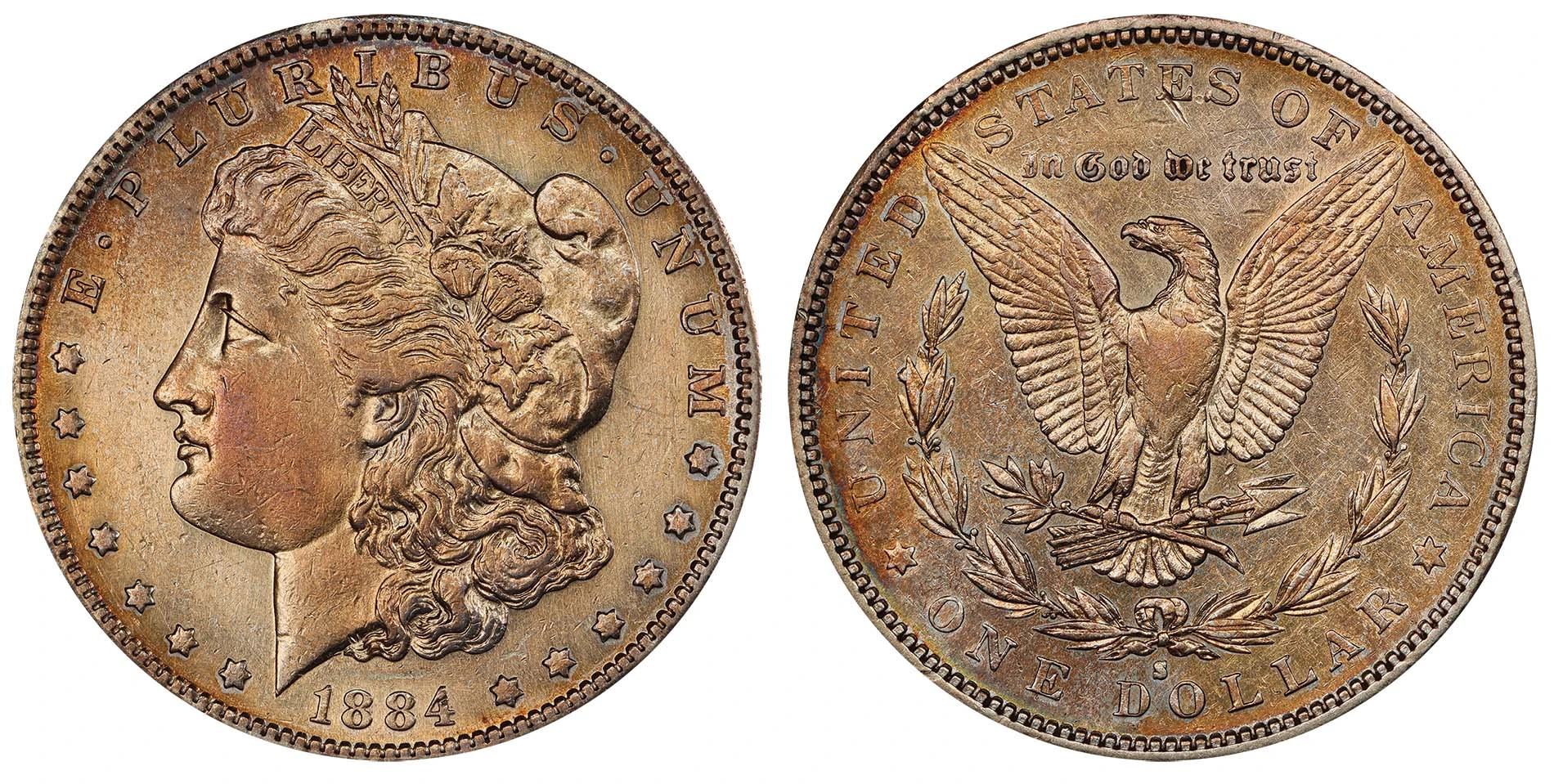
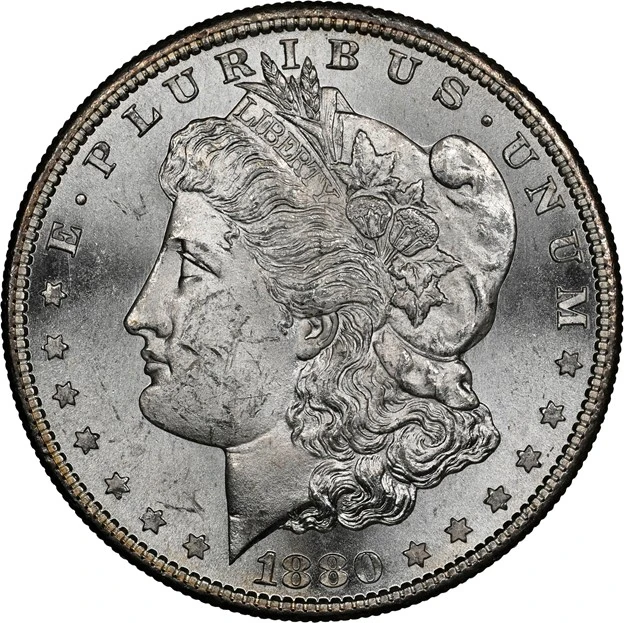
On the left, examine the fine lines across the cheek and neighboring field; on the right, locate the individual contact marks on the cheek.Use these locations to guide inspection under changing light. The attribution comes from the source institutions; brightness and color differences between photographs are not diagnostic by themselves.
The numerically graded example is a reference for acceptable contact marks, not proof that the coin has never undergone any treatment.
Cleaning can hide beneath color or preserved detail
Toning can conceal existing hairlines
PCGS identifies this1884-S Morgan dollaras both cleaned and artificially toned. Its explanation is specific: the applied color attempted to conceal extensive cleaning hairlines. Removing that color would not remove the underlying damage.
Look past the color to the cheek and adjacent field.The attribution here comes from PCGS, not from our interpretation of the image. Toning is not a certificate of originality, and a toned coin should receive the same surface examination as a bright one.
Uncirculated detail does not guarantee original luster
NGC’s 2022 grading contest included a1990 British 20-pence / New Zealand dollar overstrikegradedMint Error — UNC Details — Cleaned. NGC states that cleaning had removed its original luster.
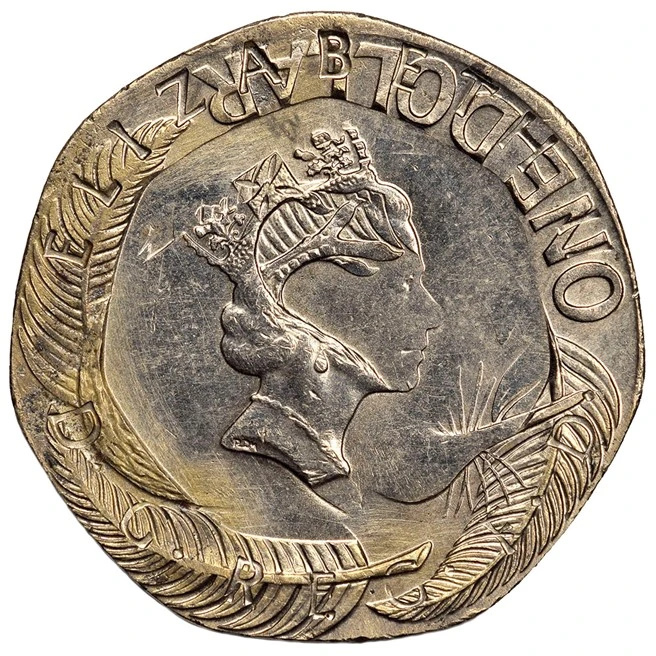
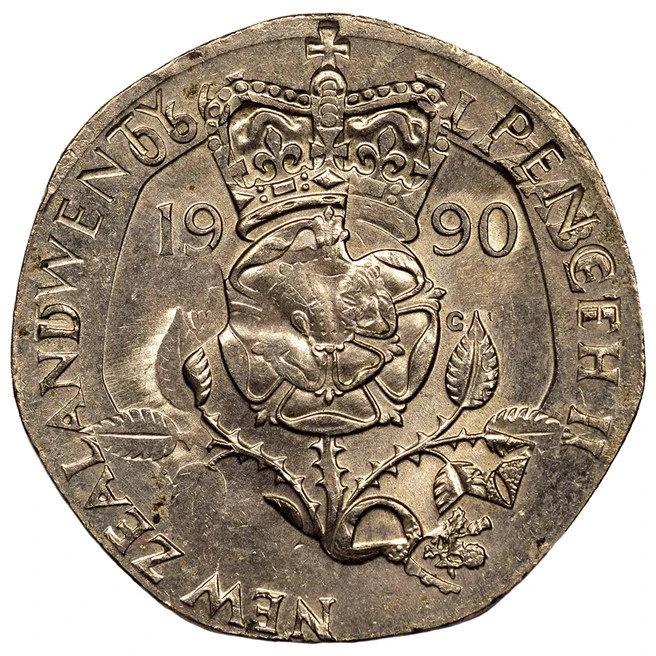
Look at the fields beside the portrait, then separate surface condition from the overlapping designs.The overstrike is a mint error; the cleaning is a separate problem. Preserved detail alone does not establish an untouched surface.
Not every line is a cleaning scratch
Use the texture, distribution and source attribution together. These NGC teaching examples show why lines or vivid color alone are not a sufficient diagnosis.
Die-polish lines
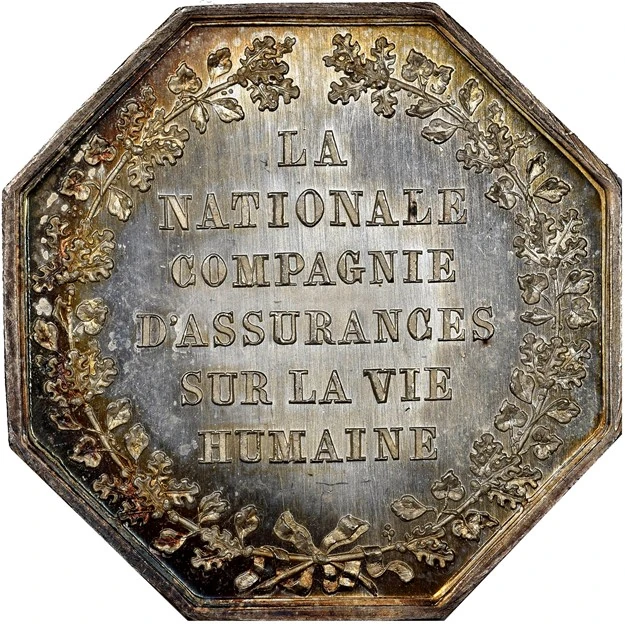
Look through and beside the reverse lettering.NGC explicitly identifies the vertical lines on this 1830-dated French silver jeton as die polish, not cleaning. They are a mint-made feature of this example.
Contact marks
Look at Liberty’s cheek.NGC attributes this 1880-S Morgan dollar’s grade to bag marks. Ordinary coin-to-coin contact can limit a numerical grade without producing a cleaning designation.
Rainbow color can also be market acceptable
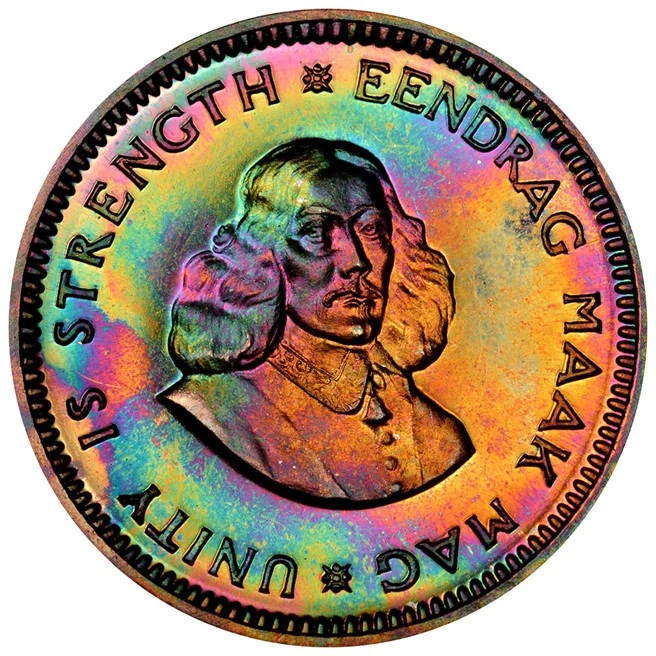
NGC graded this1961 South Africa 5 cents PF67 ★and described its color as natural-looking and market acceptable. Its teaching note explains that velvet-lined Proof sets can impart such color.
Compare the lesson with the 1884-S dollar above:vivid color alone is not the diagnosis. Keep the underlying surface and the attributed assessment in view; a rainbow photograph does not by itself prove either originality or alteration.
What does “Cleaned” or “Details” mean?
A Details grade describes a coin’s remaining detail together with a disqualifying problem.It is not an extra numerical grade. “AU Details — Cleaned” should not be priced as if it were a problem-free AU50 or AU58 coin.
| Description | Practical meaning |
|---|---|
| Improperly Cleaned | NGC’s general description for damaging cleaning when the exact action is uncertain. |
| Wiped | Localized surface hairlines, potentially from accidental handling rather than deliberate treatment. |
| Polished / Burnished | Abrasive treatment that changes the coin’s surface appearance. |
| Details | Read the accompanying problem description; cleaning is only one possible reason. |
Not every past treatment automatically prevents numerical grading. NGC distinguishes light, non-destructive cleaning from damaging treatment. That distinction requires surface assessment; it is not permission to experiment on a collectible coin.
What conservation can remove—and what it cannot repair
Removing a harmful deposit and reversing surface damage are different tasks.The examples below show a removable corrosion spot and pre-existing scratches that remain after professional treatment.
Copper: corrosion removal is not the same as abrasive cleaning
This1888/7 A Belgian Congo bronze 5 centimesreached NCS with raised green corrosion near the obverse’s 8 o’clock position. NCS reports removing that spot, leaving a slight trace, and brightening the surface; the coin subsequently graded with NGC. The source does not give a numerical grade.
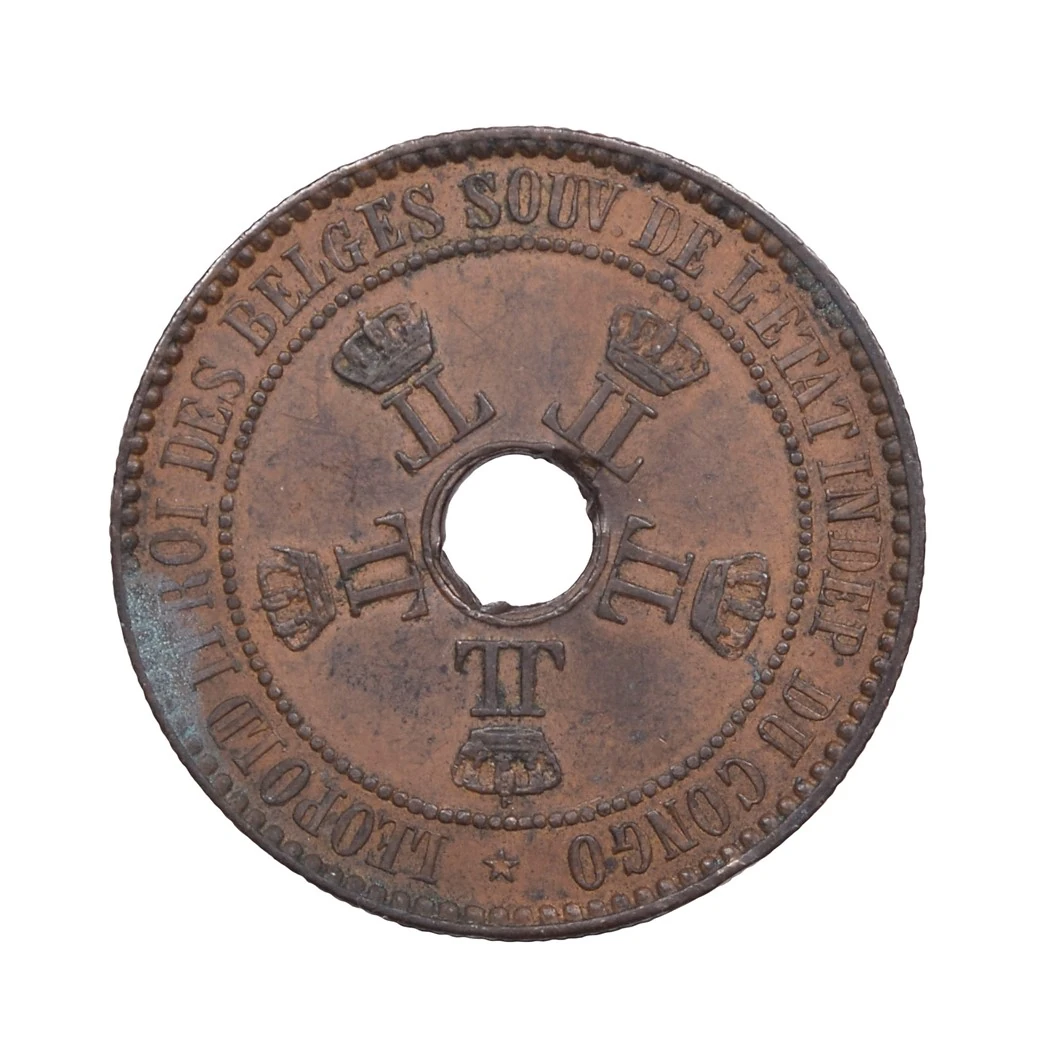
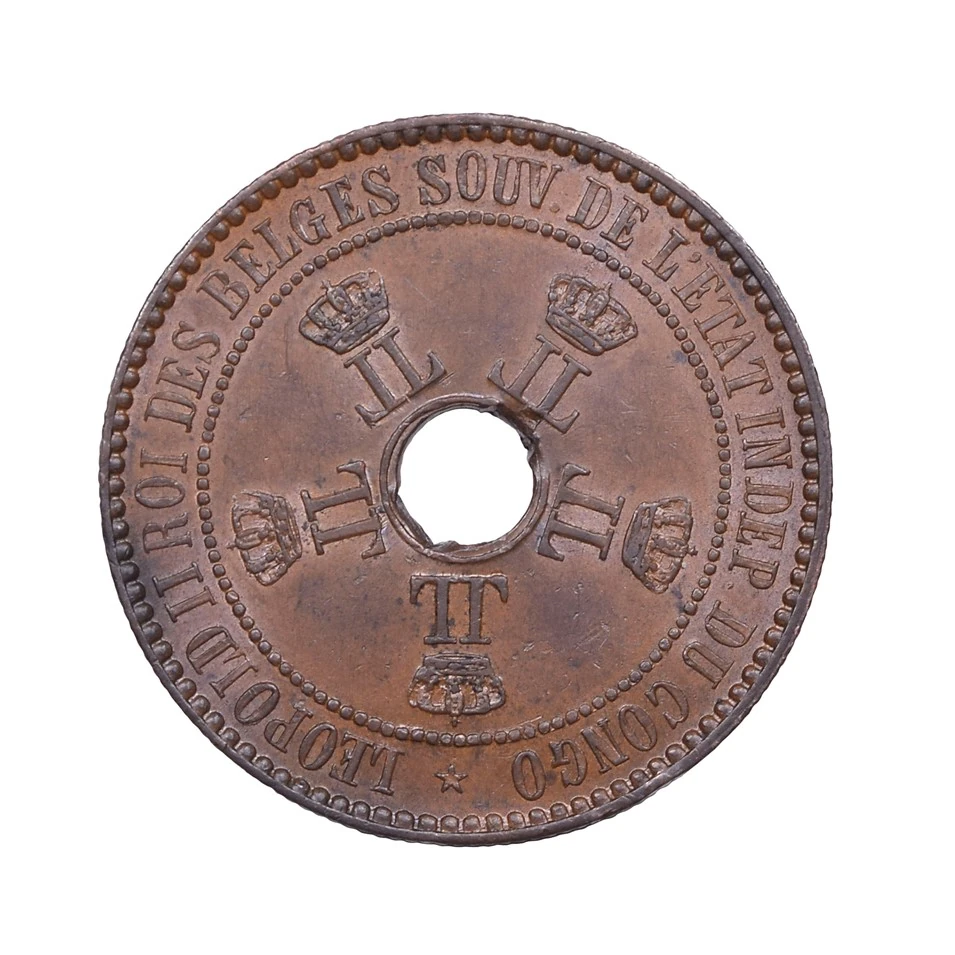
Compare the lower-left rim
Compare the green patch beside the lettering, not just overall brightness.These photographs document professional removal of a specific contaminant. They do not demonstrate that polishing is safe or that existing cleaning scratches can be reversed.
Existing scratches remain after conservation
NGC uses this1838-O Seated Liberty dimeto illustrate mechanical cleaning damage. The two images show the same coin before and after NCS conservation. The earlier cleaning already existed; the conservation treatment did not create the scratches.
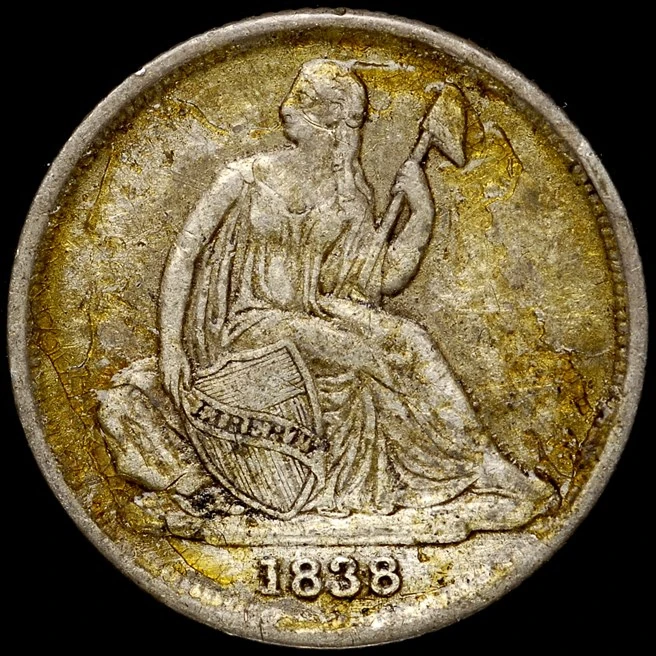
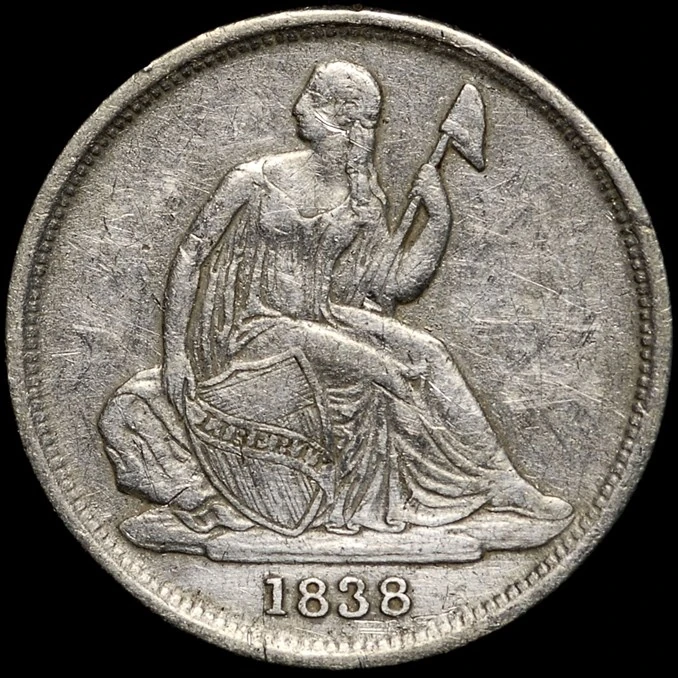
Compare the same area
Look immediately above and around1838. NGC attributes the bright patch in the later photograph to light catching parallel cleaning scratches. Their visibility changes with the surface and lighting; a brighter image does not mean the coin has become problem-free.
One useful warning sign is a pattern of scratches continuing from the background across the design or lettering. This example documents existing damage becoming easier to see, not a successful reversal of cleaning.
How much value does cleaning remove?
There is no universal percentage discount for a cleaned coin.The issue, remaining detail, severity and location of damage, visual appeal and available alternatives all matter. A Details coin can still be collectible, but a problem-free price-guide entry is not its valuation.
NGC notes that some Uncirculated Details coins fall only slightly short of numerical-grading standards, while other problem coins are much less attractive. Treating them all as “half price” conceals that variation.
Build a comparison you can actually use
- Match the date, mint, variety and strike type.
- Look for completed sales carrying the same broad detail level and problem description.
- Inspect the actual photographs: faint localized wiping and heavy overall polishing are not interchangeable.
- Compare several results from similar dates, using the same buyer’s-premium basis.
If suitable sales are scarce, retain a broad range or seek an in-hand opinion. A single cleaned-versus-uncleaned sale pair cannot isolate a fixed cleaning penalty.
A practical checklist for your own coin
Use this sequence to decide what evidence to request. It is a screening aid, not a substitute for an in-hand surface assessment.
| What you see | Check next | What remains uncertain |
|---|---|---|
| Fine lines across a patch | Tilt the coin; trace the lines through the field and design. Compare the cheek examples above. | One photograph may not separate cleaning, die polish and scratches on a holder. |
| A few distinct marks | Inspect their shape and distribution across both sides. | Contact marks can affect grade without establishing cleaning. |
| A very bright or colorful surface | Confirm the strike type and inspect the texture beneath the shine or color. | Brightness and toning alone establish neither originality nor alteration. |
| Green deposits or uneven residue | Leave the surface untouched; obtain a conservation assessment. | A photo cannot predict whether removal will leave damage or what grade will result. |
| A Cleaned or Details label | Keep the full problem description when selecting comparable sales. | A numerical-grade price guide does not establish this coin’s value. |
Before buying:request sharp photographs of both sides, an angled close-up of the suspect area and the complete holder label. If the evidence still cannot resolve the surface question, obtain an in-hand opinion before treating it as a problem-free coin.
Do not try to polish the evidence away
Stop further treatment and preserve the coin’s present condition.Rubbing or polishing can add damage. Use an appropriate inert holder, avoid touching the faces and keep the coin away from moisture and reactive storage materials.
Professional conservation is different from abrasive cleaning: it may address harmful residues while preserving the underlying surface. It cannot promise to restore a coin’s original surface or a particular grade. Ask a qualified conservation service whether intervention is appropriate before attempting it yourself.
For a remote assessment, provide sharp photographs of both sides, the suspect area at more than one angle, and the complete grading label if present. HeriBase can help record the coin’s identity; a suggested identification or reference price does not establish that its surfaces are original.
Three rules to take into your next coin inspection
A cleaned coin is identified by evidence of altered surfaces, not by shine alone.Photographs help locate a concern; inspection under changing light and a reliable attribution help resolve it.
- Inspect the surface.Check the portrait and fields for repeated hairlines or disturbed texture, then inspect the reverse and rule out holder scratches.
- Test the alternative explanation.Contact marks, die-polish lines and natural toning can occur on numerically graded coins. Compare the relevant feature, not just overall color.
- Act on the evidence.Preserve the coin as it is. Request better views or an in-hand opinion when uncertain, and retain any cleaning designation when researching comparable sales.
Professional conservation may remove certain contaminants; it does not erase abrasive scratches. For your next purchase, start with clear images and the complete description, then use the checklist above to identify what still needs verification.
Standards and image evidence
Prepared by Heritcoin Team, the team behind HeriBase. Sources checked September 20, 2026. Example attributions are those of PCGS and NGC; neither organization has reviewed or endorsed this article. No independent expert review is claimed.
- PCGS: No Grade Coins — Part IV
- NGC: Effects of Improper Cleaning
- PCGS: From the Grading Room — The Details Grade
- NGC: 2023 ANA grading contest, examples 1 and 2
- NGC: 2022 ANA contest — cleaned overstrike and naturally toned Proof
- NCS: Conservation examples — Belgian Congo bronze 5 centimes
- NGC: Details Grading
- NGC: It’s All in the Details
- NGC: Professional conservation
- PCGS: Handling and Storage