

What is a coin appraisal, and where should you start?
A coin appraisal is an assessment of a coin’s value for a stated purpose and date. Identification establishes the issue, authentication examines genuineness, and grading assesses condition. These findings can support an appraisal, but they answer different questions.
Start with AI identification for the coin’s apparent issue, date, mint mark and reference value. If an important detail remains unclear, ask a specialist for a photo-based appraisal. Choose physical examination when the question requires access to the coin itself or you need a specific certification or report. Use the level of examination your decision requires; you do not have to complete all three stages.
Understand what you have
Use an AI identification tool to obtain a starting identity and research the relevant issue. Check the result against the coin.
Resolve a specific question
Choose a suitable specialist and submit photographs and detail views when you need an explanation or a second opinion.
Examine what photos cannot show
Arrange an in-person assessment or submission when authenticity, surfaces or certification requires it.
A common coin may need only identification and a few suitable price comparisons. A potentially valuable altered coin may warrant physical examination immediately. Confirm which service answers your question before paying.
References: ANA: evaluating coins · NGC: authentication and grading process.
“I have a coin”: what do you want to know?
Turn a general request for value into questions that can be checked. These are common examples; your next step depends on the detail that matters to you.
Which coin and variety is it?
Identify the country, denomination, date and design. Check whether an apparent variety is a recognized issue or simply a surface mark.
What does the mint mark mean?
Locate the mark and check it against the correct issue. If the letter is unclear or looks altered, record that uncertainty.
What might this specimen be worth?
First establish the issue and relevant condition. Then compare similar completed sales and distinguish sale prices from asking prices.
How much confidence do I need?
Curiosity, a purchase decision and a formal valuation can require different evidence. State your purpose before choosing a paid service.
Our guide to what makes a coin valuable explains the underlying factors. Here, the focus is how to get the help needed to evaluate your own coin.
Step 1: use an AI coin identification tool
Begin with clear photographs of both sides, then review the suggested identity field by field. Use the suggested identification to narrow your research to a particular coin rather than searching by appearance alone.
- Check the visible details. Compare the date, denomination, mint mark and design with your coin.
- Check any variety designation. Locate the actual feature on the coin; a suggested label is a reason to investigate it.
- Interpret the value reference. Check what condition and issue it assumes before applying the amount to your specimen.
- Record what remains uncertain. A precise question makes a later expert review more useful.
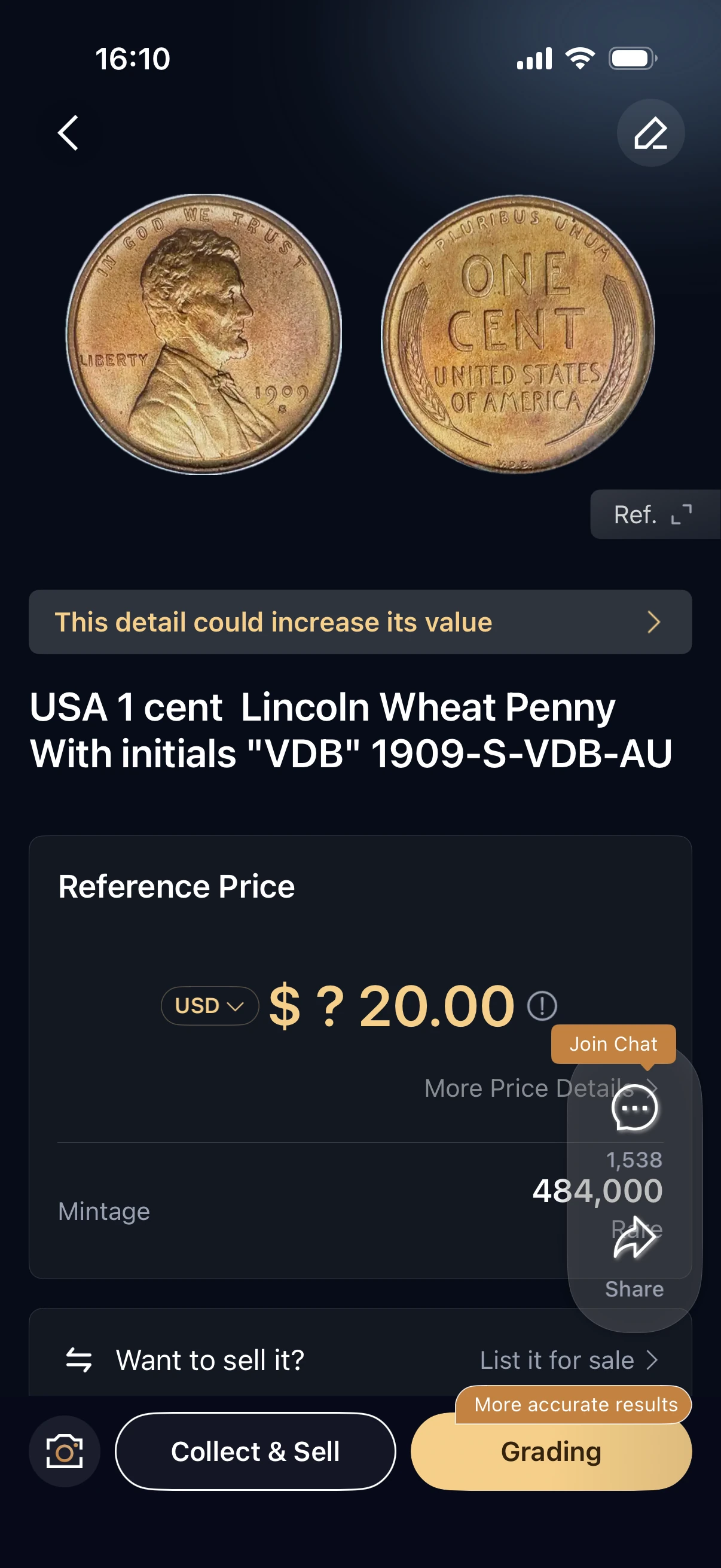
Example: review a Heritcoin identification result
The supplied result includes “1909-S-VDB” and a mintage of 484,000. These fields identify the catalog issue to research. Mintage describes historical production, not the number of coins that survive today.
The displayed AU label is a broad condition category. Catalog-field consistency does not by itself authenticate the photographed specimen or establish an exact numerical grade.
See the cross-source comparison in our coin value guide for the supporting mintage references.
When can you stop here?
If the coin is readily identified and your question is general background information, the result and suitable references may be enough. Continue to an expert when a disputed detail affects the identity, likely value or a decision to buy or sell.
What if AI coin identification results differ?
AI coin identification can be wrong. If a result does not match the visible details, try another AI coin identification tool using the same clear photographs. Compare the date, mint mark, denomination and suggested variety to find exactly where the results differ.
Agreement between apps is a useful clue, but it does not prove authenticity. Different price estimates can also reflect different assumed grades or reference data. Record the differences and ask a human specialist about any unresolved feature that matters to your decision.
For an overview of available tools, see our Heritcoin, CoinSnap and Coinara comparison.
Step 2: ask a specialist for an online coin appraisal
Use online human review when you want an explanation, a second opinion or help with an unresolved feature. Submit the coin’s photographs together with the AI result and explain exactly where you are uncertain.
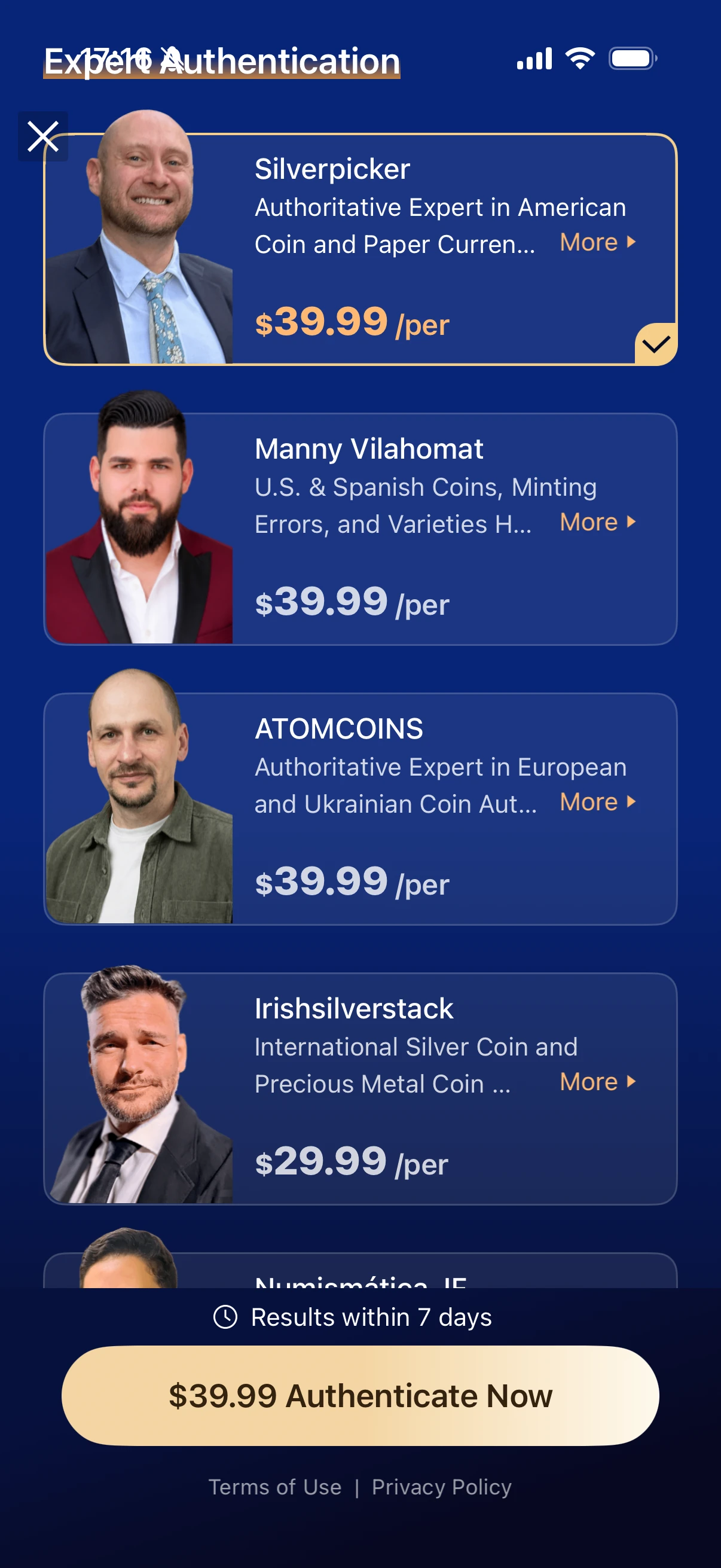
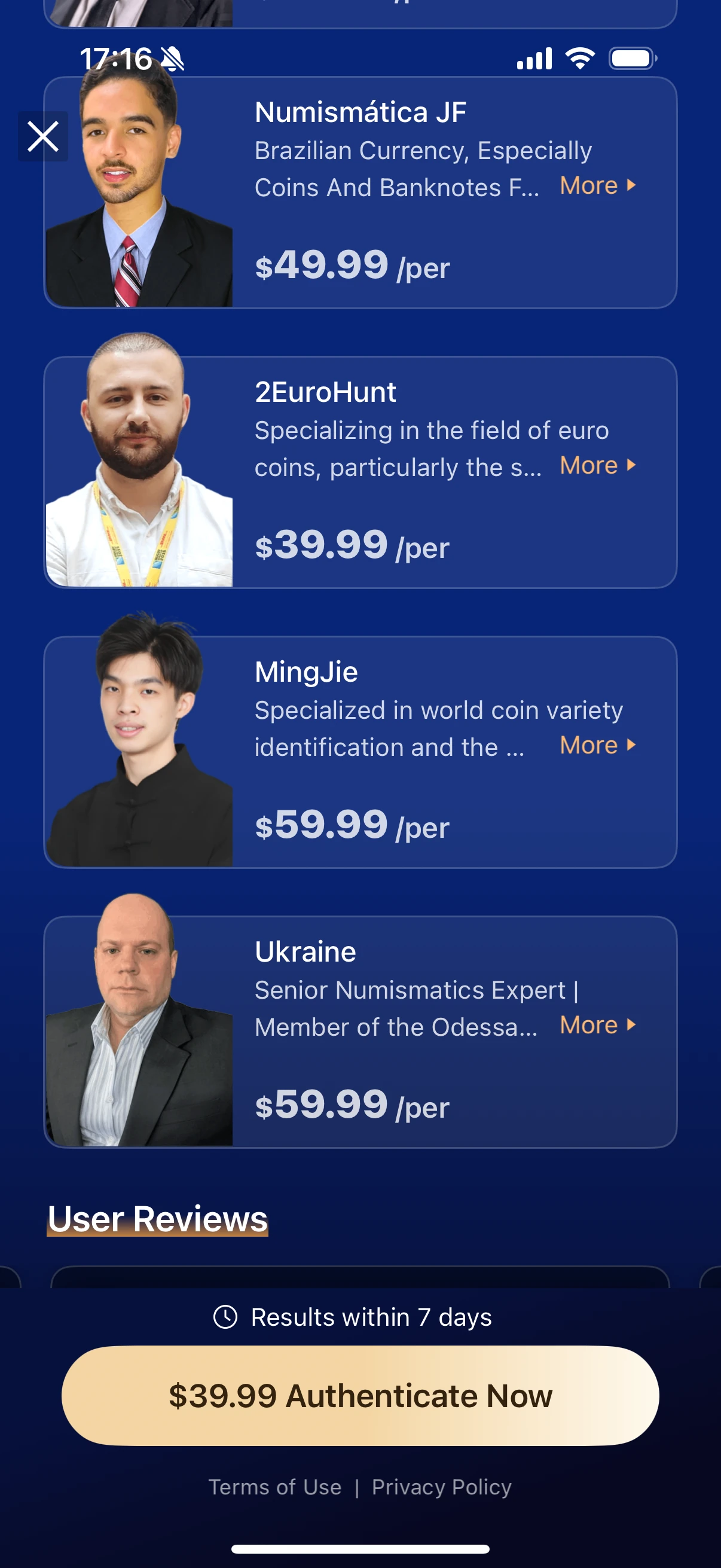
Review the available specialists and select someone whose stated focus fits your coin. Check the service scope and fee before ordering. A useful submission includes both sides, close-ups of the disputed feature and the decision you are trying to make.
Example: choose a specialist in Heritcoin
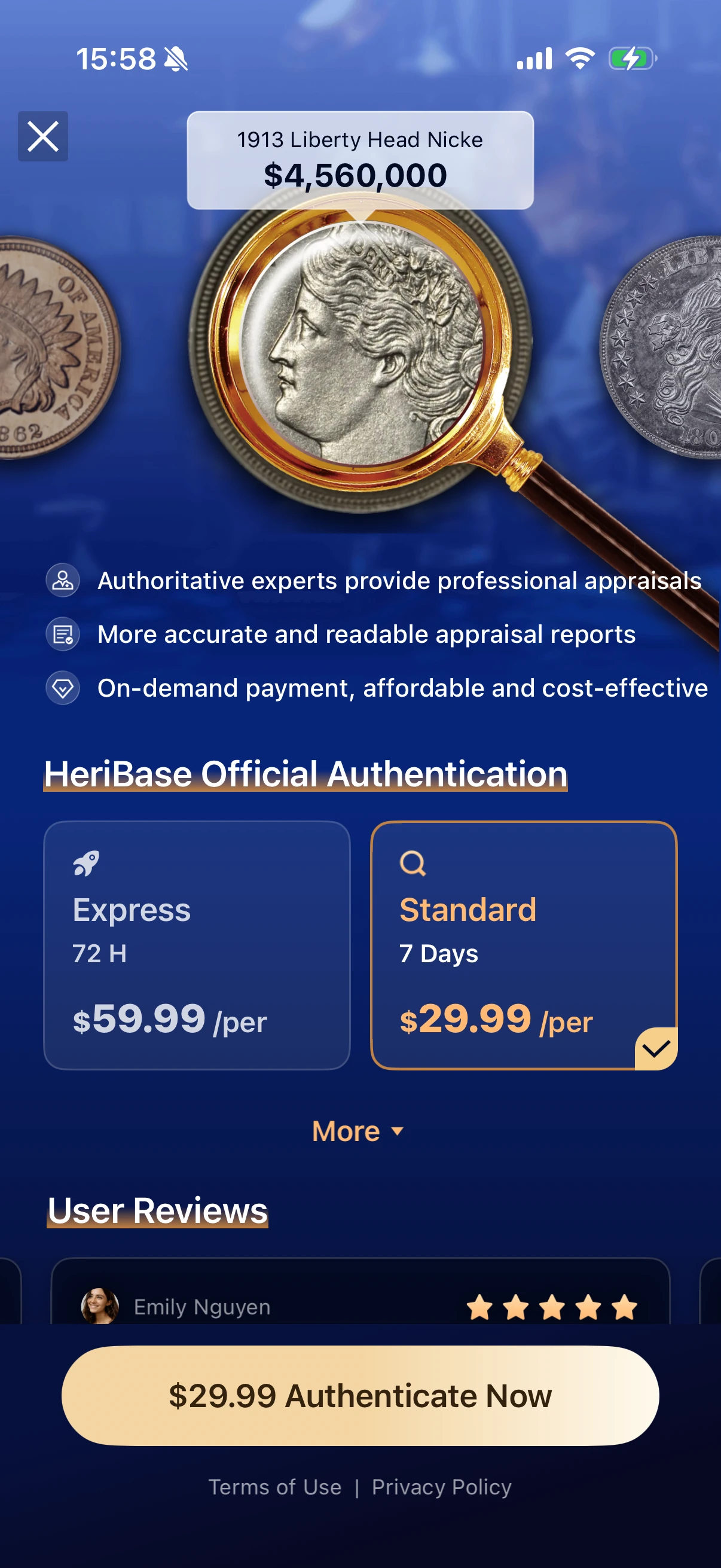
Heritcoin illustrates this process: browse specialist profiles, choose a suitable expert and submit photographs for review. The screens below use the HeriBase name and show expert profiles and appraisal options. Confirm the current terms in the app, including the format of the response and whether follow-up questions are included.
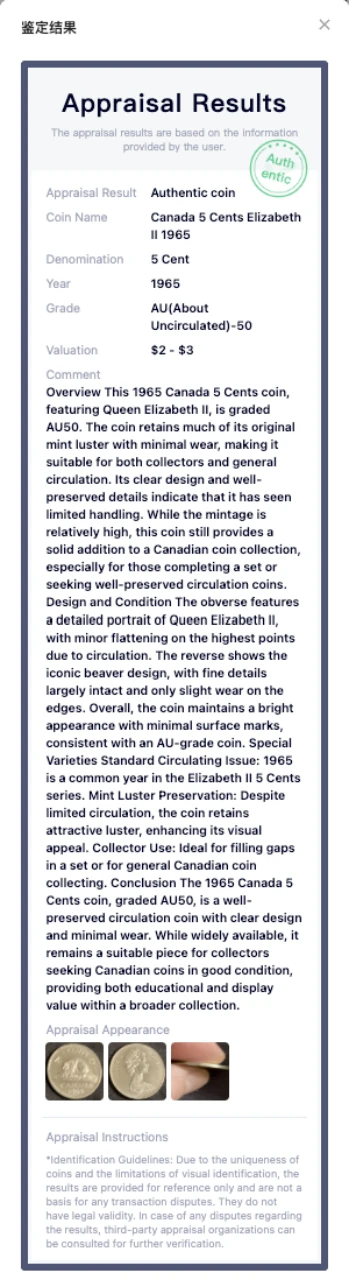
Report example: a 1965 Canadian five-cent coin
This supplied Heritcoin report shows what a photo-based appraisal response can contain: a coin identification, an authenticity opinion, a condition assessment, a value estimate and explanatory comments.
- Coin identified
- Canada 5 Cents Elizabeth II, 1965
- Appraisal result
- “Authentic coin,” as stated in the report
- Condition assessment
- AU (About Uncirculated)-50
- Displayed valuation
- $2–$3; the screenshot does not specify the currency or valuation date
- Supporting material
- Written comments on design and condition, plus three coin photographs
The report states that its findings are based on information supplied by the user. Read the authenticity and grade labels as the conclusions of this photo-based review; they are not a PCGS or NGC physical certification. The displayed estimate is not a recorded sale price.
To review a response, use the appraisal-result checklist below. The screenshot does not identify the appraiser by name; it documents the output format rather than independently verifying the reviewer’s credentials.
What makes this step convenient?
You can submit photographs without mailing the coin. This makes it practical to ask a focused question before arranging physical examination. Compare the quoted fee with the work included; a brief image review and a formal written valuation are different assignments.
To explore this service, open or download Heritcoin and review the available expert profiles and current terms.
Step 3: arrange physical coin authentication and grading
Choose physical examination when a specialist needs to inspect the actual coin or your intended use requires a particular certification or report. You may visit a suitable local specialist or submit to a service that accepts physical coins.
- Authenticity remains uncertain. A suspect mint mark, alteration or other defining feature may require closer examination.
- Condition changes the decision. Lighting and photographs may not adequately show luster, surface treatment or damage.
- Important opinions conflict. If reviewers disagree about the issue or authenticity after reviewing the same evidence, physical inspection can provide additional evidence.
- You need a specified deliverable. Check whether you need authentication, grading and encapsulation, or a written valuation for a named recipient.
The ANA emphasizes physical examination when evaluating an individual item. NGC’s published workflow includes receiving the coin, authentication and grading, encapsulation and return shipping. A certified grade helps describe the coin; it does not guarantee a selling price.
PCGS: an example of physical authentication and grading
PCGS accepts physical coin submissions for authentication and grading. Its U.S. submission guide offers two routes: submit through a Collectors Club membership or use a PCGS Authorized Dealer. Check the regional submission rules that apply to you.
Choose the appropriate service and any attribution options before submitting. The result concerns the coin’s authenticity and condition under the selected service; a PCGS grade is not a guaranteed sale price or a substitute for a valuation report commissioned for a specific purpose.
Plan for cost, timing and transport
Request the full quote and expected turnaround before submitting. When mailing is involved, check packaging instructions, tracking, insurance coverage and responsibility for loss or damage. An in-person appointment may avoid shipping, while turnaround and fees depend on the provider and assignment.
Do not wait for multiple online opinions if you already know that physical certification is needed. For an insurance or other formal valuation, first obtain the recipient’s report requirements and choose an appraiser who can meet them.
References: ANA: coin evaluation · NGC: physical submission workflow · ASA: appraisal assignments.
How do you choose a coin appraiser?
Check relevant coin expertise and appraisal competence separately. Someone may know a series well without offering the kind of valuation report you need. The International Society of Appraisers recommends asking about training, specialty knowledge and how work outside an appraiser’s expertise is handled.
| Ask before booking | A useful answer explains |
|---|---|
| Do you regularly handle this type of coin? | The relevant series, periods or specialties and any limits. |
| Who will examine it? | The responsible person and any referral to another specialist. |
| What will you deliver? | A discussion, written opinion, itemized inventory or report for the agreed use. |
| What evidence will you need? | Photographs, records, access to the coins or additional examination. |
| How are fees calculated? | The fee basis, extra work and when approval is required. |
| Will you also offer to buy or consign it? | The distinction between the valuation assignment and a proposed transaction. |
Use a professional directory to find candidates, then verify the individual’s stated credentials and fit for your assignment. A directory listing is a starting point for that conversation.
References: ISA: questions to ask an appraiser · ASA: selecting an appraiser · ANA dealer directory.
How much does a coin appraisal cost, and what do you receive?
Compare the fee with the examination and deliverable, not just the headline price. Photo review, physical grading and a formal valuation report involve different work. The examples below show how to read an offer.
| Service example | Fee shown | Time shown | Scope and source |
|---|---|---|---|
| Heritcoin Standard photo appraisal | $29.99 per appraisal in the supplied screen; currency code is not shown. | 7 days in the screen. | Photo-based expert review. Confirm the selected service’s report format and follow-up terms in the app. |
| Heritcoin Express photo appraisal | $59.99 per appraisal in the supplied screen; currency code is not shown. | 72 hours in the screen. | A separately priced service option. See the service screenshot and report example. |
| PCGS Economy, U.S. coins | US$23 per coin; published value limit US$300. | 45 business days in the published table. | Physical authentication and grading; check eligibility and additional charges with PCGS. |
| PCGS Regular, U.S. coins | US$40 per coin; published value limit US$2,500. | 25 business days in the published table. | Physical authentication and grading, not a commissioned valuation report. |
PCGS figures checked September 14, 2026. Its turnaround figures are previous-week averages, not guarantees; the clock starts after entry into its system and excludes package-opening and shipping time. Heritcoin figures are screenshot examples with no capture date supplied; check current in-app terms before ordering.
Calculate the full cost before submitting
For PCGS, the per-coin grading fee is only part of the budget. Include applicable membership or dealer charges, handling, return shipping, insurance and optional services. Its U.S. guide lists Silver membership at US$69 per year for direct submission; using an authorized dealer is another route. See submission options and the current service schedule.
Is a paid appraisal worth it for this coin?
The report example displays a value of $2–$3, while the separate service screen shows a Standard fee of $29.99. The screenshots do not establish the currencies or what this user paid, so they cannot establish a transaction return. They do illustrate why you should compare the full fee with the decision it helps you make. For a readily identified, low-value coin, catalog research may be sufficient; a collection-wide or authenticity question may justify additional work.
The cost depends on the assignment: the number of coins, research required, examination method and the agreed deliverable. Obtain a written quote for that scope instead of comparing a brief online opinion with an itemized collection report as though they were the same service.
- Ask for the fee basis: per item, hourly or a fixed project fee.
- Check the full scope: research, written findings, follow-up questions and any extra examination.
- Separate additional services: shipping, insurance, grading submissions and selling commissions, when applicable.
- Agree on changes: ask how extra work will be quoted before the assignment expands.
ISA prohibits its appraisers from charging a percentage of the appraised value. A fee that rises with the valuation creates an incentive worth questioning. This is different from a separately disclosed auction commission for selling a coin.
A “free appraisal” may be an initial opinion connected to a buying or consignment service. Confirm what is included and whether there is an obligation to sell. A buyer’s offer is not interchangeable with a valuation prepared for another purpose.
References: ASA: appraisal fees and agreements · ISA: acceptable fee arrangements.
What should you prepare before a coin appraisal?
Send enough information to connect each question to a specific coin. Keep a simple item number across photographs and notes, especially when submitting a collection.
- Photograph both sides. Use a plain background and diffuse light. Keep the whole coin visible and add close-ups of the date, mint mark and disputed feature.
- Preserve the original files. Avoid filters, retouching or enhancements that change surface details. Photograph the edge if the reviewer requests it and it is safely accessible.
- Include existing records. Record holder details, certification numbers, purchase receipts and any previous descriptions. Distinguish documentation from an unverified family account.
- Label actual measurements. If you measured weight or diameter, say how. Do not present an app’s catalog specification as a measurement of your coin.
- Explain the decision. State whether you want help identifying the issue, understanding a sale estimate or arranging a report for a particular recipient.
Do not polish or clean the coin for the photographs. NGC explains that improper cleaning and other surface problems can lead to Details grading rather than a normal numerical grade.
A clear first message
“I would like help evaluating this coin before deciding whether to sell. I have attached front and back photographs, a close-up of the mint mark and the holder label. Please tell me whether you can assess it remotely, what further examination is needed, your fee and what written findings I will receive.”
Reference: NGC: Details grading and surface problems.
A practical example: a possible 1909-S VDB cent
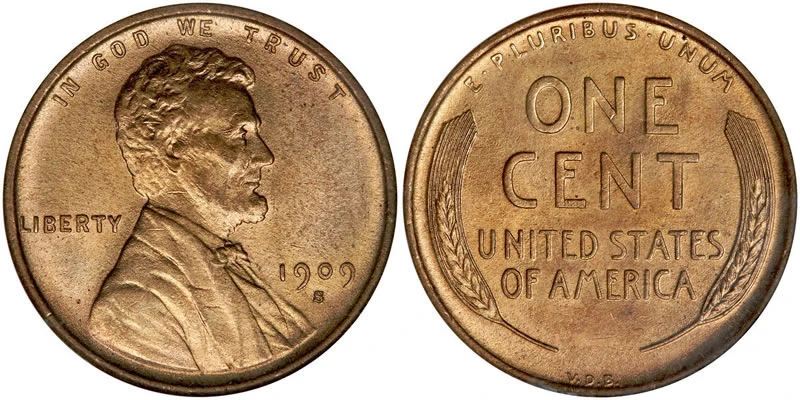
A valuable-looking identification can create an authentication question before it creates a reliable price. PCGS documents counterfeit 1909-S VDB cents and illustrates differences in mint marks and other features. Finding an “S” in a photograph is only the beginning of that comparison.
For an uncertified coin that appears to be this issue, a useful request is: “Are the date, mint mark and reverse initials consistent with the genuine issue, and what examination is needed before discussing value?”
- AI starting point: the suggested identity directs you to the 1909-S VDB issue.
- Online question: ask a specialist which visible details support that identity and which need closer inspection.
- Physical examination if needed: if a suspected alteration cannot be resolved from photos, arrange examination before relying on the rare-issue valuation.
This is an example of how to frame a request, not a completed appraisal of the illustrated coin. Our 1909-S VDB identification example compares catalog fields. A specialist’s examination answers a different question about the individual specimen.
Reference: PCGS: counterfeit versus authentic 1909-S VDB cents.
What if the AI result and expert opinions disagree?
Identify what differs before ordering another opinion. A disagreement about the date, mint mark, variety or authenticity is different from a disagreement about price. Ask each reviewer to explain the feature or evidence behind the conclusion.
A useful result explains what was evaluated, what the conclusion means and what supports it. The amount of detail should match the service you commissioned. Use the questions below to review the answer. The Heritcoin report example above shows one delivery format; confirm what your selected service includes.
| Check | Question to ask |
|---|---|
| The coin | Does the description identify my actual item, with its date, mint, relevant variety and condition? |
| The examination | Was the opinion based on photographs or physical inspection? What remains uncertain? |
| The meaning of value | Is this an expected sale range, a buyer’s offer or a valuation for another agreed use? |
| The date and evidence | Which market and date apply? How closely do the reference sales match? |
| The next step | Should I obtain further examination, retain the records or seek a different service? |
PCGS states that its Price Guide represents average dealer asking prices for PCGS-graded coins. That is a different reference from a completed transaction. When using eBay evidence, its Product Research tool can show actual sold prices, including accepted Best Offers.
Our 1921 silver dollar guide explains why the exact issue and grade matter. If prices differ, compare the valuation purpose, date, assumed condition and price basis. If an important physical feature remains disputed after clarification, ask what examination could resolve it.
References: PCGS: Price Guide methodology · eBay: Product Research.
Coin appraisal questions, answered
Can I get a coin appraised for free?
Some services offer an initial opinion or purchase estimate without a separate fee. Ask what you receive, whether selling is expected and whether further work costs extra. A free opinion and a commissioned report may have different scopes.
How do I find a coin appraiser near me?
Start with the ANA dealer directory or an appraisal association’s directory. Confirm that the person handles your coin type and the assignment you need, then book an appointment rather than arriving with an unannounced collection.
Can photographs establish an exact grade?
Photographs can support a condition opinion, but lighting and missing views limit what can be examined. Confirm whether a quoted grade is an estimate or a formal grading-service result.
Does an appraisal guarantee the selling price?
No. The result addresses the agreed value question and date. The price you eventually receive depends on the transaction, the buyer and any selling costs.
Should I clean a coin before an appraisal?
No. Preserve its surfaces and photograph it as it is. Improper cleaning can affect how the coin is graded and valued.
Do I have to use all three stages?
No. General identification may answer your question. You can also go directly to physical examination if authenticity is in doubt or a specific certification is required. Choose the service for the unresolved question.
Coin appraisal: choose the next step for the question that remains
A useful coin appraisal starts with knowing what you want to establish: the coin’s identity, variety, condition, authenticity or value. Choose the evidence and expertise needed for that question.
- Start with AI identification. Check the suggested date, mint mark and variety against the coin. If something does not fit, try another tool with the same photographs and record the differences. AI results can be wrong, and agreement between apps does not prove authenticity.
- Ask a human specialist about unresolved details. Provide both sides, close-ups and a specific question. The Heritcoin example shows how photo-based review can deliver an identification, condition opinion, value estimate and explanation. Read the findings in the context of the evidence supplied.
- Arrange physical examination when needed. If photographs cannot resolve an important doubt, or you need physical certification, consider a service such as PCGS or NGC. For a formal valuation report, choose an appraiser who can meet the intended recipient’s requirements.
Keep identification, grading and price separate. A reference estimate, an expert’s opinion and a completed sale describe different things. Compare the same issue and relevant condition, check the valuation date and market, and confirm fees and deliverables before commissioning further work.
You do not need to use every stage. Stop when the evidence is sufficient for your decision, or go directly to physical examination if that is what the question requires.
Sources and editorial approach
Reviewed September 14, 2026. This guide focuses on collector decisions and uses U.S. numismatic and appraisal references. Heritcoin Team publishes the guide and is affiliated with the featured app.
- American Numismatic Association: coin values, appraisals and dealer selection
- International Society of Appraisers: questions to ask an appraiser
- American Society of Appraisers: consumer FAQs
- NGC: authentication and grading process
More references
- PCGS: authentication and grading services
- PCGS: U.S. submission routes
- PCGS: listed fees and estimated turnaround
- NGC: Details grading
- NGC: certification verification
- PCGS: counterfeit and authentic 1909-S VDB cents
- PCGS: Price Guide
- eBay: Product Research
- ANA: dealer directory
The practical checklists and sample inquiry are editorial guidance. The coin example illustrates a question to investigate; it is not a completed Heritcoin appraisal. References identify the source of a statement and do not imply endorsement of Heritcoin.