

What makes a coin valuable to collectors?
A coin’s collector value depends on how strongly buyers want that particular issue and specimen relative to the examples available. The seven dimensions are rarity, collector demand, condition, recognized varieties or mint errors, metal content, historical significance and documented provenance. Together they help explain what buyers may be willing to pay. Age alone does not establish value, and an unusual-looking coin is not automatically a valuable error.
Start by identifying the exact coin, then compare examples with similar characteristics and documented sales. A date on its own, a dramatic auction headline or an app estimate cannot establish the selling price of the coin in your hand.
Sources:PCGS: What Determines Value in Collectibles?
How the seven dimensions connect
Rarity describes supply; demand describes buyers’ interest. Condition and recognized production differences help define which examples are truly comparable. Metal content adds a separate reference point, while history and provenance can give collectors reasons to prefer a particular issue or specimen.
Use these factors together to select comparable coins. They are not separate premiums to add to a price. The examples in this guide use U.S. coins; reported prices are in U.S. dollars.
| Factor | Why it matters | What to check |
|---|---|---|
| Rarity | Available supply can be limited for an issue or grade. | Exact date, mint, variety and evidence of surviving examples. |
| Demand | Scarcity matters in relation to interested buyers. | Relevant collecting series and comparable sales. |
| Condition | Wear and surface quality distinguish otherwise similar coins. | High points, fields, damage and the full grading label. |
| Varieties and errors | Recognized production differences can attract specialists. | Diagnostic features and a recognized attribution. |
| Metal content | Precious metal contributes a measurable component. | Fineness, standard weight and dated metal prices. |
| Historical significance | A design or event may give collectors a reason to seek an issue. | Documented context rather than a seller’s story. |
| Provenance | A traceable ownership history may add interest. | Matching auction records, photographs and documentation. |
Rarity: how many comparable coins are available?
Use rarity to narrow the available comparison group. “Rare in MS67” is a claim about a specific grade, not proof that a worn example of the same issue is rare.
Mintage describes production, not the number of collectible survivors. Begin with the exact date, mint and variety. Then ask whether the coin is difficult to find overall or only in a particular grade. A low mintage is a useful clue, but it does not by itself establish a premium.
A low-mintage U.S. key date: the 1909-S VDB Lincoln cent
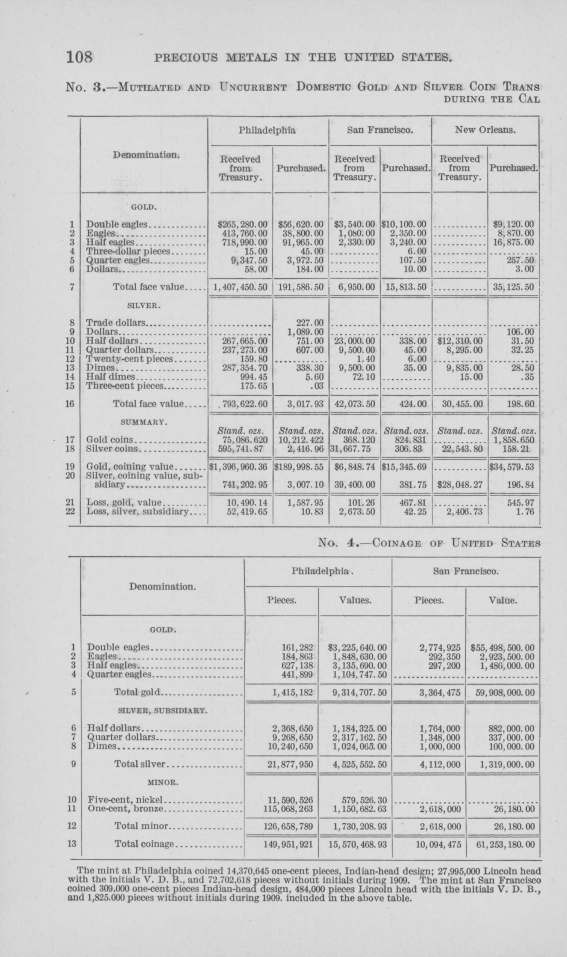
The 1909-S VDB Lincoln cent has a recorded mintage of 484,000 coins. Its identity combines three details: the 1909 date, the San Francisco “S” mint mark and the designer’s V.D.B. initials on the reverse. PCGS describes it as a widely recognized collector favorite; NGC notes that many were saved, so a low original mintage should not be confused with an equally low surviving population.

Check the date, S mint mark and reverse VDB initials to distinguish this issue from the 1909-S cent without VDB.
One issue, five published mintage references
| Source | Source type | Mintage | Where to check |
|---|---|---|---|
| U.S. Director of the Mint | Government production report | 484,000 | Report for calendar year 1909, published 1911; page 108, footnote below Table 4. Explicitly identifies San Francisco Lincoln cents with V.D.B. |
| PCGS CoinFacts | Professional grading service / coin reference | 484,000 | 1909-S VDB 1C, regular strike; the Mintage field. The RD page’s figure is for the issue, not only red survivors. |
| NGC | Professional grading service / historical article | 484,000 | “The Cents of 1909, Part Two”: San Francisco production with the designer’s letters. |
| Numista | Collector catalog | 484,000 | Specific entry: 1909 S, with initials VDB. Displayed as 484 000. |
| uCoin | Collector catalog | 484,000 | Wheat Penny type, 1909 S row displaying 484.000; distinguish it from the separate 1.825.000 row. Periods are digit-grouping separators. |
| Heritcoin / HeriBase | Contributor-provided recognition result | 484,000 | The result names 1909-S-VDB and displays 484,000 in the Mintage field, matching the five references above. |
The government report records production; PCGS, NGC and collector catalogs provide later references.
The five sources agree on the issue’s original mintage. They may share historical records; the total does not represent surviving coins or certifications.
View the original government report: page 108
The report is titledReport of the Director of the Mint Upon the Production of the Precious Metals in the United States During the Calendar Year 1909, printed by the Government Printing Office in 1911. The bottom footnote separates VDB and non-VDB Lincoln cents.
Heritcoin result: issue, mintage and specifications
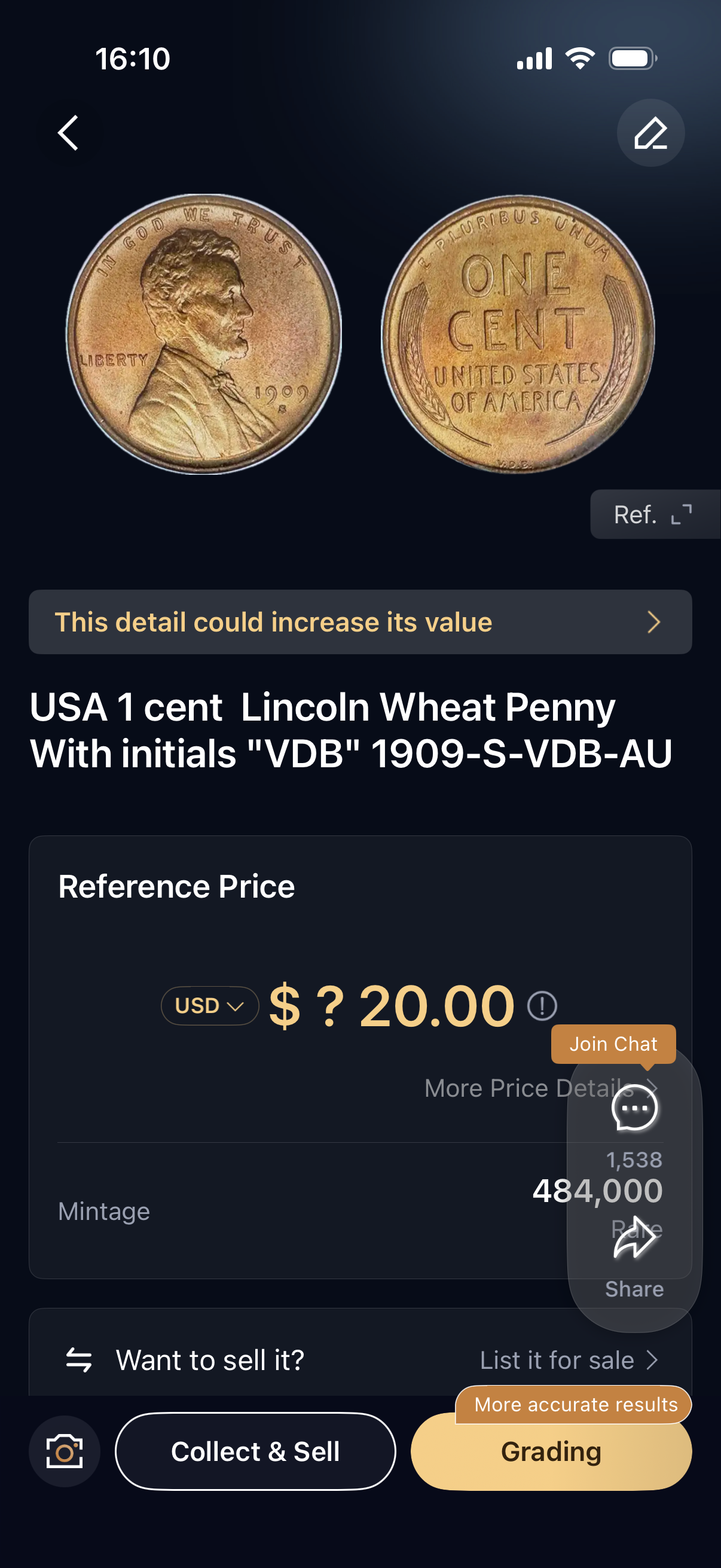
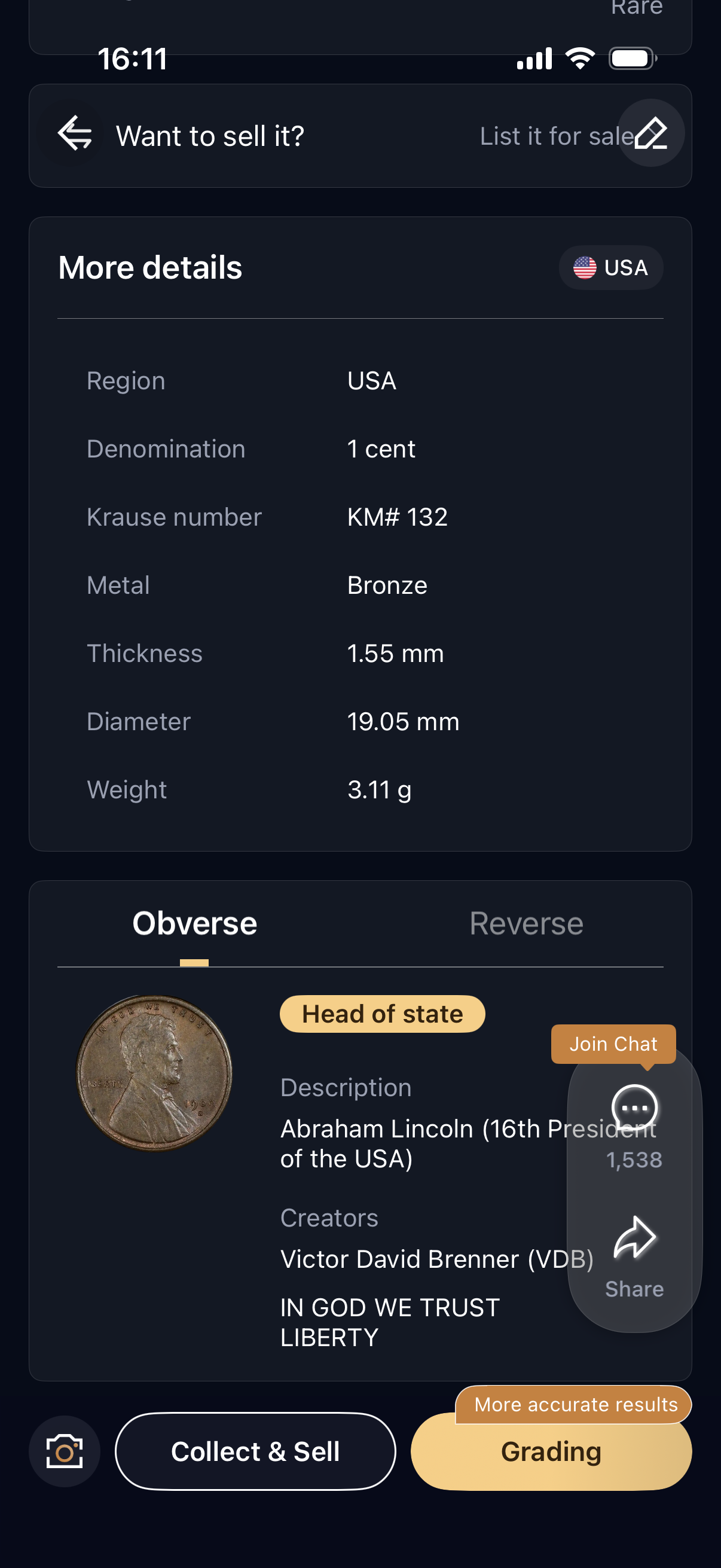
Mintage match: 484,000 coins. The supplied result identifies a Lincoln Wheat Penny with VDB initials and includes “1909-S-VDB” in the coin name. Its Mintage field agrees with the original government report and the four reference platforms above.
This example shows consistency for the displayed issue and its historical production total. The app result provides the specific year, mint and VDB designation needed to choose the appropriate catalog entry, rather than a generic 1909 cent entry.
The result also displays About Uncirculated (AU), a broad condition category rather than a numerical grade. This example checks the displayed catalog fields; it does not measure overall identification accuracy or authenticate the coin. The “Ref.” images do not document the original input photographs.
Field-by-field specification comparison
| Field | Heritcoin screen | Reference | Comparison |
|---|---|---|---|
| Country / denomination | USA / 1 cent | uCoin: USA / 1 cent | Matches |
| Catalog number | KM# 132 | Numista anduCoin: KM# 132 | Matches the catalog type; this number alone does not identify the 1909-S VDB issue. |
| Metal | Bronze | uCoin: Bronze;PCGS CoinFacts: 95% copper, 5% tin and zinc | The bronze label is consistent; the app screen does not state alloy percentages. |
| Weight | 3.11 g | PCGS CoinFacts anduCoin: 3.11 g | Matches the catalog specification. |
| Thickness | 1.55 mm | uCoin: 1.55 mm | Matches uCoin; not listed on the PCGS entry reviewed. |
| Diameter | 19.05 mm | uCoin: 19.05 mm;PCGS CoinFacts: 19.00 mm | Matches uCoin; differs from PCGS by 0.05 mm. The sources reviewed do not explain the difference. |
| Obverse / designer | Abraham Lincoln / Victor David Brenner (VDB) | uCoin: Abraham Lincoln and Victor David Brenner;PCGS CoinFacts: Victor David Brenner | Matches the displayed design attribution. |
The uCoin entry covers the Wheat Penny type across multiple years; the date, S mint mark and VDB designation are checked separately above. These displayed dimensions and weight are catalog data, not measurements of the photographed specimen.
Demand: who wants this coin, and why?
Look for evidence of buyers choosing comparable coins, rather than relying on the word “rare” in a listing. Several relevant sales are more useful to this research than a single ambitious asking price.
Rarity needs a market of interested buyers. An obscure item can be hard to locate without attracting much competition. A widely collected series can draw more buyers even when many examples exist. PCGS explains collectible prices through the interaction of supply and demand rather than age, scarcity or condition in isolation.
Sources:PCGS: What Determines Value in Collectibles?
Examples of collector demand
Complete a date-and-mint set
A collector completing a Lincoln cent set may seek the missing date and mint combination.

Collect a distinctive design
A type collector may seek a representative design rather than every year.

Specialize in a variety
A variety specialist may seek the documented doubled-die pattern.
These are a few examples of collecting interests. Completed sales provide evidence of actual buyer demand.
Condition: why do buyers distinguish between similar coins?
Condition changes the comparison group. Before borrowing a price from another coin, check whether both examples have comparable wear, surface problems and grading designations.
Compare the preservation of the coin, not just its brightness. NGC’s traditional numerical scale runs from 1 to 70. Mint State grades run from MS 60 to MS 70 and indicate no circulation wear; lower Mint State grades can still have substantial marks. About Uncirculated (AU) coins show limited wear. A broad “MS” label does not identify a specific numerical grade.
Surface problems also matter. NGC may assign a Details grade to coins with conditions such as improper cleaning or damage that prevent a normal numerical grade. A Details coin should not be priced as though it were an otherwise equivalent, problem-free numerical example.
Sources:NGC: Coin Grading Scale·NGC: Details Grading


Grade examples use different specimens and dates.
Varieties and mint errors: does the difference change the identity?
First establish whether the feature is a recognized variety, a mint error or later damage. Only then look for sales of the same attributed feature; an ordinary example’s price does not measure an error premium.
A valuable production difference needs an identifiable cause and a recognized attribution. A variety differs from the basic type in a repeatable, distinctive way; a mint error results from a production mistake. NGC distinguishes these categories and does not treat every small die defect or form of doubling as a recognized variety.
Damage after the final strike is a different issue. PCGS explains that even damage occurring inside a mint can be post-mint damage if it happens after striking. Scratches, dents or distorted lettering are therefore reasons to investigate, not evidence of a premium.
Sources:NGC: Variety vs. Mint Error·PCGS: Mint Errors Versus Post-Mint Damage
Six varieties and mint errors worth understanding
A doubled die and a double strike are different events. A doubled die carries the duplicated design on the die itself; a double strike results from a coin receiving another strike. Identify the mechanism before comparing prices.
1955 Lincoln cent: doubled die obverse
Category: recognized die variety. Look at the date and lettering on the obverse. NGC uses this issue to explain how a duplicated die design produces the same pattern on coins struck from that die.
Do not confuse it with machine doubling. A flat, shelf-like extension is different from separated die doubling. Machine doubling usually does not add value; it is not evidence that a coin belongs to the famous 1955 variety.
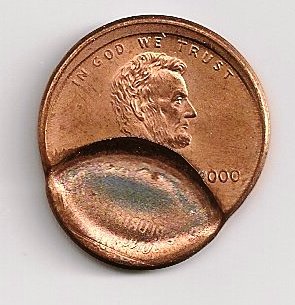
Lincoln cent: off-center strike
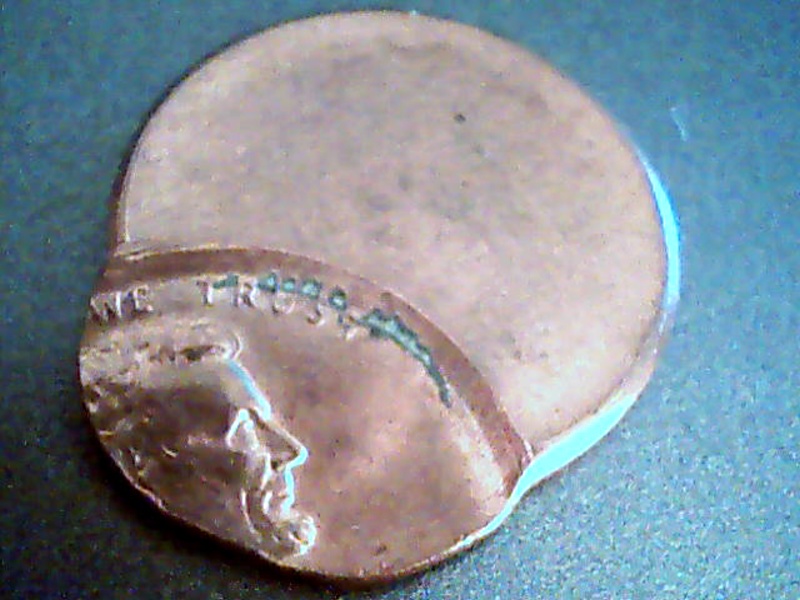
Category: mint error. NGC describes an off-center strike as an incorrectly centered strike with part of the design missing. The unstruck area and displaced design provide a starting point for examination.
Do not diagnose it by shape alone. A bent, cut or ground-down coin may also look unusual. Weight can help investigate a coin, but one weight reading does not authenticate an error.
Double strike: a flip-over example

What happens: a coin receives another strike after failing to leave the press normally. This example illustrates a flip-over multiple strike, with overlapping impressions.
Why collectors compare it separately: the number and placement of strikes define the error. Compare similarly attributed examples and preservation; this is a different mechanism from a doubled die.
Brockage: a mirrored, incuse impression
What happens: a struck coin interferes with the next strike, impressing a recessed mirror image into another coin.
What to compare: the extent and clarity of the brockage, the coin type and condition. A complete impression and a partial one describe different examples; a later impression made by squeezing coins together is not a mint error.
Broadstrike: metal spreads beyond the collar
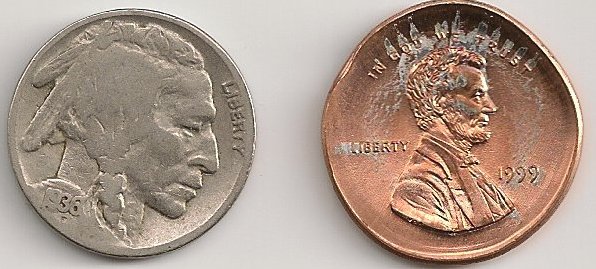
What happens: the retaining collar fails to contain the planchet during striking, allowing the coin to spread outward.
What to compare: the expanded shape, retained design and any accompanying errors. An enlarged coin with its design retained should not be priced automatically as an off-center strike with missing design.
Die cud: a raised area at the rim

What happens: part of the die breaks away at its edge. Metal flows into the missing area during striking, leaving a raised, largely featureless patch connected to the rim.
What to compare: the location, size and documented die state. A substantial cud is different from a minor die crack or metal added to a coin after manufacture.
References:NGC: Doubled Dies vs. Machine Doubling·NGC: Variety vs. Mint Error.
A documented sale: when the wrong metal changes the comparison


$264,000 reported sale: 1943 bronze cent, PCGS AU55, CAC. Heritage Auctions records this result on January 16, 2025, for auction 1380, lot 4631, from the Whispering Pines Collection. The amount is the auction page’s reported sold price, not a current estimate.
Heritage estimates about 20 surviving Philadelphia examples, separately from Denver and San Francisco coins. This is an estimated surviving population, not a recorded mintage.
This exceptional wrong-metal error trades in a different market from an ordinary steel cent. Its sale does not establish a standard premium for other mint errors.
Compare the feature before assuming a premium
| What you see | Possible explanation | What to compare |
|---|---|---|
| Distinct duplicated letters or digits | A doubled die variety | The specific issue’s documented doubling pattern, including the position and separation of details. |
| Flat, shelf-like doubling | Machine doubling during striking | NGC’s close-up comparison with genuine die doubling. This is not automatically post-mint damage, but it is not a doubled die variety. |
| Displaced design with an unstruck area | An off-center mint error | The whole coin, including both faces and edge, rather than its outline alone. |
| Gouges, scrapes or distorted metal after the final strike | Post-mint damage | Whether the feature was produced by the strike or disturbed an already struck surface. |
For additional close-up photographs, useNGC’s illustrated doubling comparison andPCGS’s illustrated error-versus-damage explanation.
Value comes after attribution. Once a feature is identified, compare completed sales for that specific variety or error and condition. A price range covering an entire error category is too broad to establish what an individual coin is worth.
Metal content: how much of the value comes from the material?
Metal content answers a different question from collector demand. Calculate the material reference first, then compare it with relevant collector transactions. Do not add the full metal value to a sale price that already reflects the coin as a whole.
Use composition and weight, not color, to estimate precious-metal content. A standard Morgan dollar weighs 26.73 grams and is 90% silver: approximately 24.06 grams of fine silver. That specification describes the issue; it does not authenticate a particular specimen.

From coin weight to fine-silver weight
Composition by mass: 90% silver, 10% copper. The bar represents alloy proportions, not separate layers inside the coin.
Indicative metal value = fine-metal weight × metal price in the same unit
If your metal price is quoted per troy ounce, convert the weight before multiplying. NGC provides separate melt-value and collector-price resources. Compare metal calculations from the same date, and keep them separate from a seller’s offer or an auction result.
Sources:PCGS CoinFacts: 1921 Morgan Dollar·NGC: U.S. Silver Coin Melt Values
Historical significance: why does the story interest collectors?
A documented event can explain why collectors seek an issue. Use that history to understand interest, then use market evidence to investigate price.
The 1943 steel cent: a wartime change you can see

In 1943, the U.S. Mint made cents from zinc-coated steel to conserve copper for World War II. The silver-colored appearance reflects this temporary material change; it does not indicate silver content.
This gives collectors a tangible link to wartime production. It is an example of historical interest in an ordinary issue, whereas the1943 bronze cent above is an exceptional wrong-metal error. The shared date and historical setting do not make the two coins equally rare or valuable.
Sources:U.S. Mint: Historic Coin Production·PCGS: Why Was the 1943 Steel Cent Made?
Provenance: does this particular coin have a documented story?
Separate the history of the coin type from the history of this individual object. An auction photograph matching the specimen supports an ownership trail; a general story about the series does not.
Documented provenance gives collectors information that the coin alone may not reveal. NGC notes that links to prominent past collectors can increase appreciation of a specimen. Keep auction descriptions and photographs that identify the actual coin. A pedigree label or family story does not automatically establish an additional dollar amount; the supporting record and market response still matter.
Sources:NGC: Policy on Pedigrees

PCGS certificate 48302194
One coin, a documented collection history
- Donald G. Partrick Collection
Named in the later Heritage catalog’s provenance.
- April 2021 · Heritage lot 3068
The catalog records a $240,000 sale, then described as NGC AU55.
- January 16, 2025 · Heritage lot 4631
Offered from the Whispering Pines Collection as PCGS AU55, CAC; sold for $264,000.
The 2025 catalog links these appearances; the price change alone does not measure a provenance premium.
Face value, melt value and collector value
The word “value” can refer to different things. Before comparing two prices, check what each number measures.

$1 denomination
The amount printed on the coin identifies its face value.
About 24.06 g of fine silver
For a standard Morgan dollar, multiply this silver weight by a dated silver price in the same unit. The result changes with the metal price.
Compare the exact issue and condition
Completed sales show what buyers paid for specific specimens. The next section compares two MS63 examples and their recorded results.
These are three ways to describe value, not three amounts to add together. A collector’s purchase price already reflects the coin as a whole.
Sources:PCGS: Morgan dollar specifications·NGC: Melt values.
A comparable-sale example: the same grade can bring different prices
The 1909-S VDB case illustrates low mintage, and the 1943 bronze cent illustrates a recognized mint error. A brief Morgan dollar comparison adds another lesson: even the same issue and numerical grade do not guarantee the same selling price. For identification and issue-specific price references, see our1921 silver dollar value guide.
Same issue and grade, different recorded results
These two PCGS auction records describe 1921 Morgan dollars graded MS63 by PCGS. They show why a single result should not become “the value” of every coin with that date and grade.
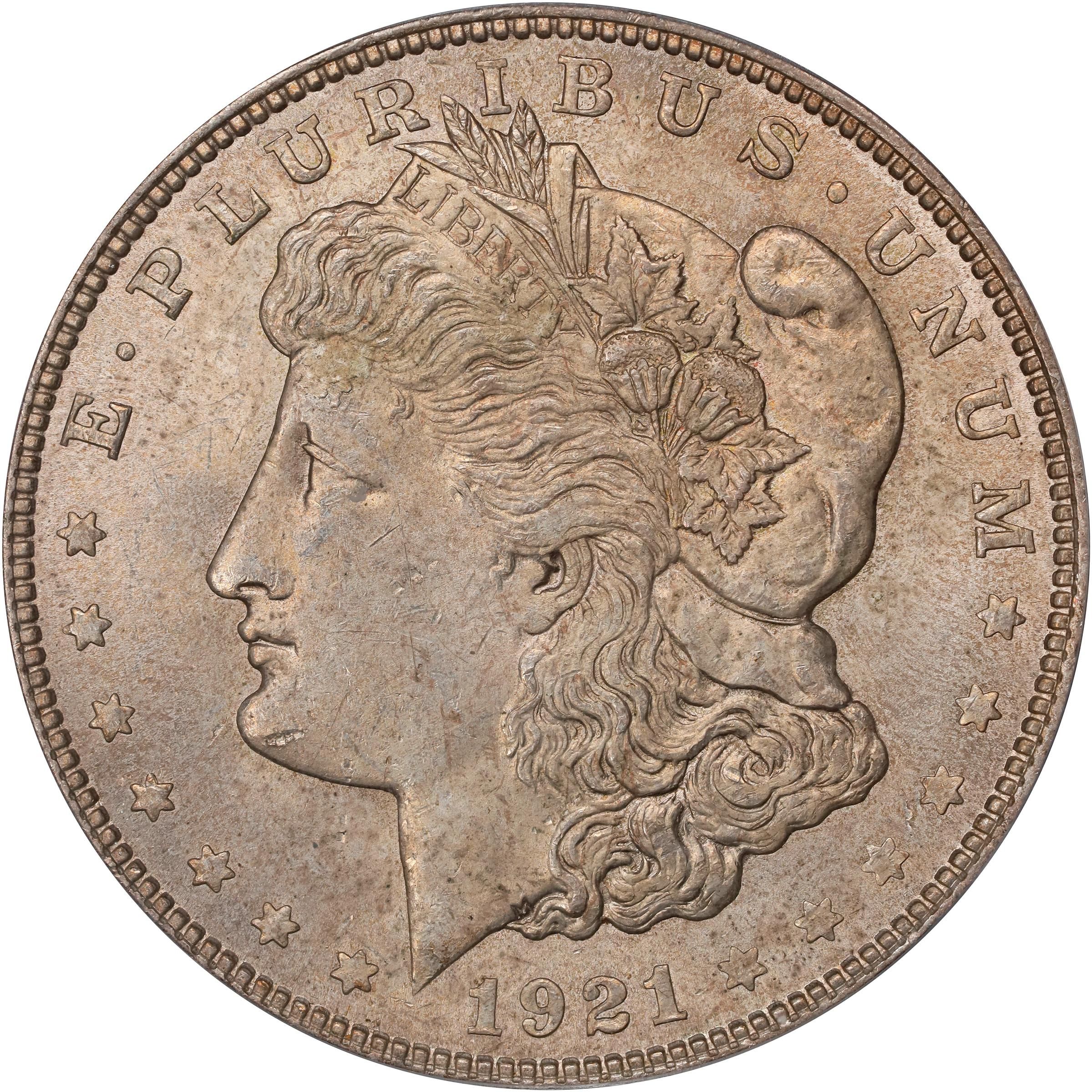
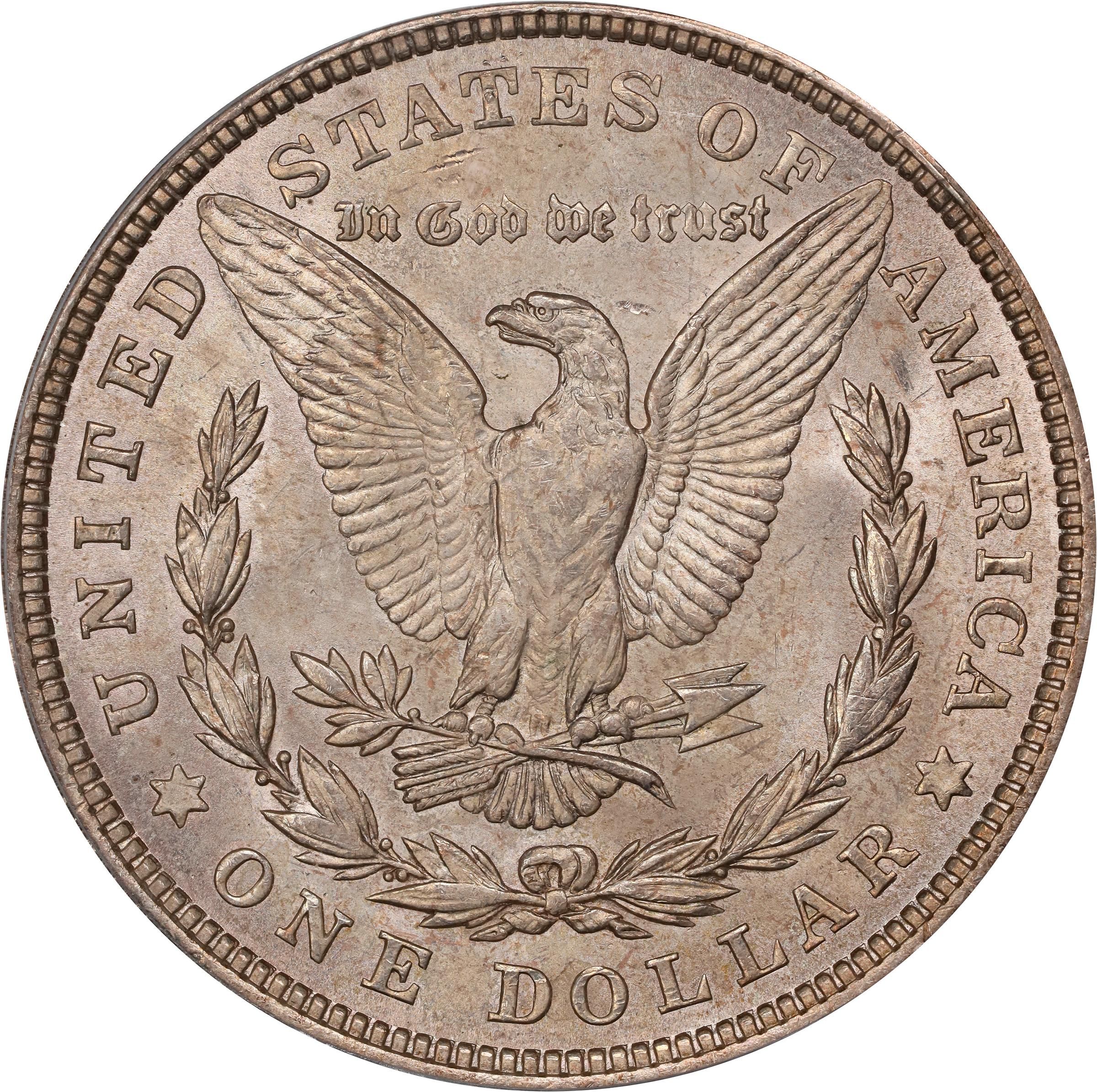
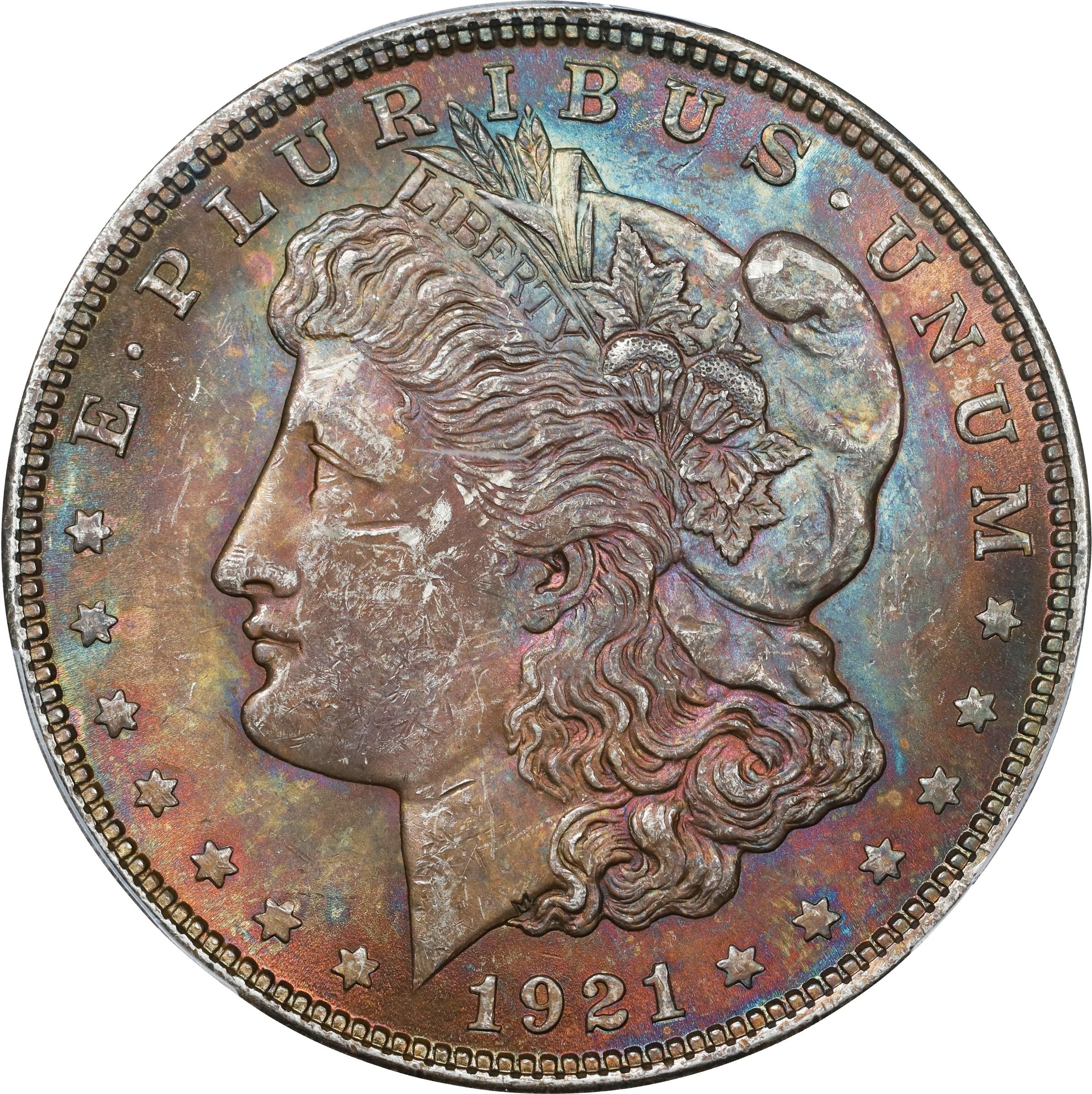
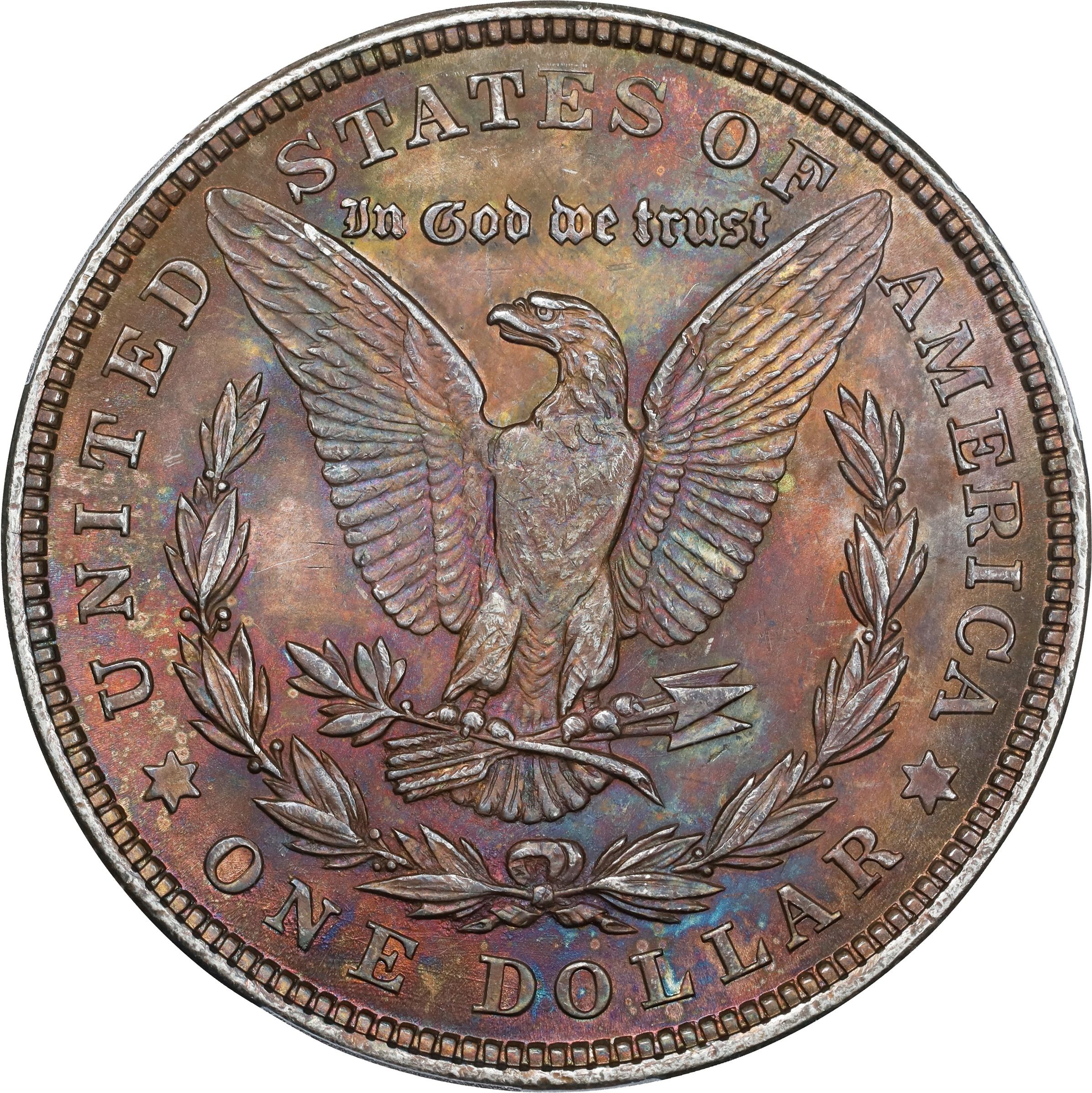
| Recorded example | Auction and date | Reported sale price | Record |
|---|---|---|---|
| 1921 Morgan, PCGS MS63; OGH Generation 2.2 | Stack’s Bowers, August 2025; lot 96168 | $65.00 | View PCGS record |
| 1921 Morgan, PCGS MS63 | Stack’s Bowers, May 2026; lot 93521 | $317.20 | View PCGS record |
These are historical results for different specimens and sale dates, not a current price range. They cannot isolate the effect of toning, holder type or buyer competition. Prices follow PCGS’s “Sale Price” field; the entries do not separately specify buyer’s-premium treatment. OGH means an older PCGS green-label holder.
Three archived eBay sales: what an evidence record contains
All three PCGS entries identify a Philadelphia 1921 Morgan dollar, PCGS MS63, under coin number 7296. Each has a different certification number. The dates below are PCGS’s weekly sale-reporting windows, not verified individual sale days.
| Reported sale window | eBay item / lot | PCGS certificate | Reported sale price (USD) | Source |
|---|---|---|---|---|
| January 20–26, 2019 | 283339385467 | 80648378 | $41.71 | PCGS sale record |
| February 10–16, 2019 | 223374889718 | 32245620 | $34.01 | PCGS sale record |
| June 16–22, 2024 | 375480865533 | 41029871 | $52.00 | PCGS sale record |
Read these as historical evidence, not a current price range. The first two records are close in date; the third is from 2024 and should be kept separate when assessing market conditions. PCGS labels the entries as auctions and reports the amounts above as “Sale Price.” Shipping, taxes, fee treatment and any Best Offer information are not separately disclosed in these records, so no delivered total is calculated.
For a current estimate, use recent sales from a narrow date range and compare the actual specimens. These archived entries document PCGS’s reported results.
How to check whether your coin may be valuable
- Start with identification in Heritcoin. Take clear front and back photographs and review the suggested coin identity. Check the country, denomination and date against the coin; photograph the edge separately if it contains relevant details.
- Find the mint mark and any attribution. Compare its location and shape with a reference for that issue. Do not infer rarity simply because a mark is absent.
- Record the condition honestly. Note visible wear, scratches and surface problems. If a certified holder is present, record the complete grade, designations and certificate number.
- Cross-check the identification fields. Compare Heritcoin’s displayed mintage and specifications with the exact issue in PCGS CoinFacts or NGC Coin Explorer, as in the1909-S VDB example. A matching catalog field supports consistency; uncertain mint marks or varieties still need examination.
- Compare several completed sales. Match the issue, grade, grading service, designations and relevant surface characteristics. Record dates, currency, fees and shipping where available.
- Build your collection record. Use Heritcoin’s collection feature to organize the identified coin. Keep original photographs, source links and research dates alongside your record so you can revisit the estimate later. For unresolved details, review thehuman appraisal options.
Using eBay sales without confusing them with asking prices
eBay’s Product Research documentation says the tool includes actual sold prices, including accepted Best Offers. Use a narrow search and inspect each result: an unrelated coin, a multi-coin lot or a different grade is not a comparable sale. If the accepted offer is not visible in the information you have, do not substitute the original asking price.
Sources:eBay: Product Research
When should you ask a coin expert?
Seek specialist help when an unresolved detail could materially change the identification or the value. Examples include an uncertain mint mark, a suspected recognized variety, signs of alteration or a coin that may require authentication. A video or a photograph can help you learn what to examine, but it does not replace inspection of the actual coin.
Tell the expert what you need: identification, authentication, grading, a sale estimate or a written appraisal for a particular purpose. Ask what the service includes and obtain the current total cost, including applicable shipping and insurance, before proceeding.
Prepare clear original photographs, measurements you actually took, holder details and existing records. Avoid cleaning the coin to improve the photographs: cleaning can change the surfaces that need to be assessed.
Sources:NGC: Details Grading
Heritcoin expert appraisal: choose a specialist and service
Heritcoin’s human appraisal options, shown under the HeriBase name in these screens, let you compare specialists and select a service. See ourcoin app comparison for a broader feature comparison.
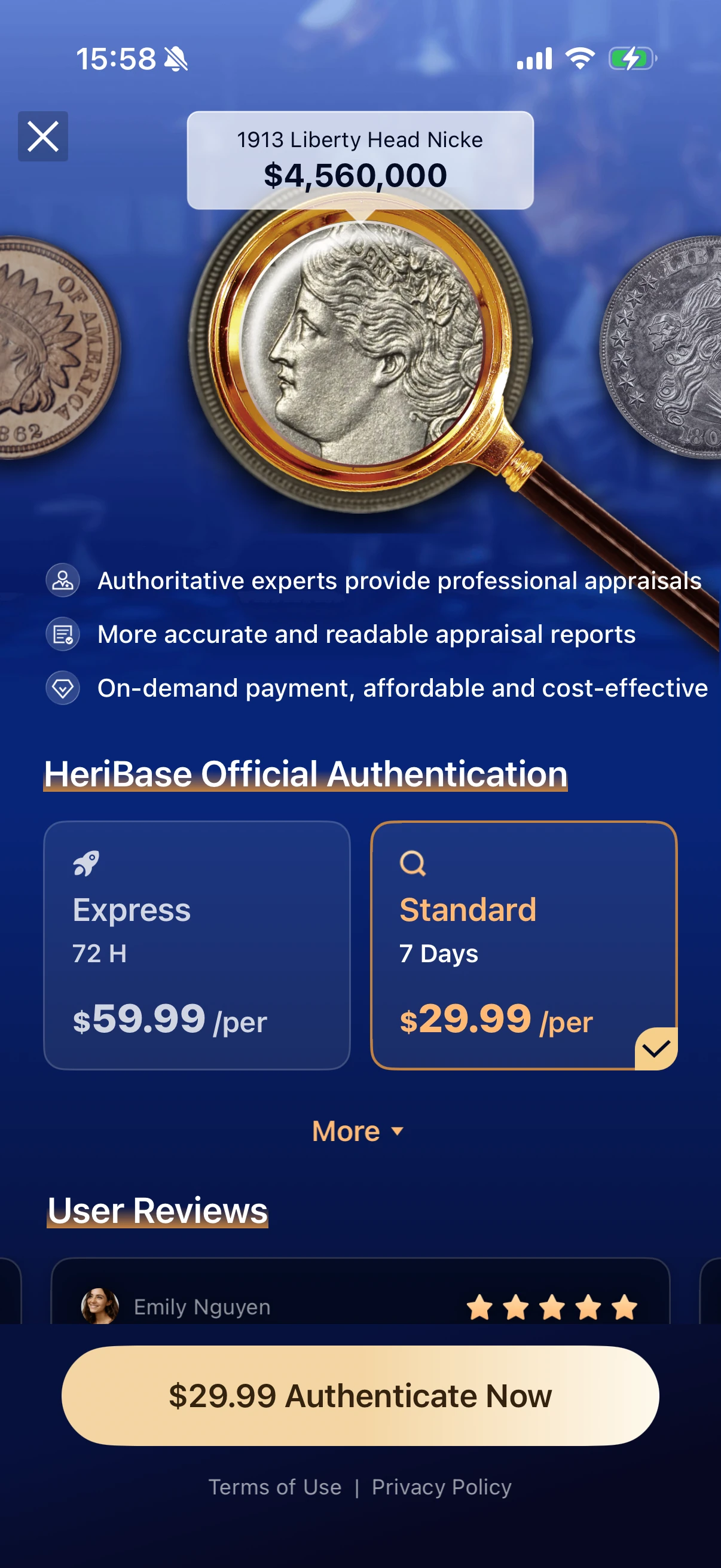
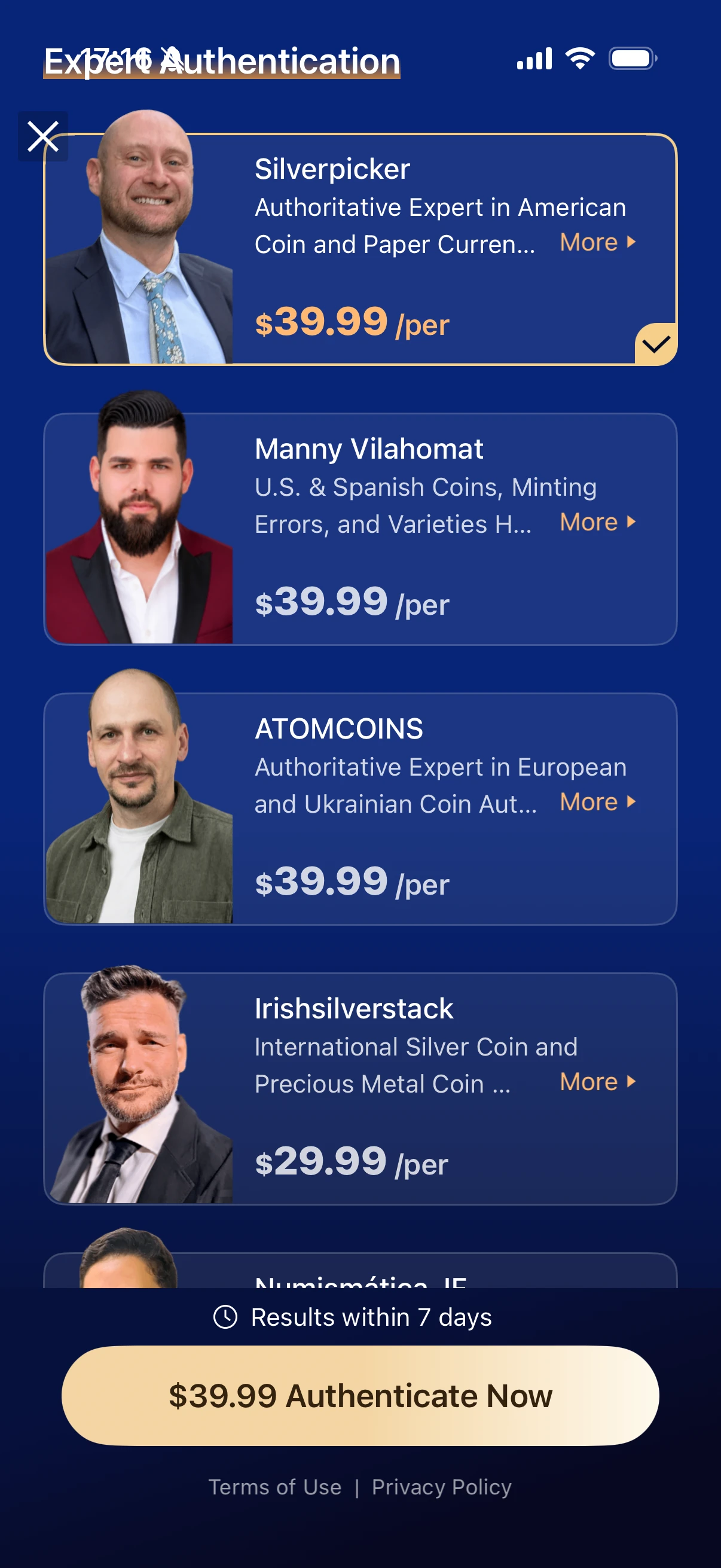
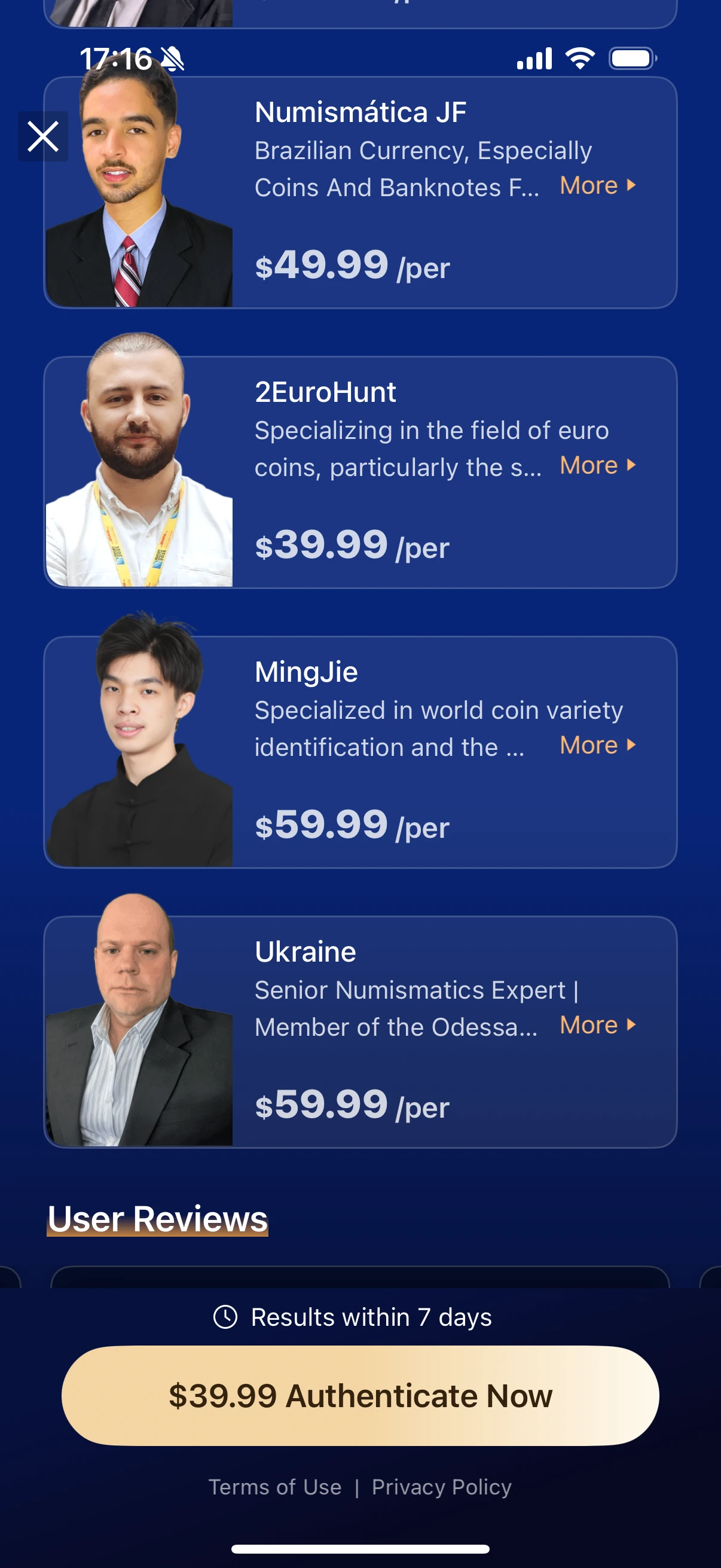
Compare the selected specialist’s expertise, fee and delivery time in the app. The screens illustrate Express and Standard options; confirm current terms before ordering.
Ask what the appraisal covers and whether physical examination or a separate grading submission is needed. Human appraisal is charged separately from the app subscription; an appraisal is not automatically a PCGS or NGC certification.
Published by the Heritcoin Team. Product screenshots show our own service.
Watch: coin collecting basics from the ANA
Coin Collecting Basics: Start Here | ANA eLearning Academy
 ▶ Watch on YouTube
Continue learning with this ANA eLearning Academy video. As you watch, relate the discussion to the factors above: the exact issue, available supply, collector interest and the coin’s condition.
Frequently asked questions
Are old coins always valuable?
No. Age does not establish a market price. Identify the issue and compare its available supply with collector demand; an old coin can be common or attract relatively few buyers.
Does a low mintage guarantee a high value?
No. Original production is only part of the picture. Surviving examples, preservation and demand affect the market for a particular issue.
Are coins without a mint mark valuable?
The absence of a mint mark is not enough to decide. Some issues normally lack a mark. Identify the design and date, then check the mint-mark conventions for that series.
Does cleaning a coin increase its value?
Do not assume so. Improper cleaning can damage surfaces and lead to a Details designation. Preserve the coin’s current state while seeking informed advice.
Can an identification app give me the exact selling price?
An app can provide an identity suggestion or reference estimate. A final selling price depends on the actual specimen and transaction. Confirm the issue, condition and comparable sales before relying on the estimate.
Should I use asking prices or completed sales?
Completed sales provide transaction evidence; asking prices show seller expectations. Use multiple closely matched records and check the price basis, including accepted offers and fees where disclosed.
Sources:PCGS: What Determines Value in Collectibles?·NGC: Details Grading·eBay: Product Research
What to remember before putting a value on a coin
A coin becomes valuable to collectors when demand for its particular characteristics meets limited available supply. Rarity and demand set the context; condition, recognized varieties or errors, metal content, history and provenance explain why buyers may distinguish one coin from another.
The examples show different parts of that process: the 1909-S VDB has a documented low mintage; the 1943 bronze cent belongs to a rare mint-error market; Morgan dollar sales show why one transaction cannot define every specimen’s value.
- Identify: confirm the date, mint mark and any recognized variety or error.
- Assess: examine wear, surfaces and relevant specifications; resolve uncertain authentication or attribution with a specialist.
- Compare: use several closely matched completed sales, recording their dates and price basis.
Put this into practice with Heritcoin: start with a coin identification, review its displayed details, then check authoritative references and comparable sales. Organize the coin in your collection and consult a human expert when a detail could materially change its identity or value. Heritcoin provides a starting point for that research; the evidence for the individual coin determines how useful an estimate is.
Sources and references
Checked September 11, 2026. Individual coin entries and historical sale records are linked beside the relevant examples.
- PCGS: What Determines Value in Collectibles?
- NGC: Coin Grading Scale
- NGC: Variety vs. Mint Error
- eBay: Product Research
- ANA: Coin Collecting Basics: Start Here
More references and image credits
The Heritcoin Team compared published catalog fields and dated sale records for this guide. The 1909-S VDB example is a single screenshot comparison, not an accuracy benchmark. Linked organizations are sources, not endorsers of this article or our service.
Additional references
- NGC: Details Grading
- PCGS: Mint Errors Versus Post-Mint Damage
- NGC: U.S. Silver Coin Melt Values
- NGC: Policy on Pedigrees
- PCGS CoinFacts: 1921 Morgan Dollar
- PCGS CoinFacts: 1921 High Relief Peace Dollar
- PCGS Auction Prices: Stack’s Bowers lot 96168
- PCGS Auction Prices: Stack’s Bowers lot 93521
Image credits
- Peace dollar: contributor-supplied photograph.
- 1909-S VDB Lincoln cent, obverse and reverse. Photo by Bobby131313, image courtesy ofCCF Numismatics, viaWikimedia Commons·CC BY-SA 3.0. Image unchanged.
- Photo credited to PCGS onWikimedia Commons.
- Photo: Contactsmc,Wikimedia Commons,CC BY-SA 3.0. Image unchanged.
- Photo: Economicrealist,Wikimedia Commons,CC BY-SA 3.0.
- Photo: Economicrealist,Wikimedia Commons,CC BY-SA 3.0.
- Photo: Economicrealist,Wikimedia Commons,CC BY-SA 3.0.
- Photo: Economicrealist,Wikimedia Commons,CC BY-SA 3.0.
- National Numismatic Collection, National Museum of American History. Photograph by Jaclyn Nash.Image source.
- Grade illustrations:PCGS Grading Standards.
- 1943 bronze cent and holder: images courtesy of Heritage Auctions, published inMint Error News; certificate 48302194.
- Morgan dollar auction photographs: Stack’s Bowers, lots 96168 and 93521, linked with each photograph.


.jpg)