

Are national park quarters worth more than 25 cents?
Start with the coin’s 25-cent face value, then check what makes your example different: mint mark, finish, condition or a confirmed error. Scan both sides in HeriBase to identify the issue and see its available reference price. If the price seems wrong, contact platform support or request a human appraisal in the app.
A park design alone does not establish a collector premium. Before using a higher price, match the complete issue and condition to actual sales. This guide explains the 2010–2021 America the Beautiful series, shows where to look and works through a recorded sale.
| What you find | Your next check |
|---|---|
| A familiar park design in pocket change | Read the year on the back and mint mark on the front. Do not assume an unusual picture means rarity. |
| W mint mark | Identify the 2019 or 2020 issue; for 2020, inspect the V75 privy mark too. |
| S mint mark or collector packaging | Establish the finish and metal before choosing a price comparison. |
| An unusual surface or shape | Save clear detail photos. Ask whether it is a mint error or later damage. |
What are national park quarters?
“National park quarters” commonly means the America the Beautiful quarters issued from 2010 through 2021. The series has 56 reverse designs honoring national parks and other national sites: one from each state, the District of Columbia and five U.S. territories. The front features George Washington.
Five designs appeared each year from 2010 through 2020, followed by the final Tuskegee Airmen design in 2021. That makes the place name as important as the year: “2020 quarter” does not identify a single design. Historic sites are part of the series even when their names do not contain “National Park.”
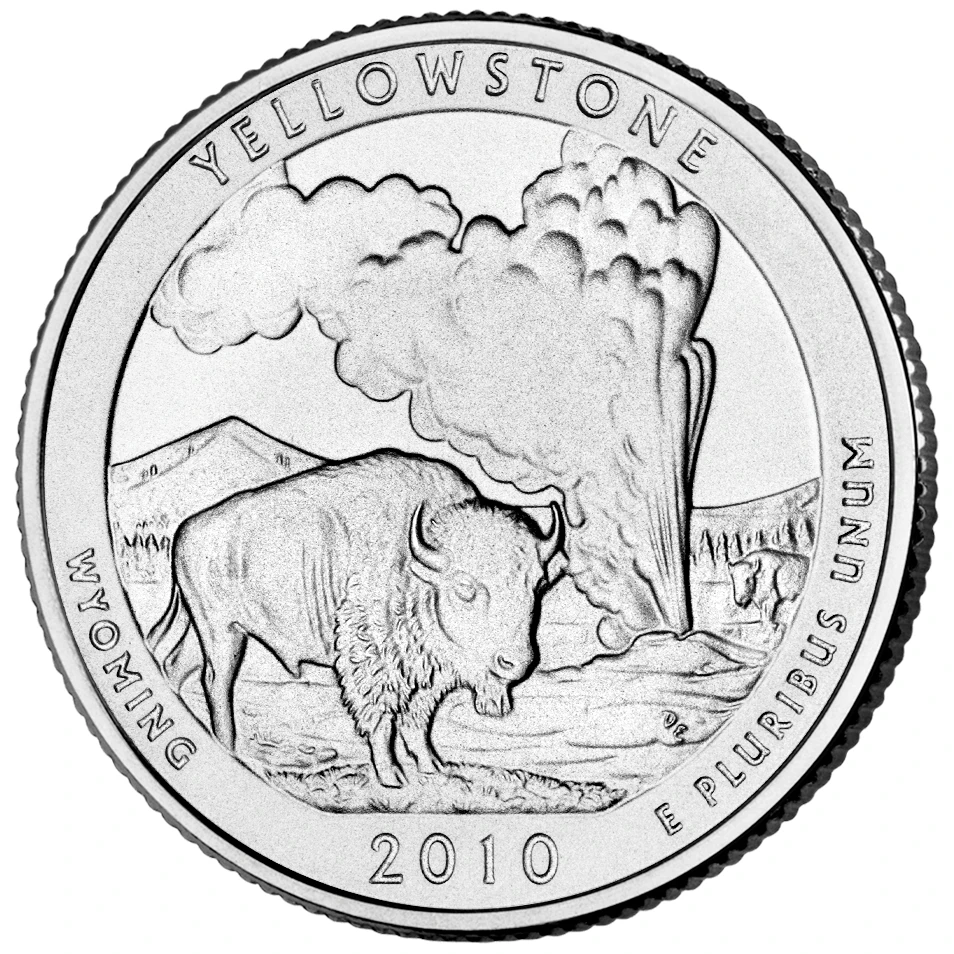
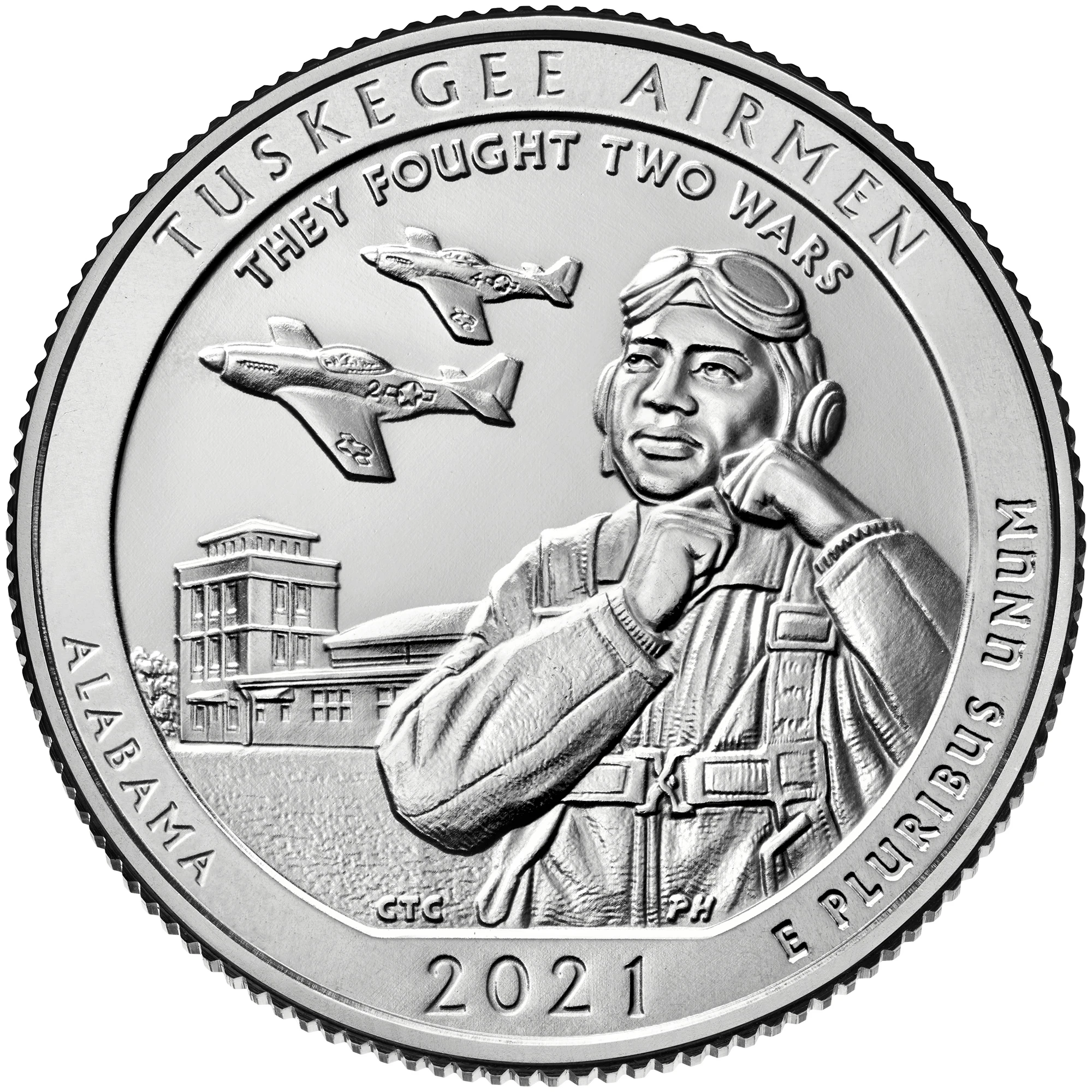
Compare the two examples: the 2010 Yellowstone reverse names Wyoming; the 2021 Tuskegee Airmen reverse names Alabama. These designs belong to the same series despite their different subjects. Use the inscriptions to narrow the issue before researching value.
Where do I find the date, place name and mint mark?
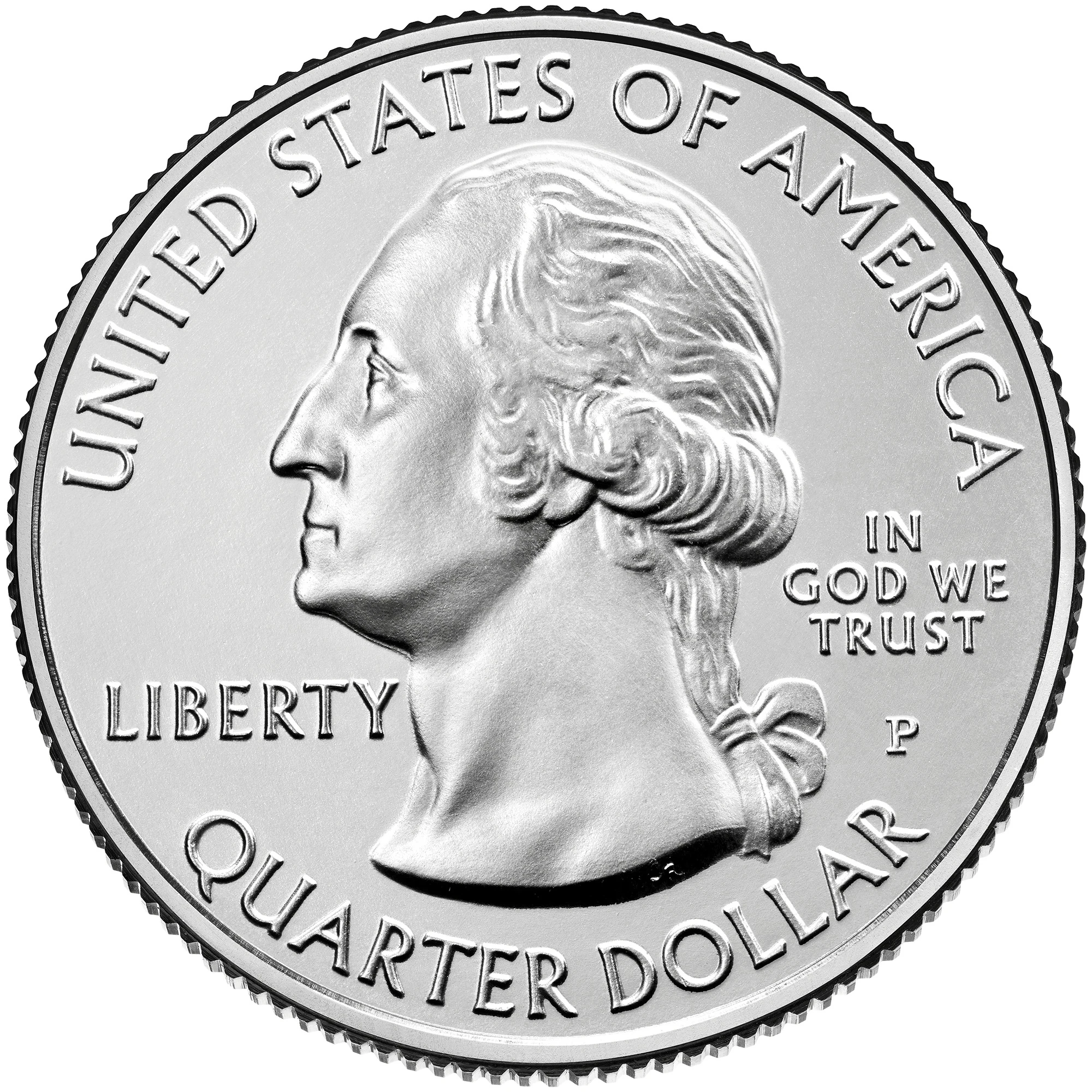
Read the reverse to identify the design and year; turn to Washington’s portrait to check the mint mark. The American Samoa example below shows why one photograph is not enough.
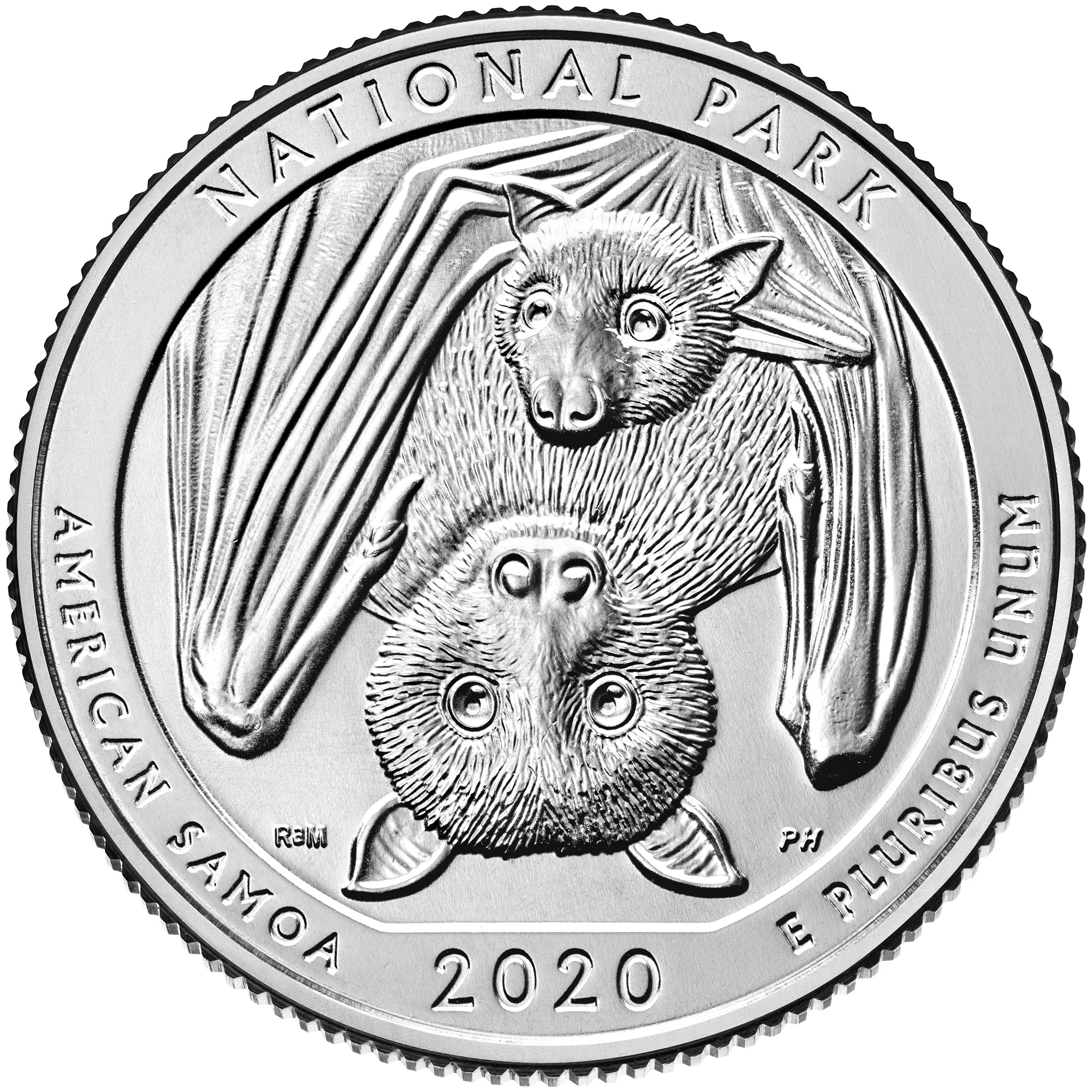
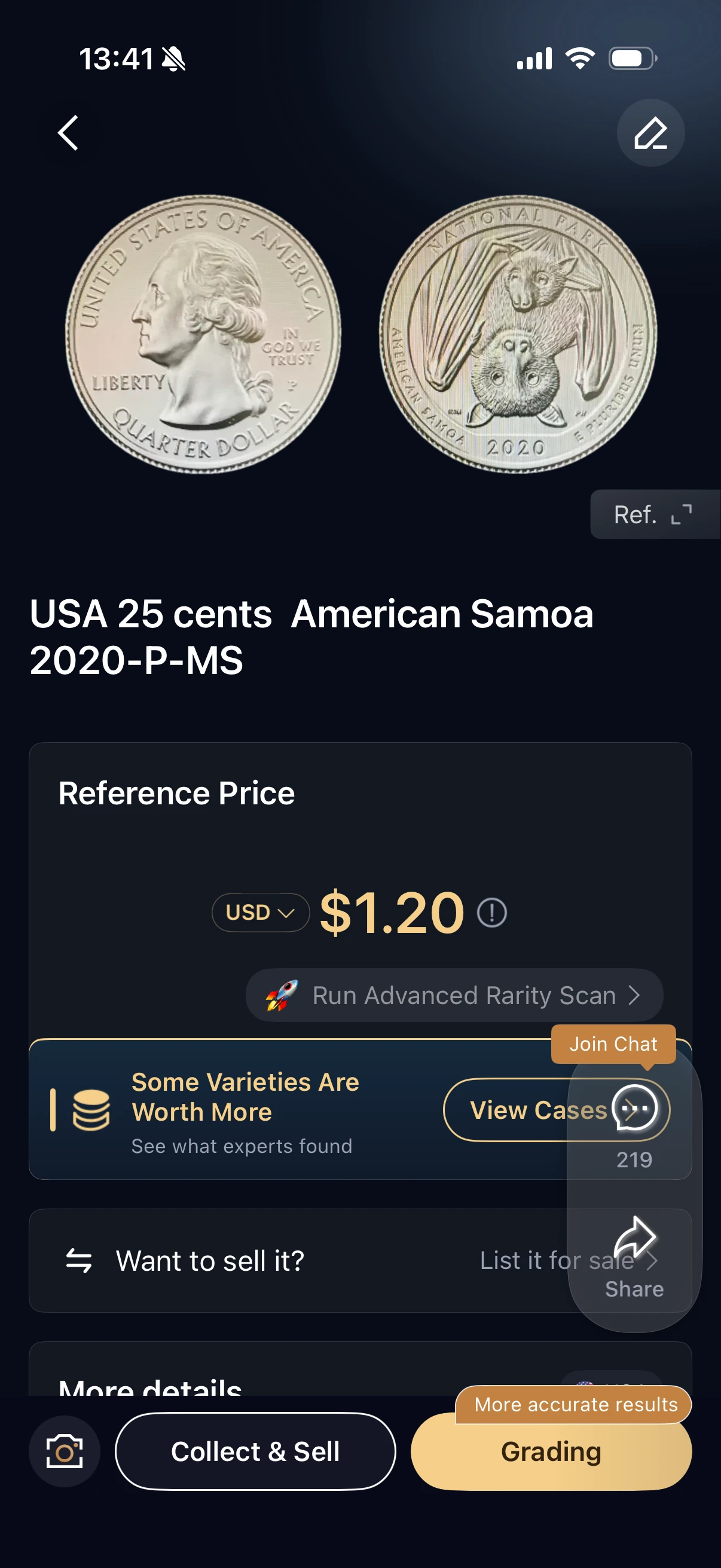
- Design: the fruit bat mother and pup identify the National Park of American Samoa reverse.
- Date and place: read 2020 at the bottom and AMERICAN SAMOA around the lower rim. Record both.
- Mint: look to the right of Washington’s portrait, near the motto. The illustrated obverse has P, for Philadelphia.
- Condition: inspect the open fields and raised details for wear, marks and surface damage. Photograph the edge if the metal is uncertain.
Write a useful starting description such as “2020-P American Samoa quarter, circulated, ungraded.” This separates it from a W-mint example, a Proof or a different year without claiming a grade you have not established. Proof describes a special manufacturing process for collector coins, not a guarantee of perfect condition or silver content.
Which versions deserve a closer look?
The same reverse can appear on coins made at different mints and with different finishes. Keep those categories separate when comparing prices. MS means Mint State: an unworn regular-strike coin graded on the MS60–MS70 scale; it may still have contact marks. Proof and regular strike describe methods of manufacture. Mint State describes condition, including for regular-strike coins distributed to collectors. See our guide to Proof, Mint State and surface condition for examples.
| Mark / version | What it tells you | Price comparison to use |
|---|---|---|
| P or D | Philadelphia or Denver. A mint mark identifies the mint; it does not establish condition. | The same design, year and mint, with similar wear and surfaces. |
| 2019 W | West Point quarters were released into circulation with a planned two million of each of five designs. | The exact W issue; do not substitute a P or D coin with the same reverse. |
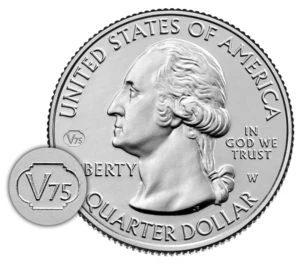
| 2020 W / V75 | West Point issues carry the commemorative V75 privy mark. | The same design, W mark, grade and relevant certification details. |
| S | San Francisco. S alone does not tell you that a coin is silver or a Proof. | Confirm metal and finish from the specific product or certification first. |
W and V75 are different details
W identifies West Point. V75 commemorates the 75th anniversary of the end of World War II; it appears within an outline based on the Rainbow Pool at the World War II Memorial. It is an intentional design feature, not a mint error. PCGS records a mintage of 2,000,000 for the 2020-W American Samoa V75 issue. That is a production total, not the number of surviving high-grade examples.
Why an S mark needs another check
In 2012, the Mint began offering S-marked America the Beautiful quarters in a circulating-quality finish through collector bags and rolls. These differ from Proof products. A bright surface or an S is therefore not enough to choose a silver-Proof price. Keep original packaging and record the exact product description when available.
How do I turn an identification into a useful price?
Use a reference price as a starting point, then check whether a buyer has paid a comparable amount for the same kind of coin. A price attached to a different mint, finish or certified grade cannot establish your quarter’s value.
- Confirm the full issue. Match the date, site, mint mark, metal and finish. Save the identification result and both-side photos.
- Match condition honestly. If yours is ungraded and worn, do not search only for the highest certified grades. Describe visible wear and damage instead.
- Find completed sales. Check that the lot sold, contains a single comparable coin and shows enough detail to verify the match.
- Record the date and costs. Note currency, buyer’s premium when disclosed, shipping and taxes. A reported auction result is not necessarily the seller’s net receipt.
- Keep the uncertainty visible. Several relevant recent sales can support a range. One old result is one historical example.
A documented example: $31 for a specific 2020-W quarter
In April 2021, a 2020-W American Samoa quarter graded NGC MS65 sold for $31 at David Lawrence RC’s Internet Auction #1165 (lot 8225), as recorded by PCGS Auction Prices.
NGC is the grading service named in this sale. In MS65, MS identifies Mint State and 65 is the assigned condition grade on the 1–70 scale; it is not a price or a percentage. The NGC grading scale explains how these labels describe a coin’s condition.
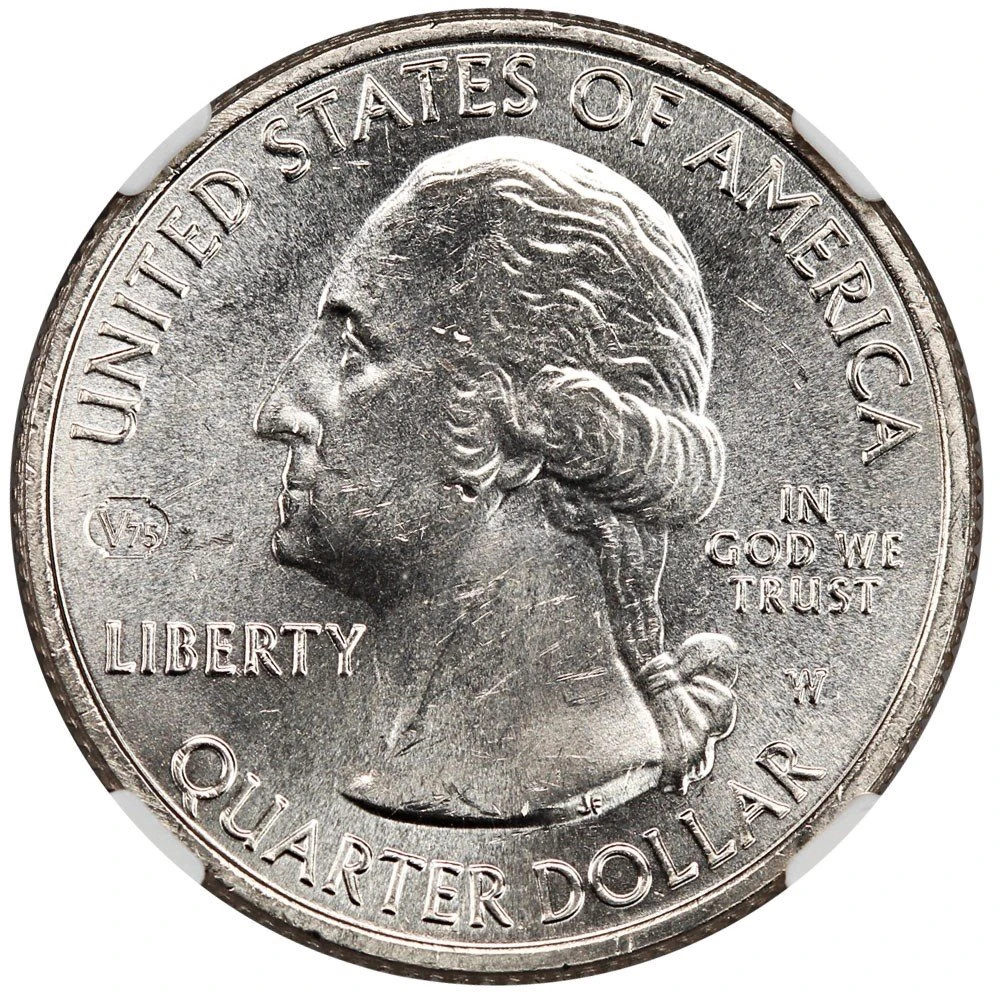
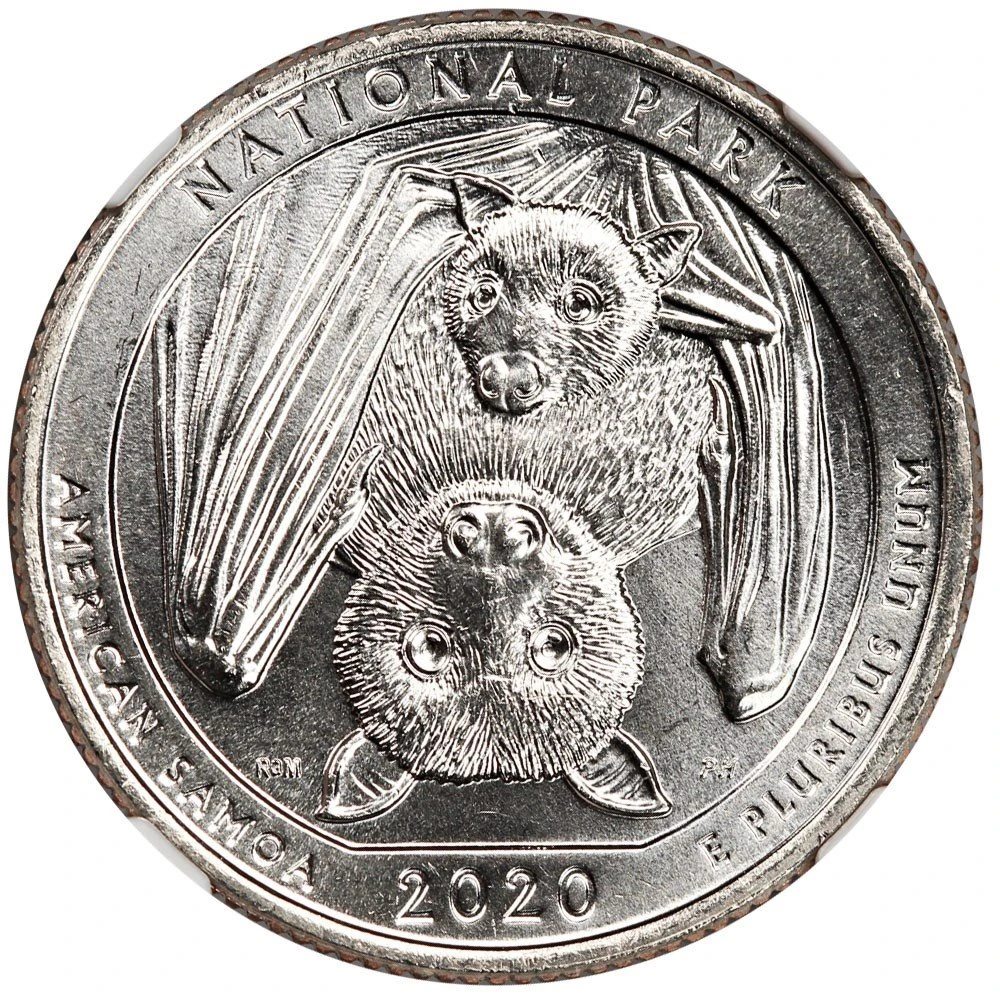
This supports a narrow conclusion: that particular certified W-mint coin sold above face value. It does not establish a current $31 price for every bat quarter. The source page does not itemize transaction fees, and the record is not a present-day offer. The photographs above show the coin illustrated in this auction record. On the obverse, compare the W mint mark and V75 privy mark; on the reverse, check the American Samoa design and 2020 date.
Apply the comparison: if your coin has P, the mint differs; if it has W but is visibly worn, the condition differs. In either case, find a better match before adopting that price. If your app result and comparable sales disagree, save the evidence and ask support or a human appraiser to explain the difference.
Is a silver-looking or unusual quarter automatically valuable?
No. Color and unusual appearance are clues to investigate, not a diagnosis of metal or a mint error. Ordinary clad quarters already look silver-colored. Lighting, wear and surface treatment can also change their appearance.
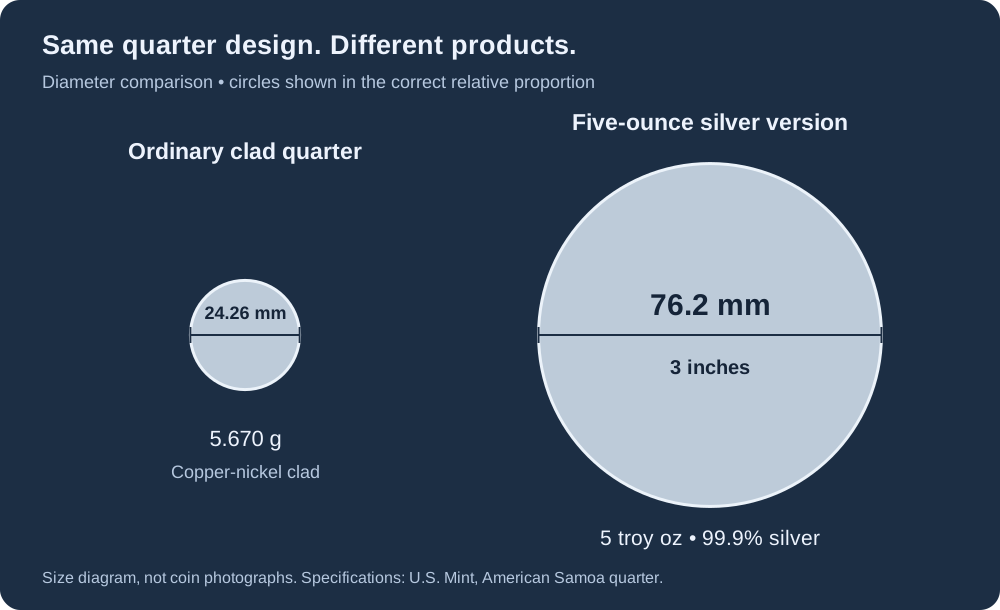
The Mint’s American Samoa specifications list the ordinary clad quarter at 5.670 grams and 24.26 mm in diameter. A separate five-ounce silver version measures three inches across. Although it shares the quarter design and denomination, that large silver product belongs in a different comparison group. For a normal-size S quarter, use the product check below before choosing a silver or clad comparison.
How to check a normal-size S quarter
Match the coin’s year and design to the exact product name, then read its composition and finish separately. A package saying “Proof” establishes the product’s finish; it does not by itself establish silver content.
- Record the product. Read the date and S mark on the coin, then copy the full name and product code from its original packaging or Certificate of Authenticity. If the coin is certified, record the service, certification number and complete label, including any silver designation.
- Compare the official descriptions. For a 2020-S American Samoa example, the Mint’s 2020 America the Beautiful Quarters Proof Set announcement (20AP) identifies the standard Proof product. Its American Samoa specifications describe the cupro-nickel clad quarter, including the Proof finish. The separate 2020 Silver Proof Set announcement (20AQ) explicitly specifies 99.9% silver and includes the same American Samoa design. Match the complete product description, not just the S mark or bat image.
- Check that the evidence belongs to this coin. Loose packaging alone cannot establish a loose coin’s composition. Without a reliable product or certification match, save photos of both sides and the edge, plus its measured weight and diameter. Have a qualified coin dealer or grading service examine an unresolved metal or finish question before using a silver-Proof price.
Keep the evidence intact
Do not polish the coin to improve a scan. Take an evenly lit photo of each side and an additional close-up of the unusual area. For a suspected composition issue, record actual weight and diameter; specifications shown in an app are catalog information, not measurements of your coin.
Describe what you observe before naming an error: “raised line across the field” or “flattened edge” is more useful than assuming a rare variety. A photo review may narrow the possibilities, but an unresolved authenticity or metal question may need physical examination. Price an error only after its attribution is supported.
A HeriBase test example: a 2020-P American Samoa quarter
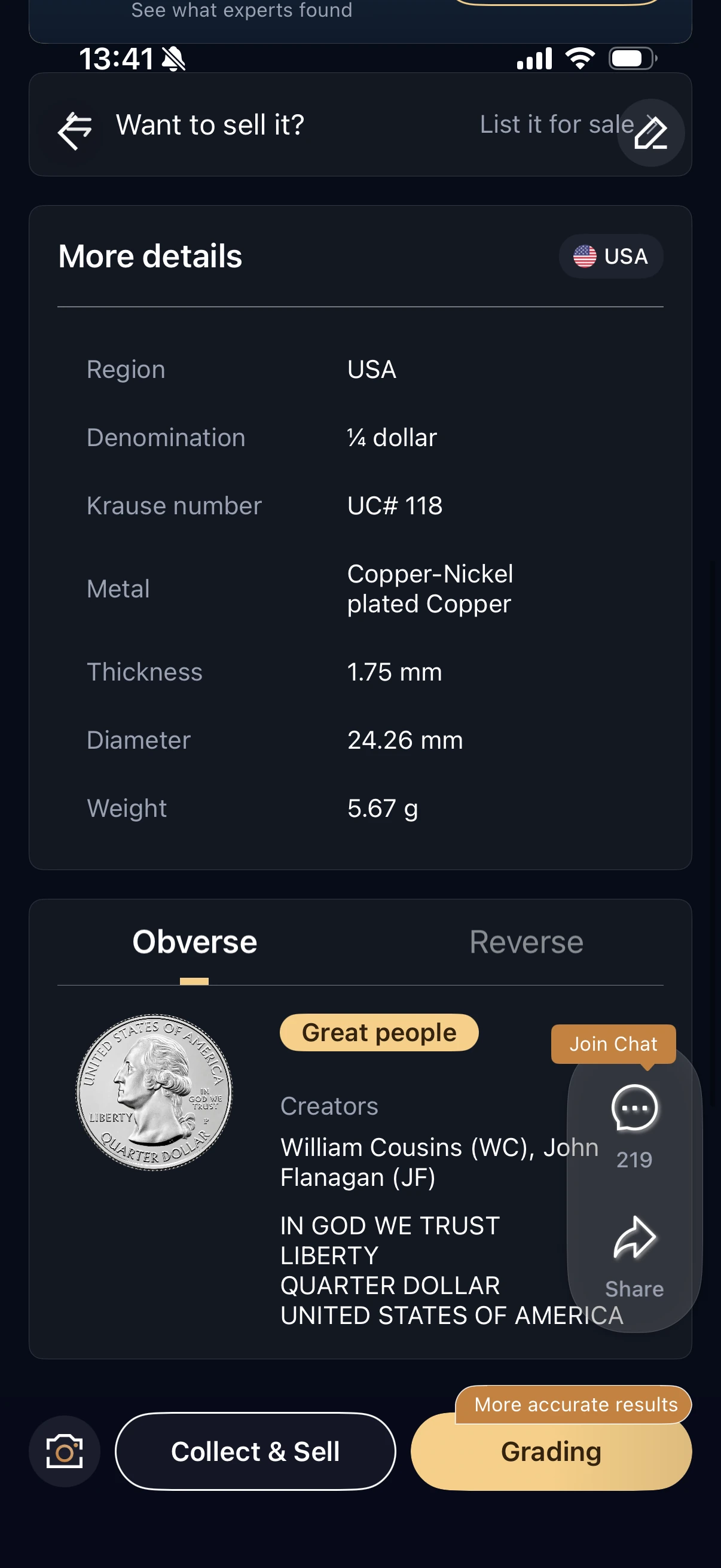
The supplied HeriBase test record identifies “USA 25 cents American Samoa 2020-P-MS” and displays a USD $1.20 reference price. The original capture date and app version were not recorded. These are historical interface examples, not a current quote; the article’s update date does not date the displayed price. Use the result and details screens to learn which identification fields to check.
What this result tells you
- Suggested issue: 2020-P American Samoa quarter, labeled MS.
- Reference price: USD $1.20 in the supplied record.
- Listed material: “Copper-Nickel plated Copper,” as displayed in the app.
- Listed specifications: 24.26 mm diameter, 5.67 g weight and 1.75 mm thickness; catalog entry UC# 118.
The specifications describe the catalog entry, not measurements of the physical coin. The MS label does not provide a certified numerical grade. These two screens do not display mintage or the underlying price records, so neither can be checked from this example alone.
Why $1.20 and $31 are different comparisons
The app record is for a P-mint issue; the April 2021 auction example is a W-mint coin certified NGC MS65. The mint and condition descriptions differ, and an app reference is a different kind of price from a completed sale. The gap does not by itself show that either price is wrong. First confirm which issue and condition match your coin.
If you disagree with the displayed reference, save the result and clear photographs, then contact platform support or request a human appraisal. Ask the reviewer to check the mint mark, assumed condition and price basis. This example documents a user-supplied app result; it does not establish a completed sale or an independent accuracy test.
Use the same steps for your quarter
1. Photograph both sides
Keep the entire coin in frame, use even lighting and make sure the year, place name and mint mark are readable. Retake a blurred image before accepting the result.
2. Match the suggested issue
Check the site, year, P/D/S/W mark and any stated finish against your coin. A matching reverse with the wrong mint is not a complete identification.
3. Read the available reference price and mintage
Check which issue and condition the price assumes. If mintage is listed, use it as context for that exact issue; it does not measure demand, survival or your coin’s grade. Avoid filling missing fields with assumptions.
4. Resolve a disagreement
Send the saved result and clear photos to platform support, or request an in-app human appraisal after reviewing the fee and service scope. Ask which identification or condition detail explains the price difference. Consider physical examination if the question cannot be settled from photos.
For example, if you can read W on the coin but the result names a P issue, address the mint mismatch first. Requesting a different price without correcting the identification leaves the underlying problem unresolved.
See the HeriBase scanning steps · Review human appraisal scope and fees
FAQ
How many national park quarter designs are there?
The America the Beautiful series contains 56 reverse designs from 2010–2021. A set containing every mint mark, metal and finish is larger than a 56-design set.
Is every 2020 bat quarter rare?
No. The bat design alone does not establish rarity. The bat image identifies the American Samoa design. Read the mint mark and check condition before researching a premium. The W issue is a different price comparison from P or D.
Does V75 mean the quarter is an error?
No. V75 is an intentional commemorative privy mark on the 2020-W quarters. It should be recorded as part of the identification.
Should I pay for grading before selling?
First establish a plausible premium using matched sales or an appraisal. Compare the likely benefit with submission, shipping and other costs. Paying for grading does not guarantee a higher net return.
What if I disagree with the HeriBase price?
Check the identified issue and assumed condition, then contact support or apply for a human appraisal. Include both-side photos, close-ups and the saved result so the reviewer can address the specific mismatch.
Identify the version before choosing the price
Scan both sides in HeriBase, confirm the year, site and mint mark, and check the available reference price against comparable sales. Pay particular attention to W issues, collector finishes and condition. If the price still seems inconsistent, ask platform support or request a human appraisal.
The practical outcome is a complete description and a defensible comparison—not a price borrowed from a similar-looking coin. Save the identification, your photographs and the sale evidence together so the next reviewer can see exactly what needs checking.
Sources and supporting records
U.S. Mint records establish the designs and product distinctions; NGC and PCGS support the W-mint details and the historical auction example. The sale is dated April 2021 and is not presented as a current market quote.
References· 10 sources
- U.S. Mint: America the Beautiful designs and release years
- U.S. Mint: American Samoa design and specifications
- U.S. Mint: 2012 S-mint collector bags and rolls
- NGC: 2019 W-mint quarter release
- PCGS: 2020 V75 privy marks
- PCGS CoinFacts: 2020-W American Samoa mintage
- PCGS Auction Prices: April 2021 NGC MS65 sale, lot 8225
- NGC: grading scale and MS / Proof labels
- U.S. Mint: 2020 standard Proof Set, product 20AP
- U.S. Mint: 2020 Silver Proof Set, product 20AQ and composition