

In this article
What should I do first with an inherited coin collection?
Photograph the collection as received, keep coins with their labels, and make a simple inventory before separating or selling anything. Do not clean the coins.Record each coin’s identity, both sides and its album or box location. Leave unknown dates, grades and purchase costs unresolved, then ask a knowledgeable dealer or appraiser about pieces you cannot confidently assess.
Start with one page or a small batch. Once you know what you have and where it is, you can choose family keepsakes, research values and compare offers without losing the collection’s history.
A family collection may arrive in albums, envelopes, mint boxes or a jar, with years of handwritten notes mixed in. Some pieces may have collector value; others may matter most because of the person who kept them. A useful first pass preserves both kinds of information and turns an unfamiliar collection into manageable decisions.
1. Keep the collection and its history together
Before rearranging anything, photograph each box, album cover and page. Give the containers simple names such as “Album A” and “Box B.” Include envelopes, receipts and handwritten notes in the photographs so you can reconnect a coin with its original context later.
Keep sets together during this first pass. A loose coin beside a presentation box may belong to that set; a handwritten number may connect it to an old inventory. Record those possibilities before separating the pieces. An old price label is useful history, but it is not a current valuation.
Ask family members whether particular coins have a story: a birthday gift, a souvenir from a journey or a collection built over many years. Add that story to the record with the name of the person who supplied it. You can leave decisions about dividing or selling the collection until the relevant family members have discussed them.
Handle the coins as little as practical
Leave coins in intact holders and keep original packaging and certificates. For loose coins, work over a soft surface and hold them by the edges. Do not polish or scrub them to make the photographs look better: cleaning can reduce collector value. The U.S. Mint recommends cool, dry storage and acid-free, PVC-free storage materials.
If a holder is sticky, deteriorating or stuck to a coin, set it aside for advice rather than peeling or scraping it away. Ourguide to recognizing cleaned coinsexplains why surface condition matters.
2. Make an inventory you can actually finish
Start with containers and groups, then work down to individual coins.For a large collection, “Box B: three labeled rolls and twelve loose coins” is a useful first entry. It is better than spending the whole afternoon researching one unfamiliar coin while the rest remains unrecorded.
Use a notebook, spreadsheet or digital collection record. The format matters less than being able to find a coin again. For each item you examine, record:
- ID and location:a unique reference, plus the box or album, page and slot.
- Identity:country, denomination, date and visible mint mark. Write “unknown” where necessary.
- Photographs:both sides and any holder label or accompanying note.
- Condition information:visible wear or damage; copy a certified grade only when present on the holder.
- Family context:who collected it, any known story and documents associated with it.
- Next action:identify, research, ask an expert, keep or discuss with family.
Keep estimated values in a separate field with their source and date. If you do not know what the original owner paid, leave the purchase cost unknown. An inheritance does not give you evidence of a purchase price.
Example of a useful record
FAM-001 · Album A · page 1 · slot 3
U.S. one-cent coin, 1923; no mint mark recorded. Front and back photographs saved. No certified grade recorded. Any original label or note kept with the album. Purchase cost unknown. Next action: compare the date and mint mark with a reference.
This is an illustrative inventory entry. Its purpose is to connect an identity and a task to one physical location; it does not assign a value or grade.
3. Identify one small batch before searching for prices
Choose one album page or a handful of loose coins. Read the country, denomination and date first, then compare the designs on both sides. Check any mint mark against a reference for that particular series; it is not in the same place on every coin.
Photograph one coin at a time in even light, keeping the whole rim visible. Take a closer image of a difficult date, mint mark or holder label. If a detail is unclear, keep it unresolved rather than choosing whichever match has the highest advertised price.
A coin identifier can help you find a starting match. Compare its result with the coin in front of you before saving the record. A date, denomination or mint-mark mismatch is a reason to look again. A suggested grade or special variety also needs separate support.
A 1923 cent: create, identify and reopen a record
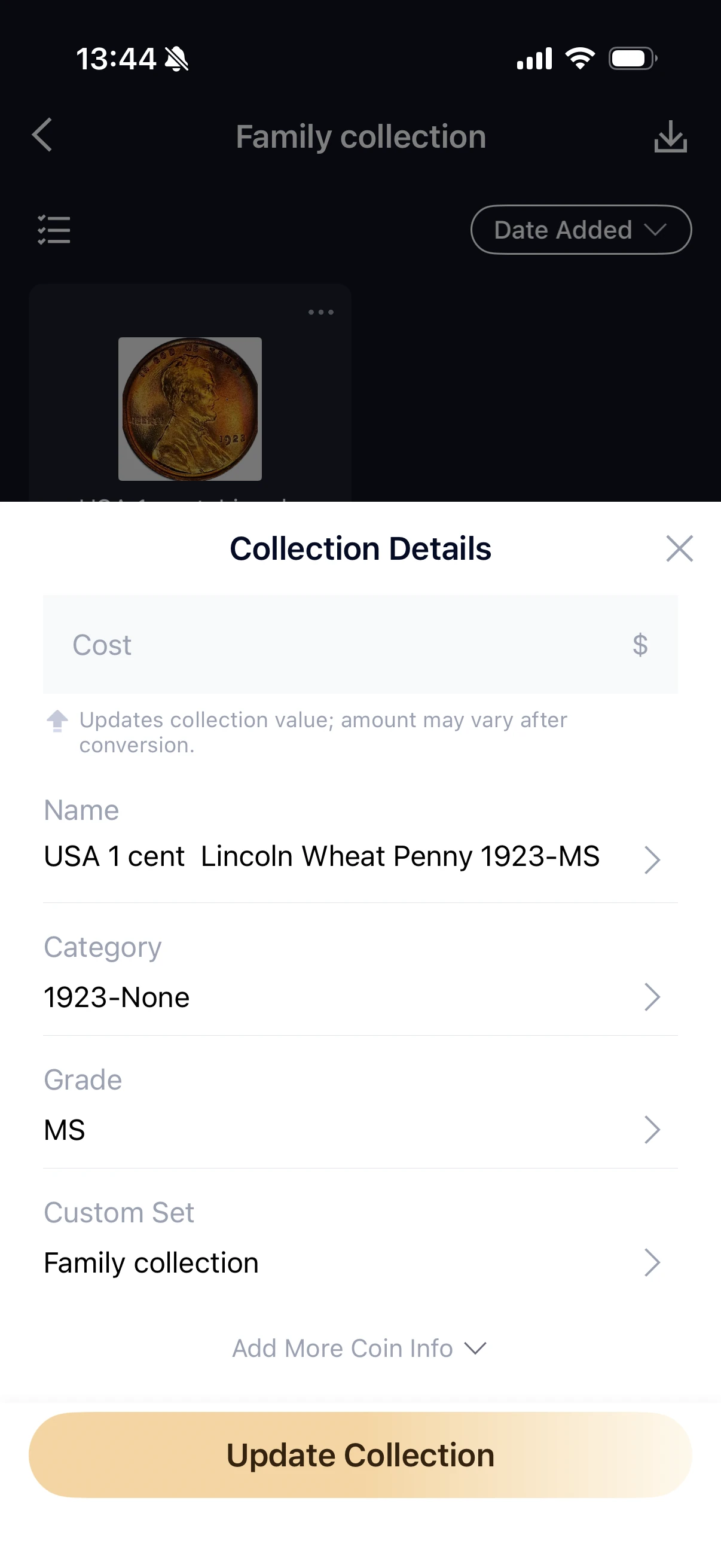
I created a set namedFamily collection, checked a 1923 Lincoln wheat cent in HeriBase and reopened its saved collection details. Here is the sequence shown in the four screenshots.
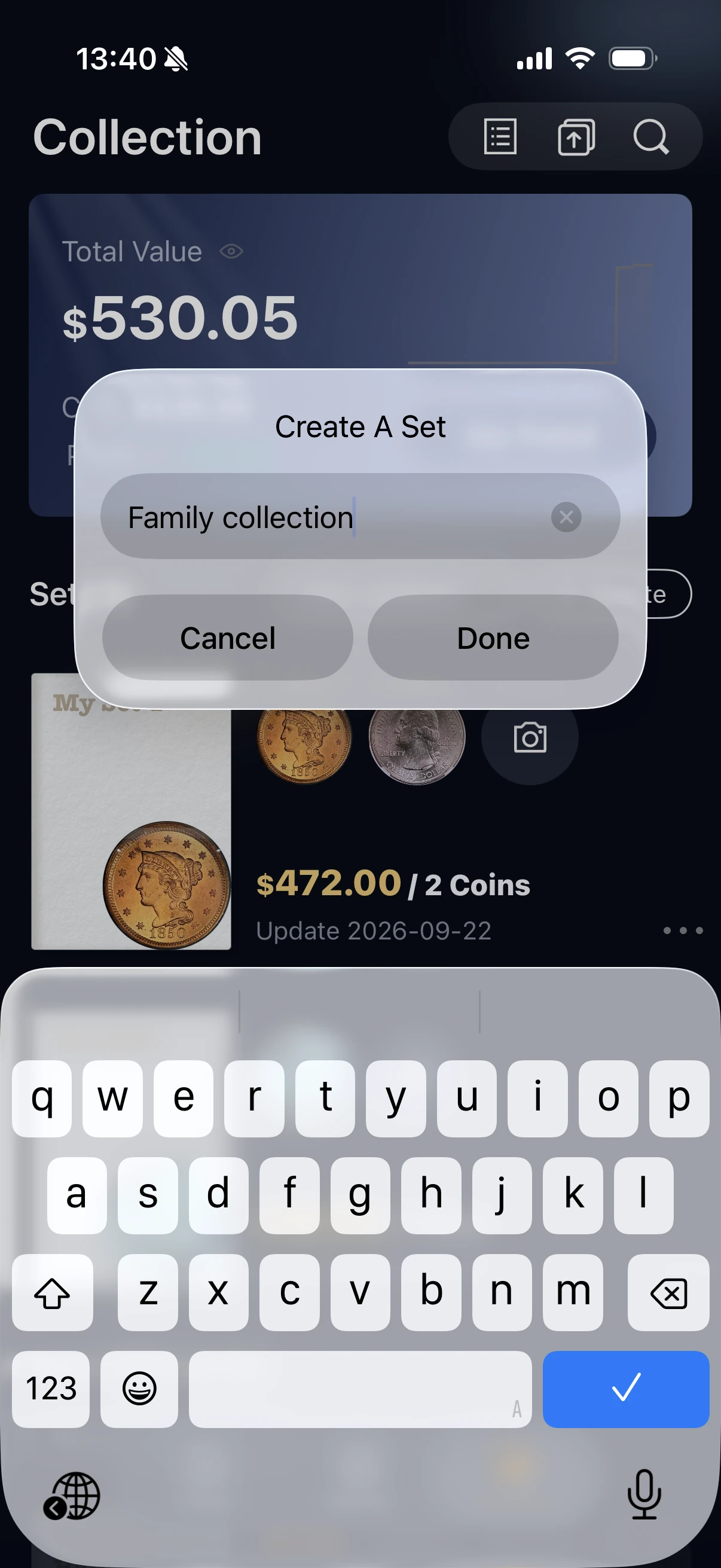
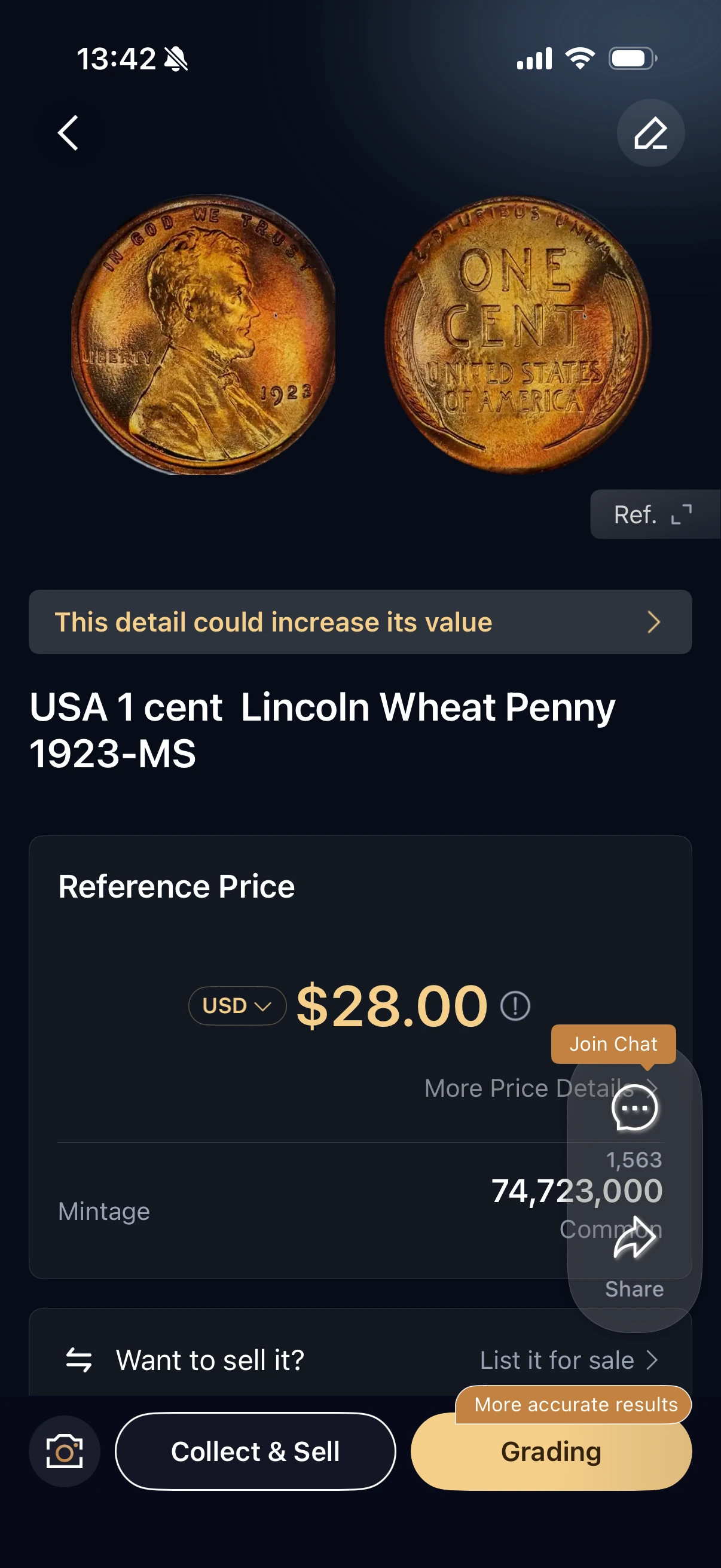
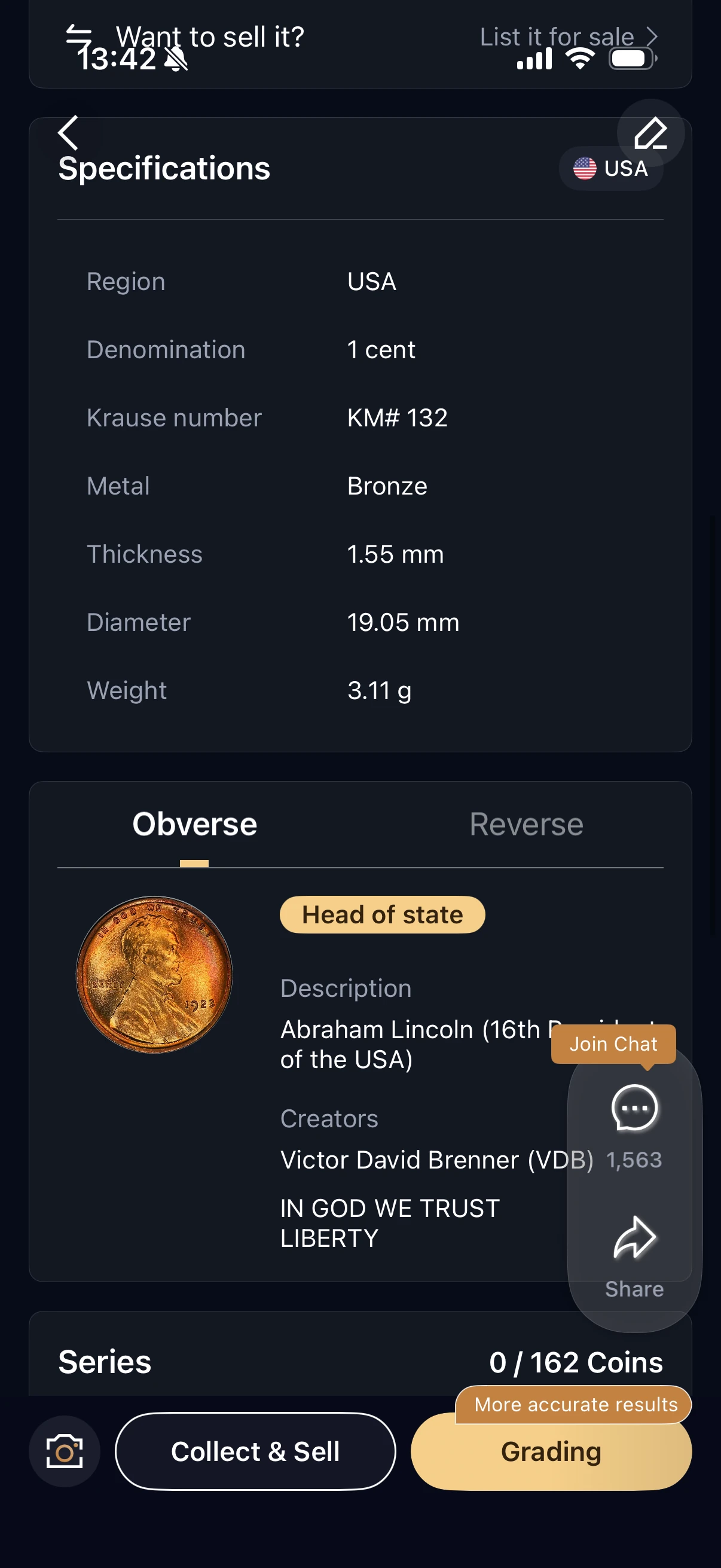
I openedCollection, tapped+ Createand enteredFamily collection. The identification screen showsUSA 1 cent Lincoln Wheat Penny 1923-MS. I reviewed the displayed date, design and specifications, then returned to the saved record. For a coin in hand, I would also compare these details with the physical piece.
InCollection Details, the name still identifies the 1923 cent andCustom SetshowsFamily collection. TheCostfield is blank. The$28on the identification screen is an app reference price, not a purchase cost or a completed sale. The displayed MS category is also not a certified numerical grade.
To link this digital record with physical storage, I would keep the same coin ID in my inventory alongside the album, page and slot. Thefirst-collection guideexplains the broader collection workflow.
For a collection spread across several albums, this link becomes especially useful: search or review the digital record first, then retrieve the specific piece instead of repeatedly turning through every album.
4. Decide which coins need closer attention
Make three working groups:identified and ready for research, uncertain and needing help, and family keepsakes.These are next-action groups, not declarations of value. A sentimental coin can also belong on the research list.
Prioritize the following for an experienced review:
- Coins in grading holders, especially when you need help interpreting the label or matching the certification record.
- Pieces labeled as gold, silver, a scarce date or a special variety, where the claim still needs checking.
- Coins that appear unusual compared with a reliable reference, including possible errors that could instead be damage.
- Sets with accompanying paperwork or a detailed old inventory that may explain what was assembled.
- Coins you cannot confidently identify or for which apparently similar examples have very different prices.
Age, shine and an impressive asking price are not enough to put a coin in a high-value category. Conversely, an ordinary-looking piece should not be dismissed solely because it is small or worn. Resolve the exact issue and condition before drawing a price conclusion.
If the collection is too large to sort comfortably, take overview photographs and the initial container inventory to a knowledgeable dealer or appraiser. Ask whether they work with the types of coins you have. The ANA’s dealer directory is one starting point for finding contacts; still discuss the service and fees directly.
5. Separate a price clue from a valuation or offer
An inherited collection has no meaningful single price until its contents and condition are understood.Treat each amount you encounter according to what it represents:
- Old receipt:evidence of a past purchase, not today’s selling price.
- App reference or price guide:a research starting point for the described issue and condition.
- Precious-metal value:a calculation based on verified metal content and a dated metal price; it does not describe every collector premium.
- Completed sale:evidence of what a particular coin sold for under stated conditions.
- Dealer offer:an amount a buyer is offering for the specified items.
When comparing a completed sale, match the date, mint mark, variety and grade as closely as possible. Check whether the reported amount includes a buyer’s premium. A certified example in exceptional condition is a poor comparison for an ungraded, worn coin of the same year.
For a larger or uncertain collection, ask for a written explanation of what a valuation covers and what it costs. Clarify whether you are paying for an assessment or receiving a purchase offer. If you may sell, comparing more than one offer on the same documented group makes the differences easier to understand.
Should you send everything for grading?
No. First identify candidates where an independent opinion on authenticity or grade could affect the decision to keep or sell. Ask about the full submission cost, including handling and shipping, before committing. Paying to grade every coin is not a necessary first step.
Ourcoin appraisal guidecovers the next stage, while thegrading scale guidehelps explain the condition terms you may encounter.
6. Choose what to keep, share or sell
Once the collection is documented, you can make smaller decisions instead of one irreversible decision about the whole box. Keep a few pieces with strong family meaning, continue a series you enjoy, or explore selling coins you do not want to manage.
If family members are choosing keepsakes, show them the photographs and any researched information before moving the coins. Update the inventory when an item changes hands so the remaining collection stays understandable.
Before arranging a sale, prepare a list of the exact coins included, photographs and relevant holder details. Ask how the proposed price, fees, payment and delivery work. For a group offer, confirm which items are included rather than assuming every coin in the photographs is part of the same agreement.
Keep the record even after a coin leaves the collection. Mark it as transferred or sold and retain the related documentation. That preserves the family history and prevents later confusion about a missing album slot.
A practical plan for your first session
- Photograph the collection as received.Capture each container and its labels.
- Name the containers.Write a simple overview inventory without dismantling sets.
- Record one small batch.Photograph both sides, identify what you can and save locations.
- Make a short questions list.Note uncertain identities, labels and valuation questions.
- Put everything back safely.Save a backup of the inventory and photographs.
At the end, you should be able to locate every item you examined and explain what remains unknown. That is useful progress even if you have not priced or sold a single coin.
Frequently asked questions
Should I clean inherited coins before getting them valued?
No. Leave their surfaces as you found them and photograph them without polishing. If a coin or holder appears to need conservation, ask a specialist before attempting treatment.
Do I need to buy new albums immediately?
No. First record the existing arrangement and assess the holders. Suitable existing storage may be enough. Replace unsuitable materials carefully after documenting where each coin came from.
What if I cannot identify most of the coins?
Start with clear photographs and broad groups by visible country or denomination. Leave uncertain entries marked unknown. Those images and the group inventory will make a conversation with a knowledgeable collector or dealer more productive.
Can I use an app to value the whole collection?
An app can help identify and organize coins and provide reference amounts. Review those records before treating a displayed total as useful research. It is not automatically the amount a buyer will pay for the collection.
Should I sell the collection as one lot?
Only after you understand what the lot contains. A group sale may simplify the process, but ask whether particular coins or sets merit separate assessment. Compare the convenience and expected net proceeds of the available options.
Preserve the history, then decide what comes next
Your first goal is an identifiable, traceable collection—not an immediate price for every coin.Preserve labels and family notes, photograph both sides, and connect each record to an album, page or box. Work in small batches and keep uncertain coins on a review list.
The 1923-cent example shows the digital part: create a named collection, check the suggested identity and reopen the saved record. Its $28 reference price stays separate from the blank Cost field. With that distinction clear, seek help where needed and decide what to keep, share or sell using documented information rather than a single displayed estimate.