

How much is a gold dollar coin worth?
A common, worn, gold-colored U.S. dollar is usually worth its $1 face value. A genuine U.S. gold dollar dated 1849–1889 contains gold and has a separate collector market. For example, PCGS lists the common 1853 Philadelphia gold dollar at $435 in AU50 and $800 in MS63, checked September 18, 2026. Identify the issue and grade before choosing a price.
This guide covers U.S. one-dollar coins. It separates ordinary Sacagawea and Presidential dollars from historic gold dollars, recognized varieties and the special 2025 gold Sacagawea issue. Foreign dollars, privately plated souvenirs and larger-denomination U.S. gold coins require different references.
Start at $1
For an ordinary circulated coin, look for a specific reason for a premium: preservation, a collector finish or an authenticated variety.
Check gold + collectibility
Match the date, mint and grade. An 1853 Philadelphia example has a different price from an 1853-D Dahlonega coin.
A half-ounce exception
The 25th-anniversary Sacagawea gold proof is a distinct product, not an ordinary golden dollar.
Is it gold-colored, or actually gold?
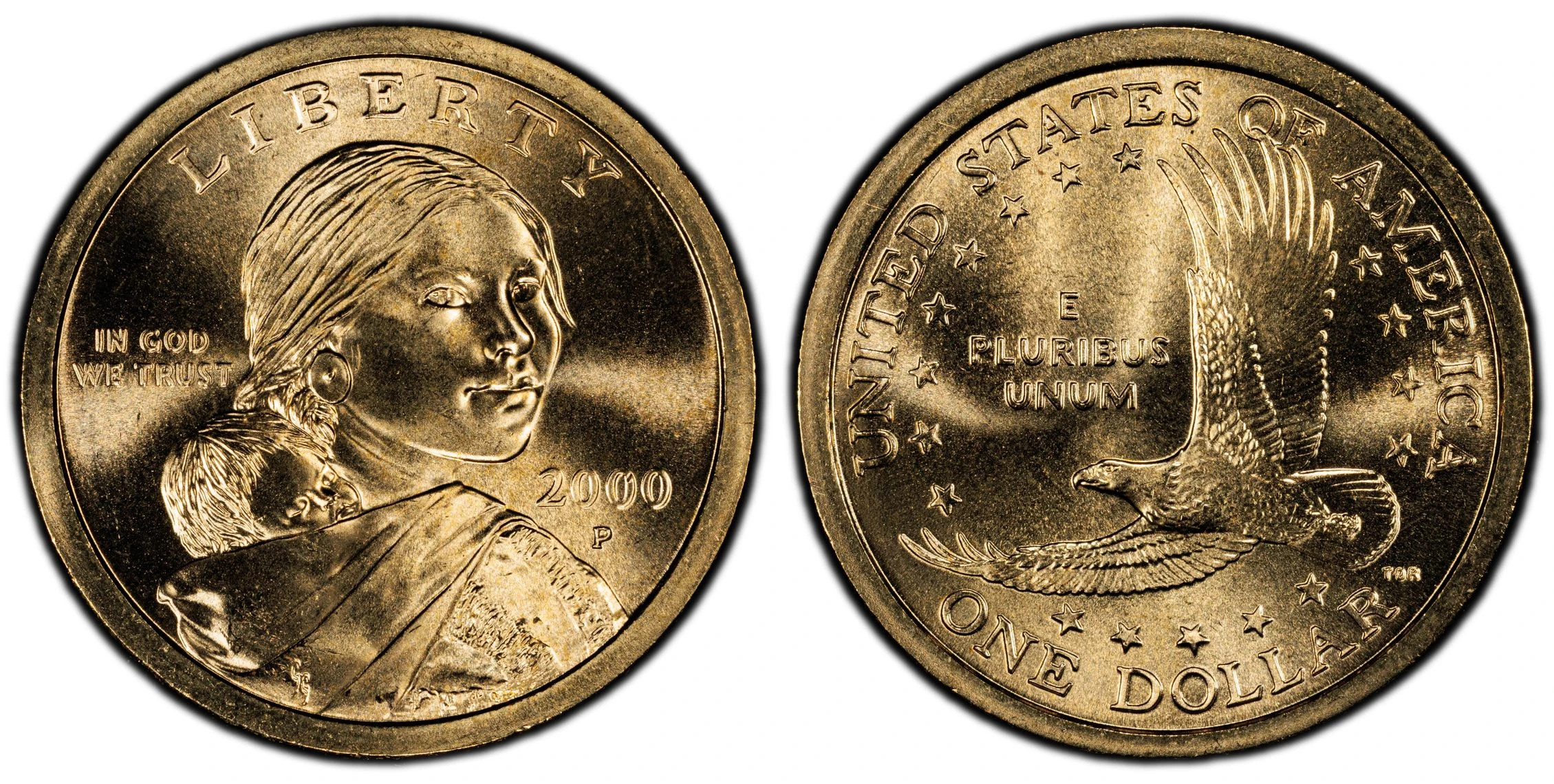
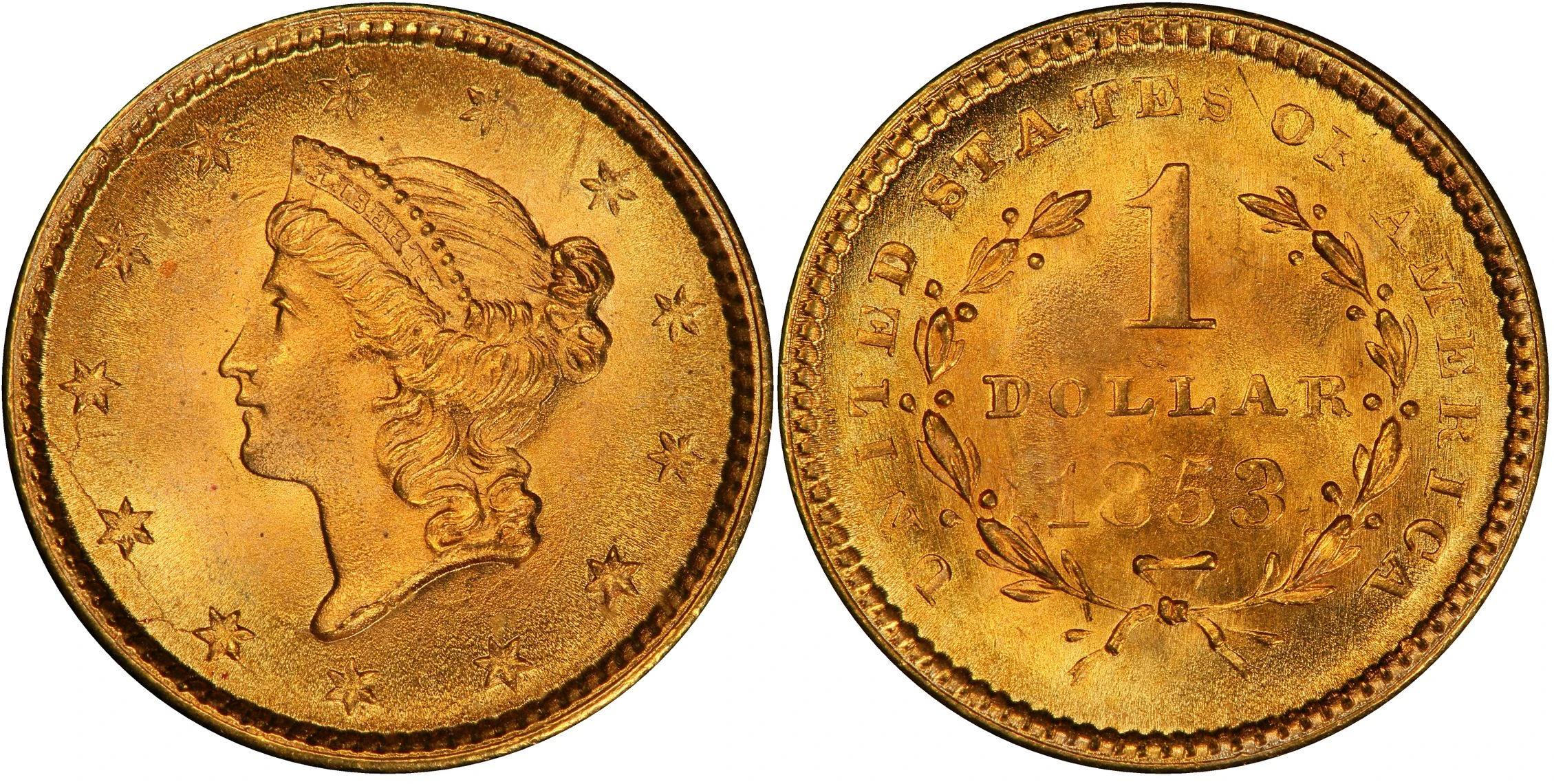
- Read the denomination and all dates. A Presidential dollar can show a president’s years in office on the portrait side. These are not the coin’s issue date; inspect the edge.
- Match both designs. The original Sacagawea dollar has an eagle reverse. Native American dollars retain her portrait with changing reverse designs. Presidential dollars show the Statue of Liberty.
- Check size and weight. Ordinary modern golden dollars are about 26.5 mm and 8.1 g. Historic gold dollars are much smaller, roughly 13–15 mm, with a standard gross weight of 1.672 g.
- Confirm the exact issue. A photograph, scale reading or gold-colored coating alone cannot authenticate a coin or establish purity.
Start by comparing your coin with an AI result
Photograph both sides in Heritcoin, then compare the suggested denomination, date, mint mark and design with your coin and the examples above. Check whether the result describes a modern base-metal dollar or a historical gold issue. Treat the suggested metal as catalog information, not a test of your specimen.
If the result does not match, retake the photos or compare another AI tool using the same images. For an unresolved detail, continue with a Heritcoin human expert; arrange physical examination if authenticity or composition remains uncertain.
Identify your coin with Heritcoin →Sacagawea and Presidential dollar value
For a common circulated modern golden dollar, $1 is the practical starting point. A modern date, attractive color or unfamiliar portrait does not itself establish a collectible premium. Uncirculated coins, proofs, special finishes and attributed errors must be compared within their own categories.
What is a 2000 Sacagawea dollar worth?
A regular 2000-P Sacagawea dollar is not rare simply because it is the first year. PCGS records a Philadelphia mintage of 767,140,000. Its reference guide distinguishes ordinary examples from high grades and special varieties. A P mint mark alone does not identify the valuable “Cheerios” variety.
The standard coin is a copper-based alloy, with manganese brass providing its appearance. The original Sacagawea design was issued from 2000–2008 and transitioned to the Native American program in 2009. Ordinary versions contain no gold.
What about a Presidential dollar?
Read the edge for the issue year and mint mark before searching. For example, the Lincoln dollar shows 1861–1865 as his presidential term, while its issue date is 2010. A worn example is not a nineteenth-century gold coin.
Regular-strike coins vs. proof coins: same design and year
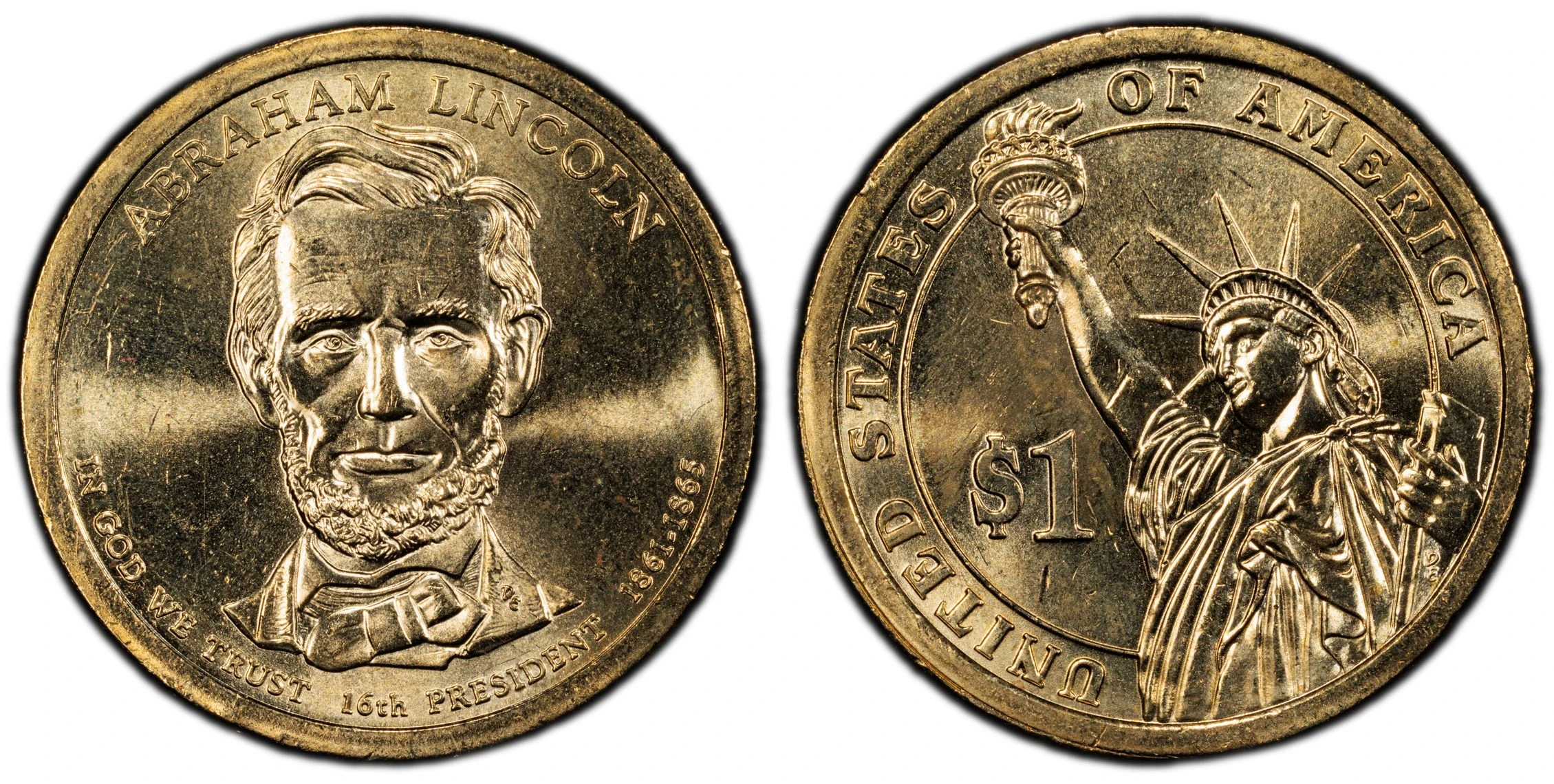
Philadelphia; PCGS MS65. A circulation-strike issue shown in uncirculated condition.
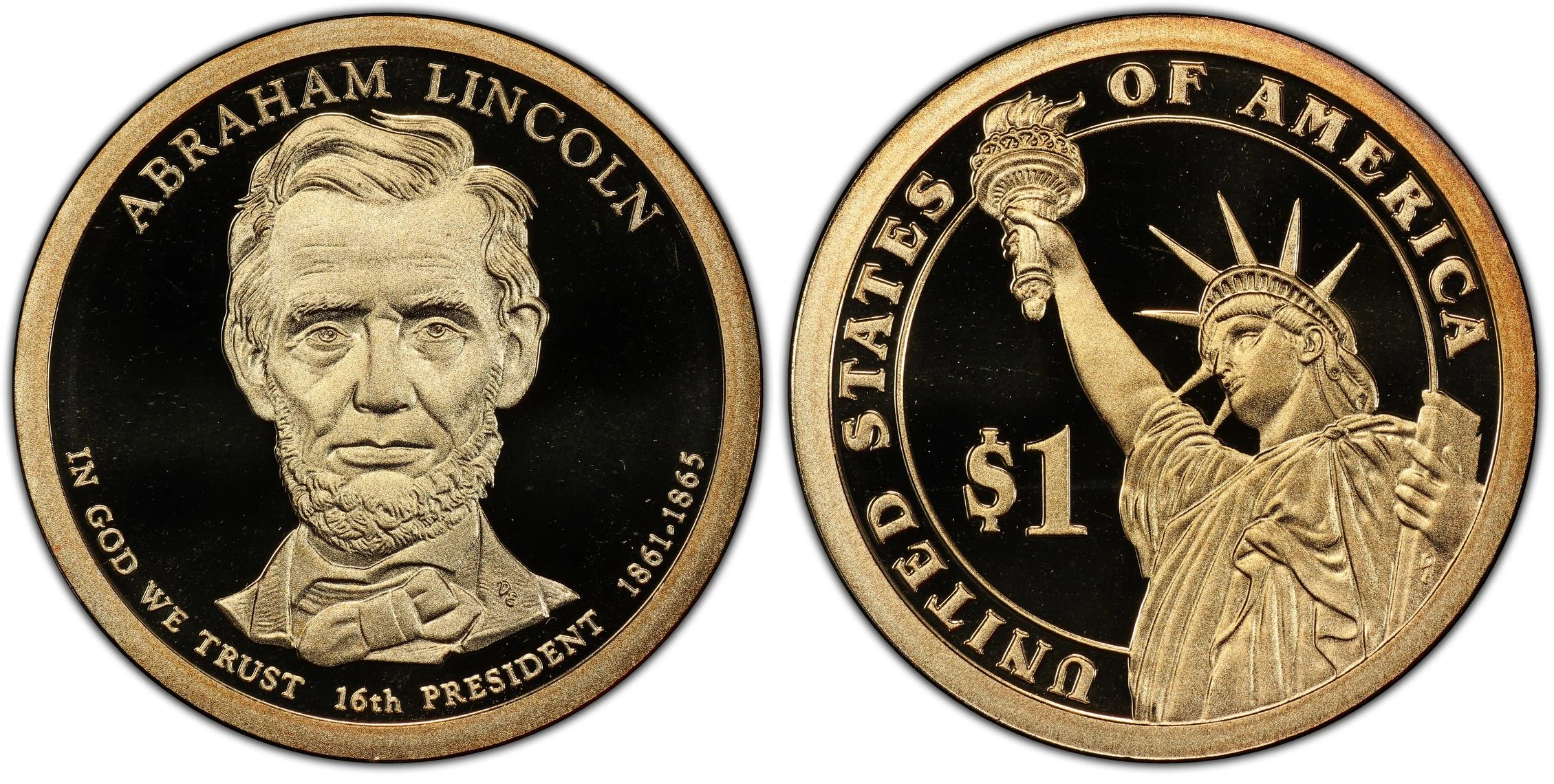
San Francisco; PCGS PR70DCAM. Notice the contrast between frosted designs and reflective fields.
Proof describes how a coin was made, not simply how shiny or unworn it looks. These are the same 2010 Lincoln dollar design, struck at different mints. Polishing can also create shine, so reflectivity alone does not identify a proof.
Use Heritcoin to establish the base identity, then check mint, finish and surfaces against the comparison. If proof status remains unclear, request human expert review before applying proof prices.
The three genuine gold-dollar types, 1849–1889
All three regular U.S. gold-dollar types have the same standard gold content: 0.04837 troy ounce. They are 90% gold, with a gross weight of 1.672 g. A change in portrait or diameter does not mean a larger quantity of gold.
1853 example. Small Liberty portrait on the original compact coin.
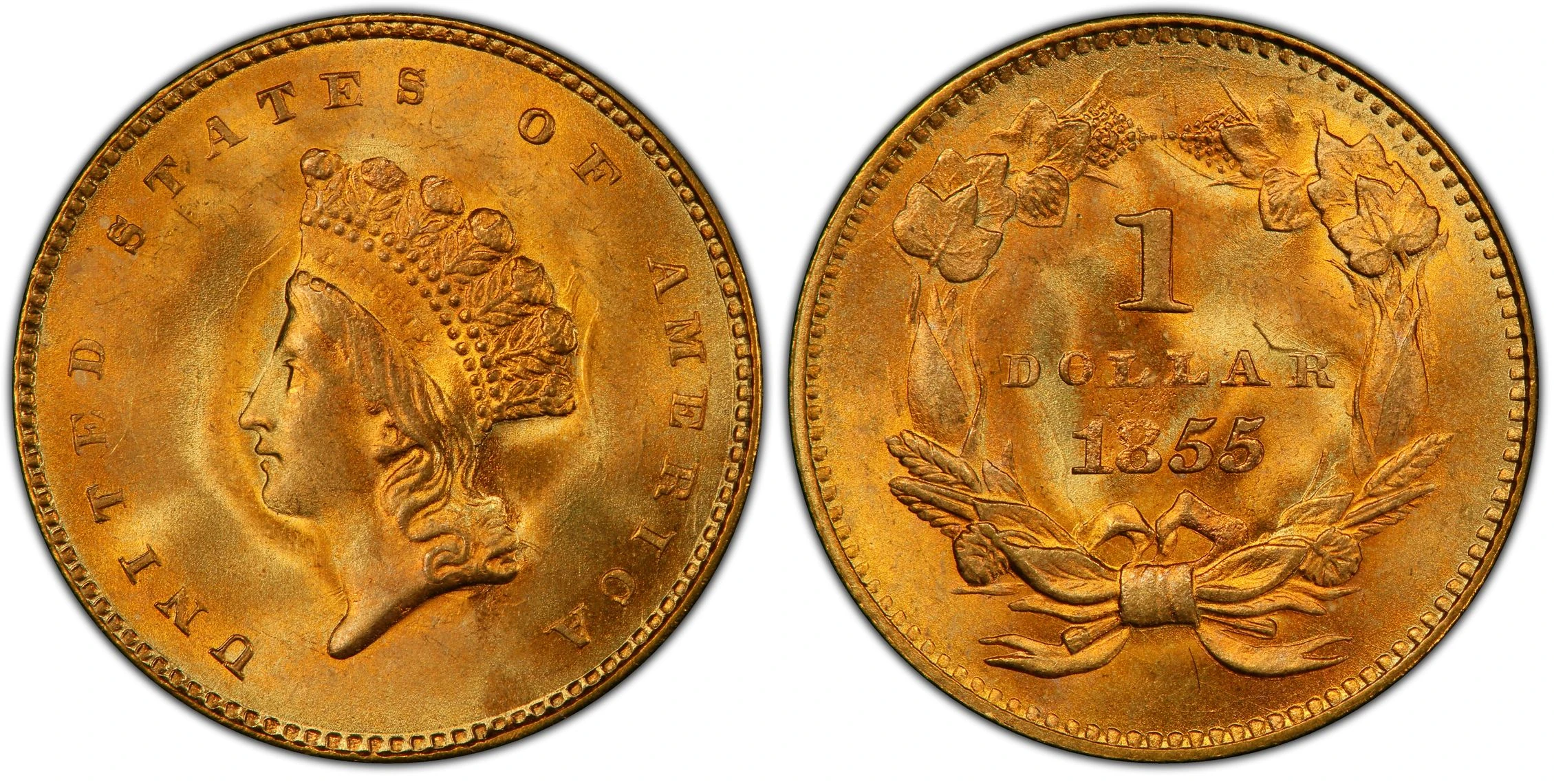
1855 example. Feathered headdress with the smaller head on an enlarged planchet.
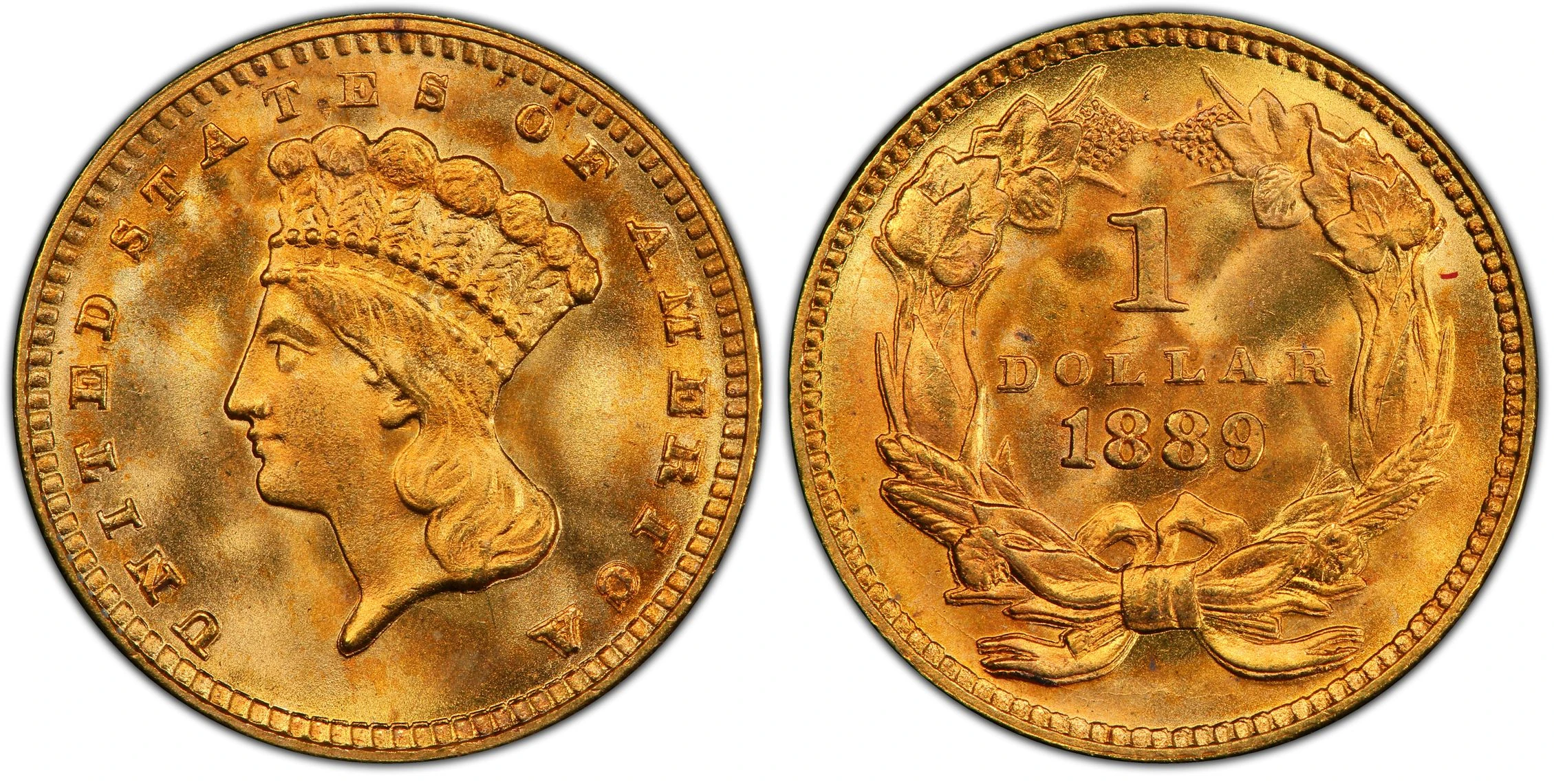
1889 example. Revised, larger portrait distinguishes the third type.
| Type | Dates | Main visual distinction | Fine gold |
|---|---|---|---|
| Type 1: Liberty Head | 1849–1854 | Small Liberty portrait; approximately 13 mm | 0.04837 troy oz |
| Type 2: Indian Princess, Small Head | 1854–1856 | Feathered headdress; enlarged planchet | 0.04837 troy oz |
| Type 3: Indian Princess, Large Head | 1856–1889 | Larger, revised portrait; approximately 15 mm | 0.04837 troy oz |
Now record the year, mint mark, condition and any variety. An 1853 Philadelphia coin and an 1853-D coin do not belong in the same price row. In this historical series, D identifies Dahlonega; do not assume the Denver meaning used for modern dollars.
Type 2 coins can have weakly struck details. A soft numeral or letter is not automatically wear or a mint error. Compare the entire design and surfaces, and seek an experienced opinion when the distinction affects a sale.
Gold dollar coin value chart: what each number means
There is no reliable single price for every “gold dollar.” The table below identifies the kind of value you can use. All dollar amounts are USD; each guide table includes its reference date.
| Coin or category | Reference | How to interpret it |
|---|---|---|
| Common worn modern golden $1 | $1 face value | Starting point for an ordinary circulation find, without an attributed premium feature. |
| 2000-P regular Sacagawea, MS63 | $5 guide value | PCGS grade-specific references, not completed transactions. These rows exclude special varieties and assume the stated grade. |
| 2000-P regular Sacagawea, MS65 | $7 guide value | |
| 2000-P regular Sacagawea, MS67 | $20 guide value | |
| 1849–1889 gold dollar, any of the three types | $193.48 metal-only illustration | Calculated at a hypothetical $4,000/troy oz gold price. Collector value requires a separate lookup. |
| 2025-W half-ounce Sacagawea gold proof | $2,000 metal-only illustration | Same hypothetical gold price; excludes proof/collector premium and transaction costs. |
PCGS guide values, accessed September 17, 2026. MS means Mint State; the number identifies the grade.
Historic gold dollars: compare the same grade
These Philadelphia issues provide one example of each design type. The 1853 is a common Type 1 date; the 1855 represents Type 2, while the 1889 represents Type 3. Each contains the same standard quantity of gold, but their collector prices differ.
| Issue / type | AU50 | MS60 | MS63 | MS65 |
|---|---|---|---|---|
| 1853 · Liberty Head (Type 1) | $435 | $600 | $800 | $2,750 |
| 1855 · Small Head (Type 2) | $650 | $1,650 | $5,000 | $25,000 |
| 1889 · Large Head (Type 3) | $450 | $650 | $950 | $1,650 |
Regular strikes, Philadelphia, PCGS-certified grades. Guide values are not purchase offers or auction results; they do not apply automatically to ungraded, damaged or cleaned coins.
AU50 means About Uncirculated, with wear; MS60, MS63 and MS65 are Mint State grades.Mint State coins have no circulation wear, but marks, luster and other surface qualities affect the numerical grade. A photograph or AI estimate does not establish a certified grade.
At MS63, the 1855 guide value is $5,000 versus $800 for 1853 despite identical standard gold content. This is why matching only the denomination or metal can produce a misleading estimate.
Calculate gold content without double-counting purity
Historic gold-dollar metal value = 0.04837 × gold price per troy ounce.
At an illustrative $4,000, the result is $193.48. The 0.04837 figure already represents fine gold: do not multiply it by 90% again. Use a current, timestamped gold quote for a live calculation.
Collector value can exceed metal value. Compare matching completed sales and deduct selling costs when estimating what you might receive.
What have specific gold dollars actually sold for?
These examples demonstrate why attribution matters. They are individual results, not a current price range for all coins sharing the date.
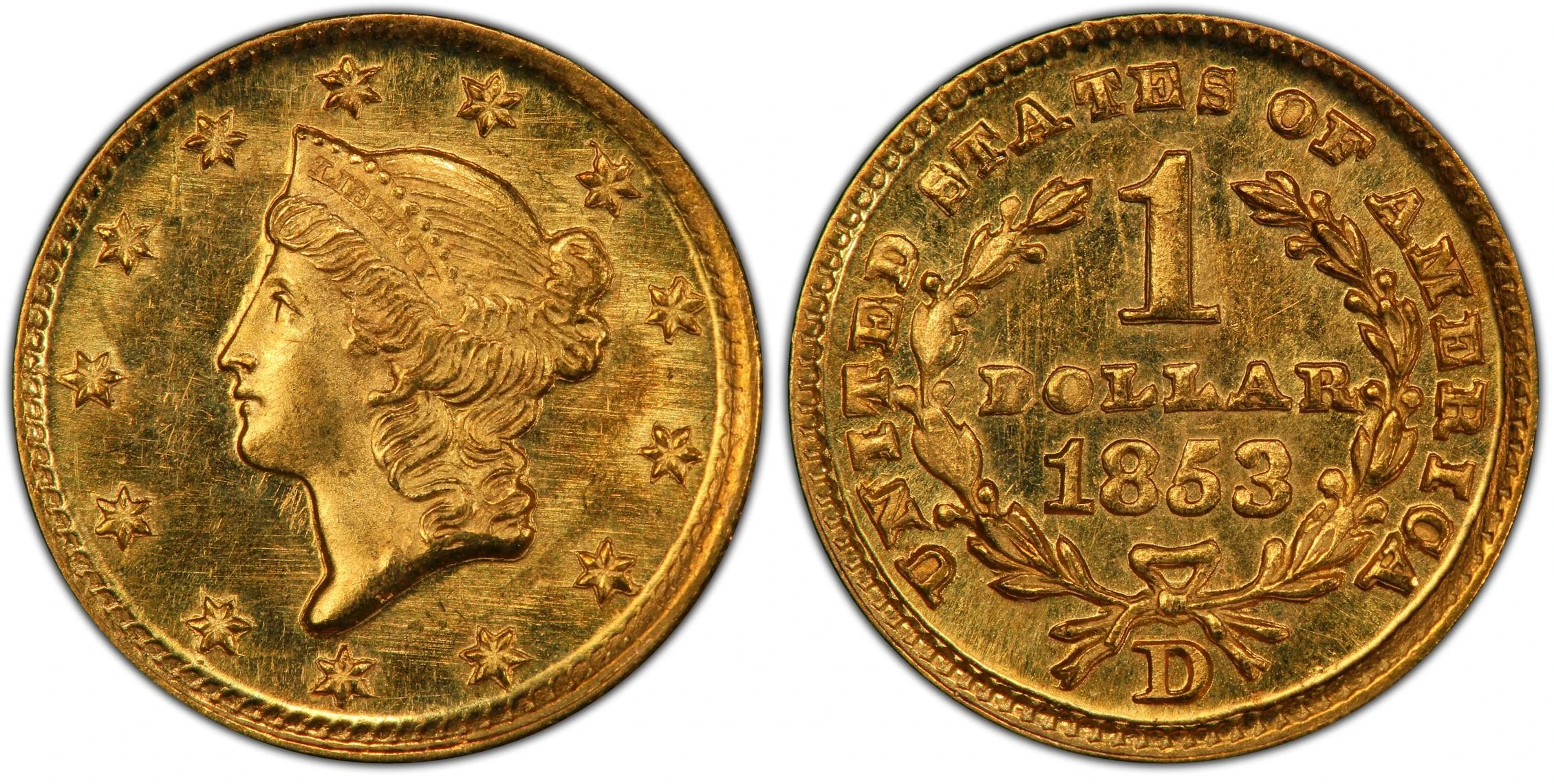
Same date and mint, but a different PCGS MS65+ specimen. This is not the NGC AU58 coin sold in lot 4133.
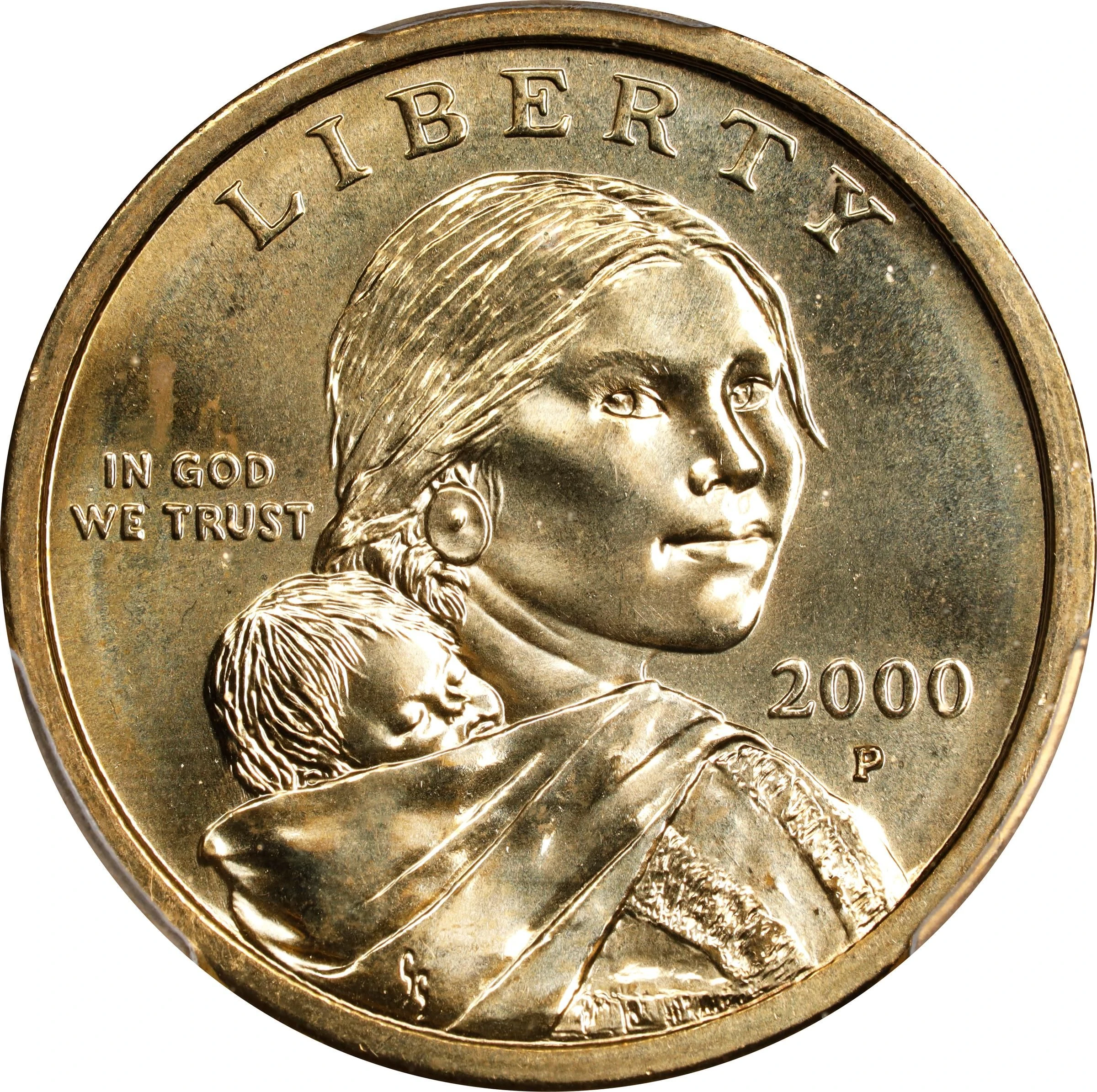
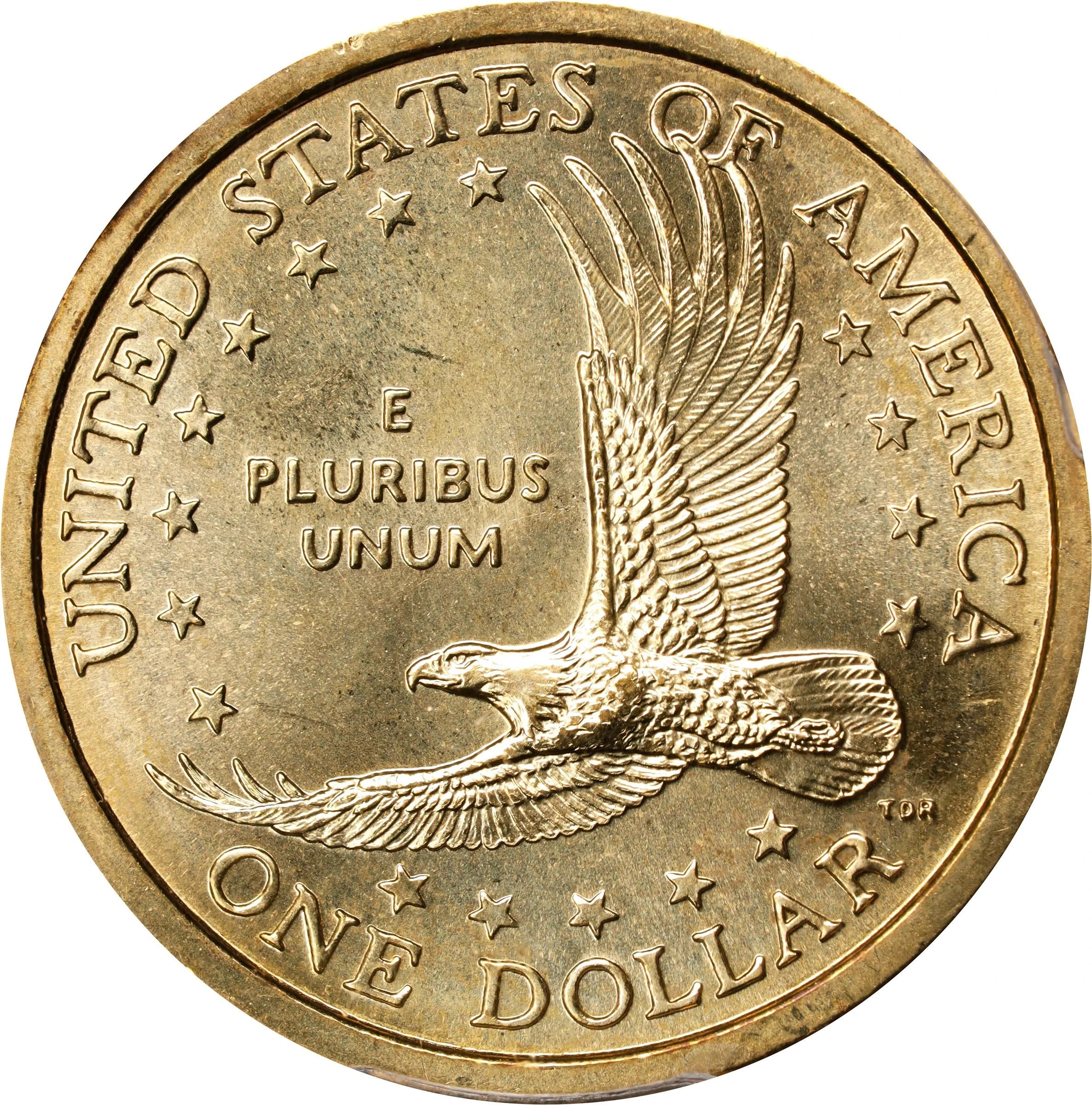
PCGS MS67, FS-902. Obverse and reverse photographs from the recorded $6,000 sale.
| Coin | Sale / lot | Reported price | Why it differs |
|---|---|---|---|
| 1853-D gold dollar, NGC AU58 | Heritage, March 2025 Lot 4133 | $4,213.20 | Specific historical mint issue and grade; not an ordinary 1853 Philadelphia comparison. |
| 2000-P Sacagawea “Cheerios,” FS-902, PCGS MS67 | Stack’s Bowers, August 30, 2025 Lot 6174 | $6,000 | Attributed reverse variety with enhanced eagle tail-feather detail; not a regular 2000-P dollar. |
Reported auction prices are not seller net proceeds.
Notice that the modern coin’s exceptional price comes from its variety and preservation, not gold content. The historical coin’s price reflects more than a small amount of gold. Neither transaction supports assigning thousands of dollars to an unidentified coin.
Rare varieties, edge lettering and the 2025 gold exception
FS-902: enhanced eagle tail-feather detail.
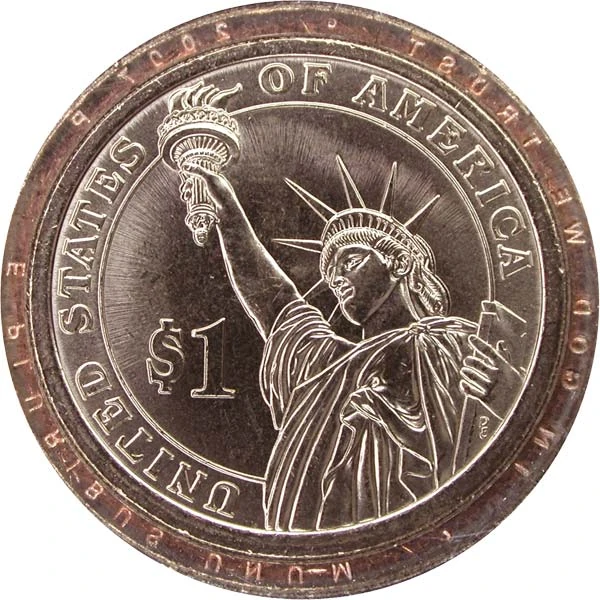
NGC’s expanded edge view shows the inscriptions around a normal Presidential dollar.
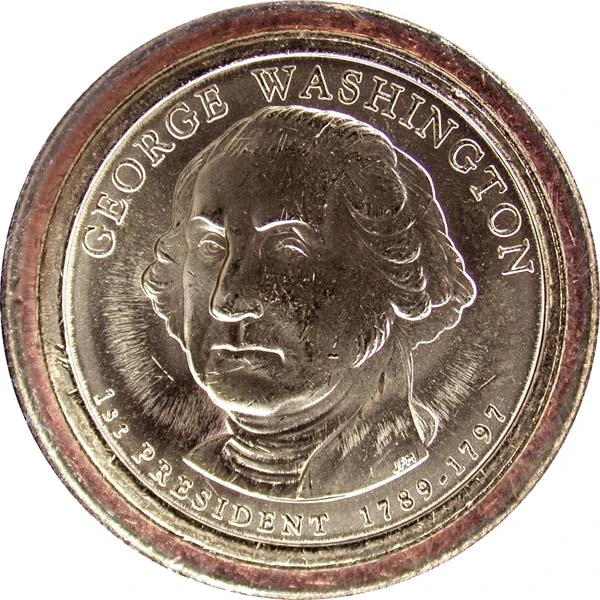
NGC-certified missing-edge-lettering example.
Cheerios dollars
The valuable attribution concerns a specific reverse with enhanced tail-feather detail. A 2000 date and P alone are insufficient. Match a specialist reference and the full variety designation before using its sales.
Missing edge lettering
Some modern dollars genuinely missed the edge-lettering operation. NGC also documents altered edges that imitate the error. A smooth edge needs examination, not an automatic rarity claim.
“Upside-down” edge lettering
Lettering orientation on circulation-strike Presidential dollars can vary normally. Orientation by itself does not establish a mint error or a premium.
Gold plating
A privately applied coating does not turn a modern dollar into a U.S. Mint gold issue. Identify the underlying coin; do not estimate its value by treating its entire weight as gold.
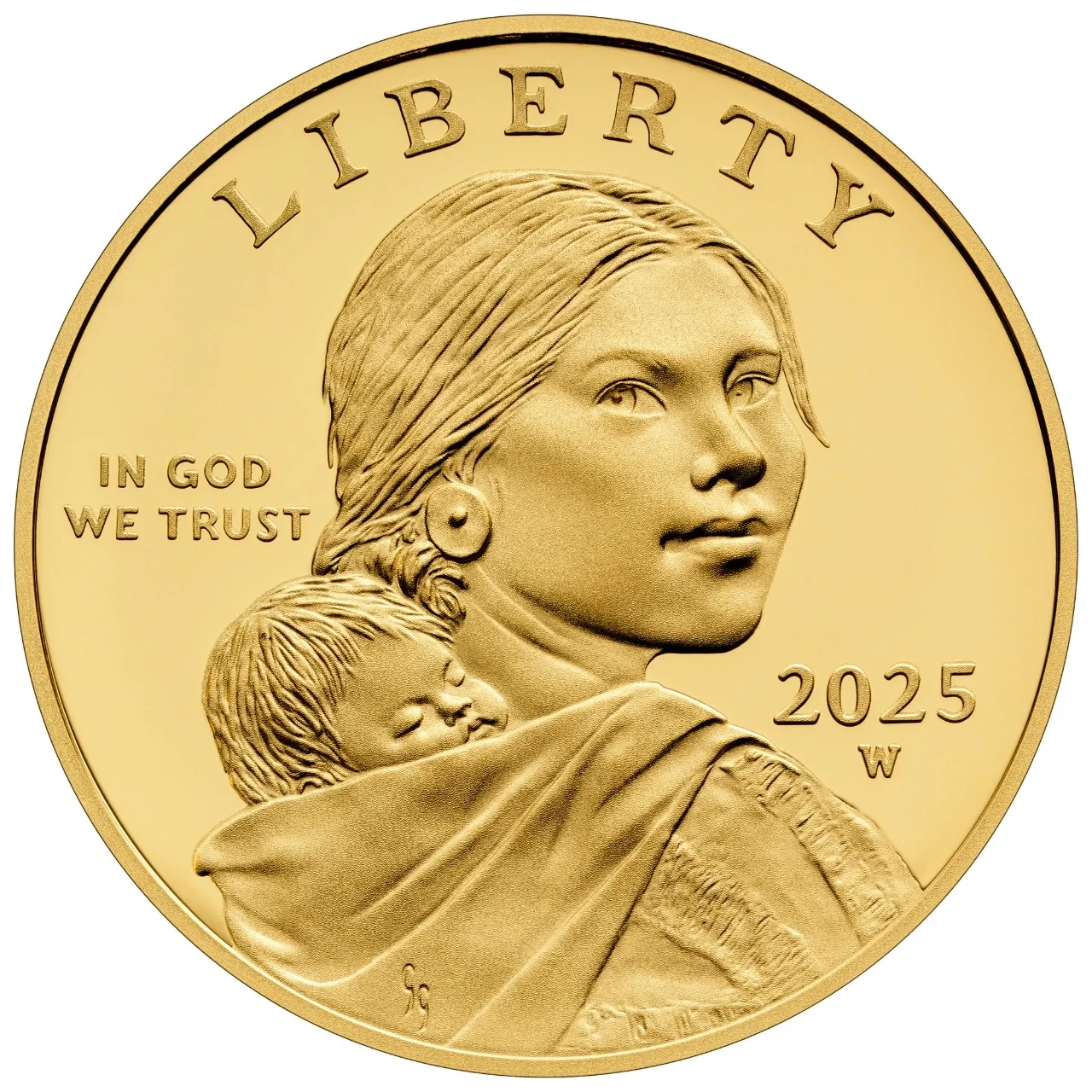
Yes, there is a real gold Sacagawea dollar
The U.S. Mint announced a 2025 25th-anniversary Sacagawea 24K half-ounce gold proof, produced at West Point. It is a separate gold product with a $1 denomination.
Match the exact issue, specifications and any original documentation. The ordinary Native American dollar dated 2025 is not automatically this gold proof. For the gold version, calculate half-ounce metal value, then compare like-for-like proof sales and current offers.
A practical identification and valuation workflow
- Photograph both sides and the edge. Use even light, keep the full rim visible and add close-ups of dates, mint marks and suspected varieties. Do not clean or polish the coin.
- Write a complete identity. For example: “2000-P Sacagawea, regular strike, no confirmed variety” or “1853-D gold dollar, condition unconfirmed.” Keep uncertainty visible.
- Choose the correct reference. Look up the issue in PCGS CoinFacts or NGC Coin Explorer. Match the denomination, mint and strike type before reading a price.
- Compare condition honestly. Circulated, Mint State and proof are not interchangeable. A cleaned or jewelry-mounted gold dollar is not comparable to a problem-free certified specimen of the same apparent detail.
- Review several completed sales. Check dates, grade, variety, photos and buyer’s fees. Exclude asking prices, mismatched denominations and multi-coin lots.
- Compare net offers. For a sale, account for grading, shipping, insurance and platform or auction fees. An ordinary $1 coin may not justify a paid submission.
A real Heritcoin identification: the 1853 Liberty Head dollar
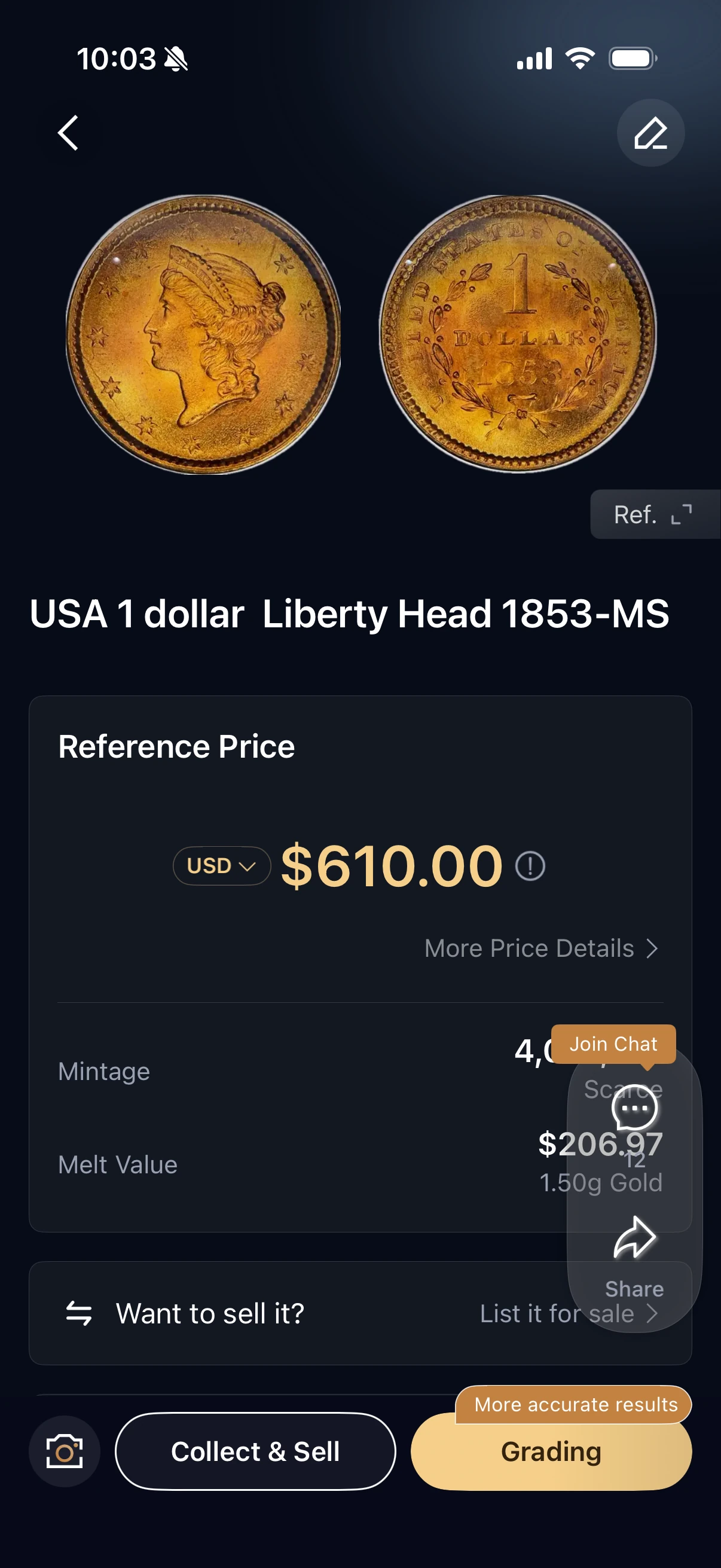
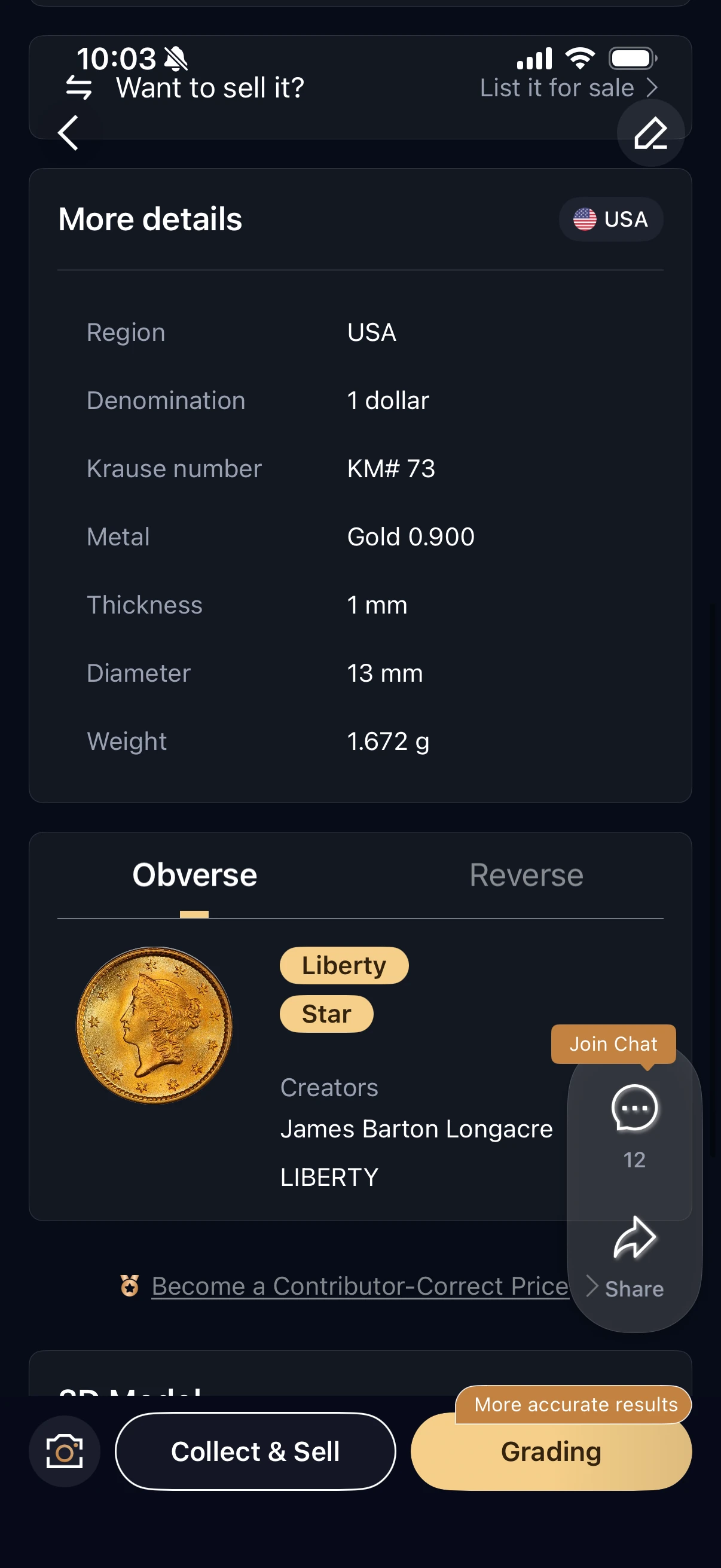
The reader used the PCGS reference photograph shown earlier and supplied these Heritcoin result screens. The app identified “USA 1 dollar Liberty Head 1853-MS”, matching the country, denomination, design and year of the reference coin.
What the result tells you
- Metal: “Gold 0.900” identifies a 90% gold issue, unlike an ordinary golden-colored modern dollar.
- Specifications: the screen lists 1.672 g and 13 mm. The weight matches the standard used above; the diameter is approximately consistent with PCGS’s 12.70 mm listing.
- Designer: James Barton Longacre matches the PCGS reference.
- Two different values: the app displays a $610 reference price and a $206.97 melt value, with 1.50 g of gold. These are the values captured in this result, not live quotes.
How to compare the $610 estimate
The result shows MS without a numerical grade. The PCGS table above lists $600 at MS60 and $800 at MS63; the app’s $610 estimate does not establish either grade. The source photograph is labeled PCGS MS68, so this result should not be treated as a grade-matched valuation of that specimen.
This reference-photo example supports checking the coin’s identity and catalog details. To resolve the grade or value of your own coin, submit its photographs for Heritcoin expert review and arrange physical examination when needed.
Identify with AI, ask a person, then examine the coin if needed
Compare in Heritcoin
Capture the obverse and reverse. Check the suggested coin name, year and mint against the physical coin. Use the reference value only after confirming the identity and its assumed condition.
Ask a Heritcoin expert
If the identity or finish remains unclear, open Expert Appraisal Service, select a suitable specialist and submit clear photos plus a specific question. Review the service scope and separate fee before paying.
Submit the actual coin
If photographs cannot resolve authenticity, metal or surface questions, arrange examination by a qualified numismatic professional or a grading service such as PCGS or NGC. Ask whether the service covers the tests you need.
AI and photo-based reviews cannot confirm metal purity or replace physical authentication. For these questions, you can proceed directly to an appropriate testing or grading service.
A useful question to send with your photos
“My coin looks like a 2010 Lincoln dollar. Heritcoin suggests the regular issue, but the fields look reflective. Can you help distinguish a proof from a regular strike or polished coin? I have included front, back and edge photos.”
For a possible Cheerios dollar, include a sharp reverse close-up and ask specifically about the tail-feather design. If the feature remains inconclusive, do not apply the rare-variety price.
Start with Heritcoin →Human expert appraisal is separate from a Premium subscription; available services and fees are shown in the app.
Gold dollar coin value: frequently asked questions
Can Heritcoin tell whether my dollar is real gold?
Heritcoin can suggest an issue whose catalog specifications include a metal composition. A photo cannot confirm that your specimen has that composition. Ask a Heritcoin human expert about unclear identification features, and arrange appropriate physical testing if the metal or authenticity remains uncertain.
Are gold dollar coins real gold?
Ordinary modern golden dollars are not. Historic U.S. gold dollars dated 1849–1889 are 90% gold. The special 2025 half-ounce Sacagawea proof is a separate 24K gold issue. Identify the exact coin rather than relying on color.
How much is a 2000-P gold dollar worth?
An ordinary worn 2000-P Sacagawea dollar generally starts at $1. Higher-grade examples and confirmed varieties need separate comparisons. A “Cheerios” auction price applies to an attributed variety, not every 2000-P coin.
Why does my Presidential dollar have no date on the front?
Check the edge for its issue date and mint mark. Dates beneath the president’s portrait describe the presidential term. Their placement is part of the design, not evidence that the coin is an old gold dollar.
Does a dollar with no edge lettering have an error?
It depends on the issue. Original 2000–2008 Sacagawea dollars normally have plain edges. On an issue that should have lettering, a genuine omission must be distinguished from wear or deliberate alteration.
How much is an 1853 gold dollar worth?
For the Philadelphia regular strike, PCGS guide values checked September 18, 2026 are $435 in AU50, $600 in MS60, $800 in MS63 and $2,750 in MS65. Mint-marked issues such as 1853-D need separate references, and cleaning or damage can change the comparison.
How much gold is in an 1853 gold dollar?
The standard fine-gold content is 0.04837 troy ounce. Multiply that by the gold quote per troy ounce for a metal-only estimate. The coin’s mint, condition and authenticity also affect its collectible value.
Should I clean a gold dollar before selling it?
No. Preserve the surfaces for examination. Polishing and other cleaning can reduce collector appeal and prevent meaningful comparison with problem-free examples. Photograph the coin as found and handle it by the edge.
Identify the dollar first, then choose the right price
Begin with the design, date, mint and metal—not its gold color. Use $1 as the starting point for an ordinary circulated modern dollar. For historical gold dollars, compare the exact issue and grade: the three Philadelphia examples above range from $800 to $5,000 at MS63. Calculate metal value separately, and use a separate reference for the 2025 half-ounce proof.
Start with Heritcoin AI identification and compare the result with your coin. If an important detail remains unresolved, apply for Heritcoin human expert appraisal. When authenticity, composition or surfaces cannot be established from photos, send the coin for physical examination before relying on a high valuation.
Sources and editorial method
Prepared by the Heritcoin Team, which offers coin-identification services. General references checked September 17, 2026; historical grade-price tables checked September 18, 2026; citing independent sources does not imply endorsement. Coin photographs are not to scale.
- U.S. Mint: modern dollar designs.
- U.S. Mint: Lincoln dollar and issue date.
- PCGS: 2010-P Lincoln regular strike.
- PCGS: 2010-S Lincoln proof.
- Stack’s Bowers: actual Cheerios lot 6174.
- U.S. Mint: Sacagawea Golden Dollar — modern design, composition and gold-anniversary distinction.
- U.S. Mint: circulating coin specifications — standard modern dollar dimensions and alloy.
- NGC: gold dollars, 1849–1889 — type development and identification.
- NGC: U.S. gold coin melt values — gross weight, fineness and actual gold weight.
- PCGS: 2000-P Sacagawea dollar — specifications, mintage and grade-specific reference values.
- PCGS: 1853 gold dollar — Type 1 identification and grade-specific values.
- NGC grading scale — condition terminology.
- NGC authentication and grading process — professional examination.
- NGC: missing edge lettering and altered edges.
- PCGS: Presidential dollar edge orientation.
- U.S. Mint: 2025 Sacagawea gold proof announcement.
- PCGS auction record: 1853-D, NGC AU58, lot 4133.
- PCGS auction record: Cheerios dollar, PCGS MS67, lot 6174.
- PCGS: 1855 Type 2 gold dollar and grade-specific values.
- PCGS: 1889 Type 3 gold dollar and grade-specific values.