

In this article
01 Quick answer
A common worn, copper-nickel Kennedy half dollar is usually worth $0.50. Silver Kennedy halves are worth more: the September 28, 2026 NGC silver-content benchmarks were $22.18 for a 1964 half and $9.07 for a 1965–1970 half. These are metal-value benchmarks, not guaranteed sale prices.
Collector condition can add a premium. For example, the PCGS guide checked on the same date listed a 1964-D at $38 in MS63, $52 in MS65 and $150 in MS66. To choose the right comparison for your coin, match its design, year and mint mark, then its metal, finish and condition. Older designs, proofs and recognized varieties have their own values.
This guide covers U.S. half dollars, whose face value is $0.50. A Canadian, Australian or other country’s 50-cent coin needs that country’s catalogue and currency. All dollar amounts below are USD.
02 Identify your half dollar
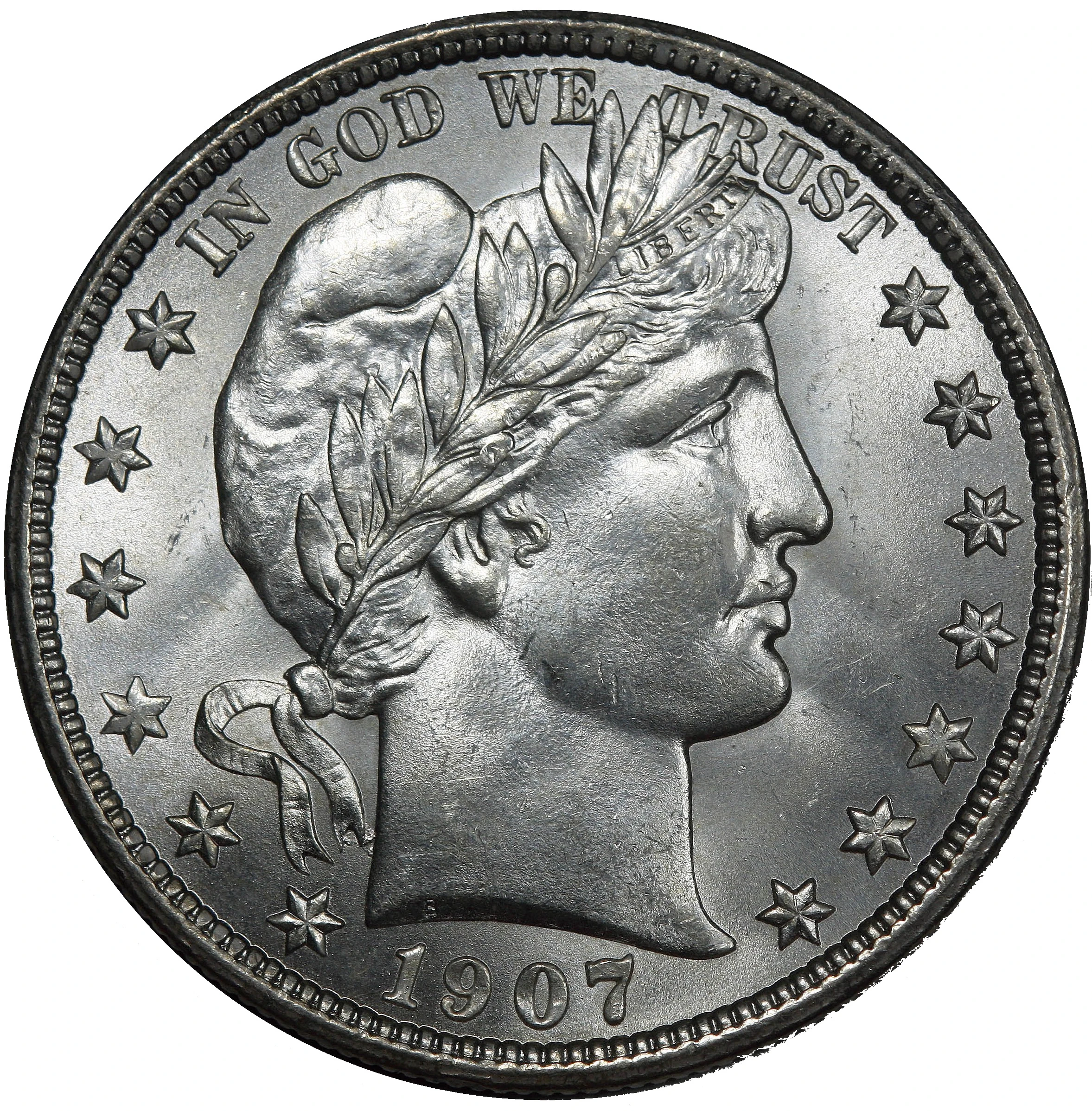
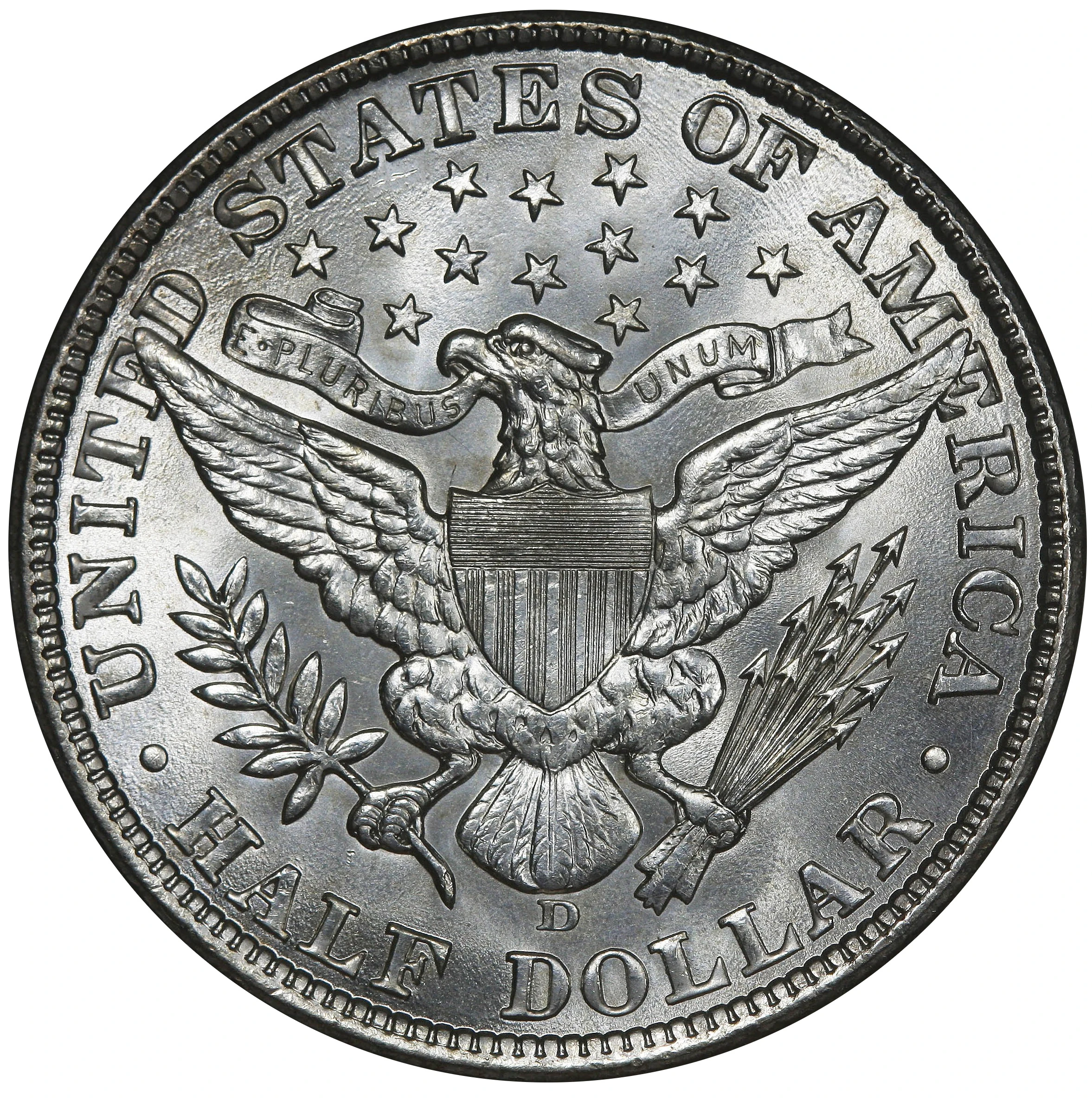
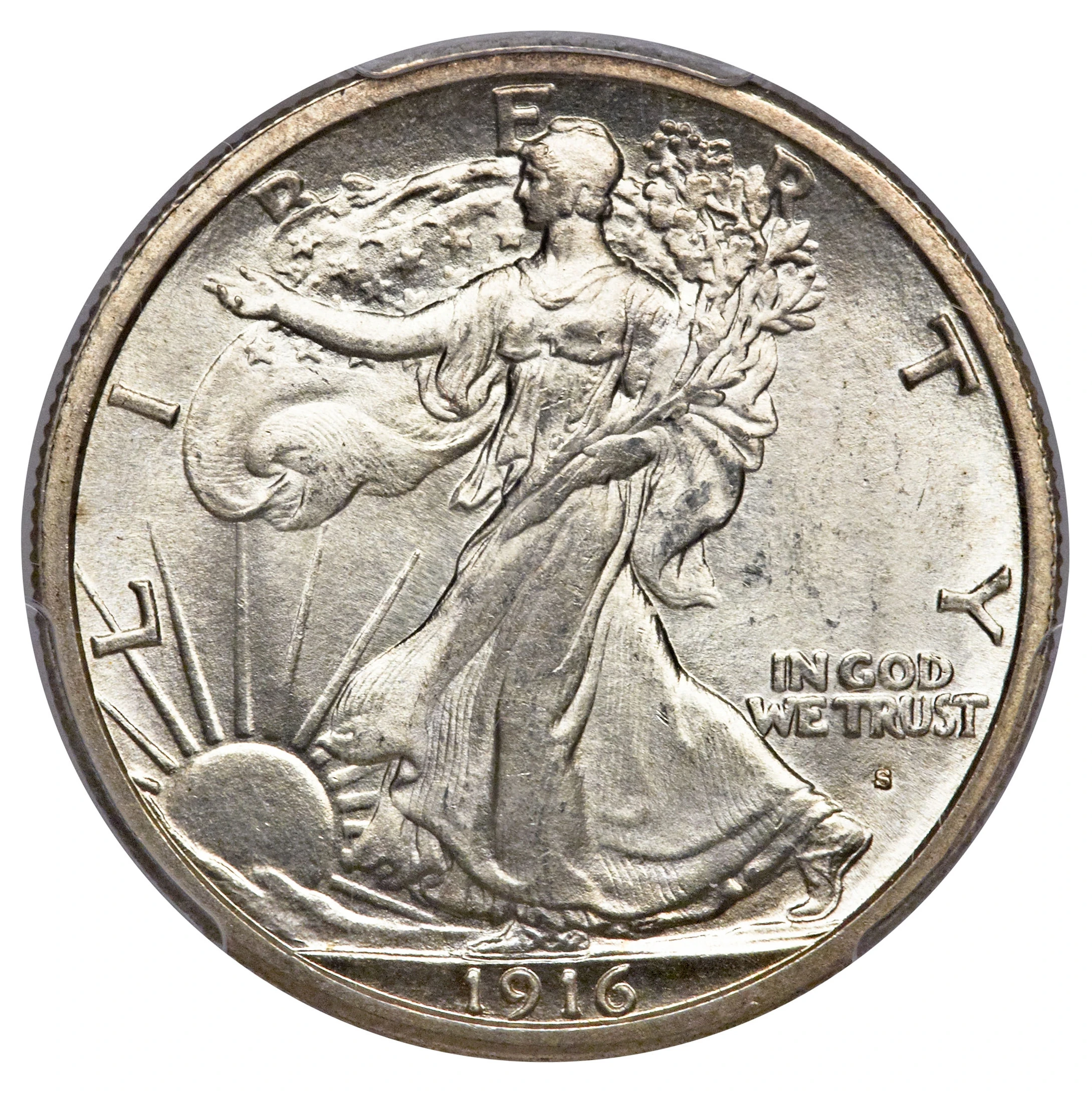
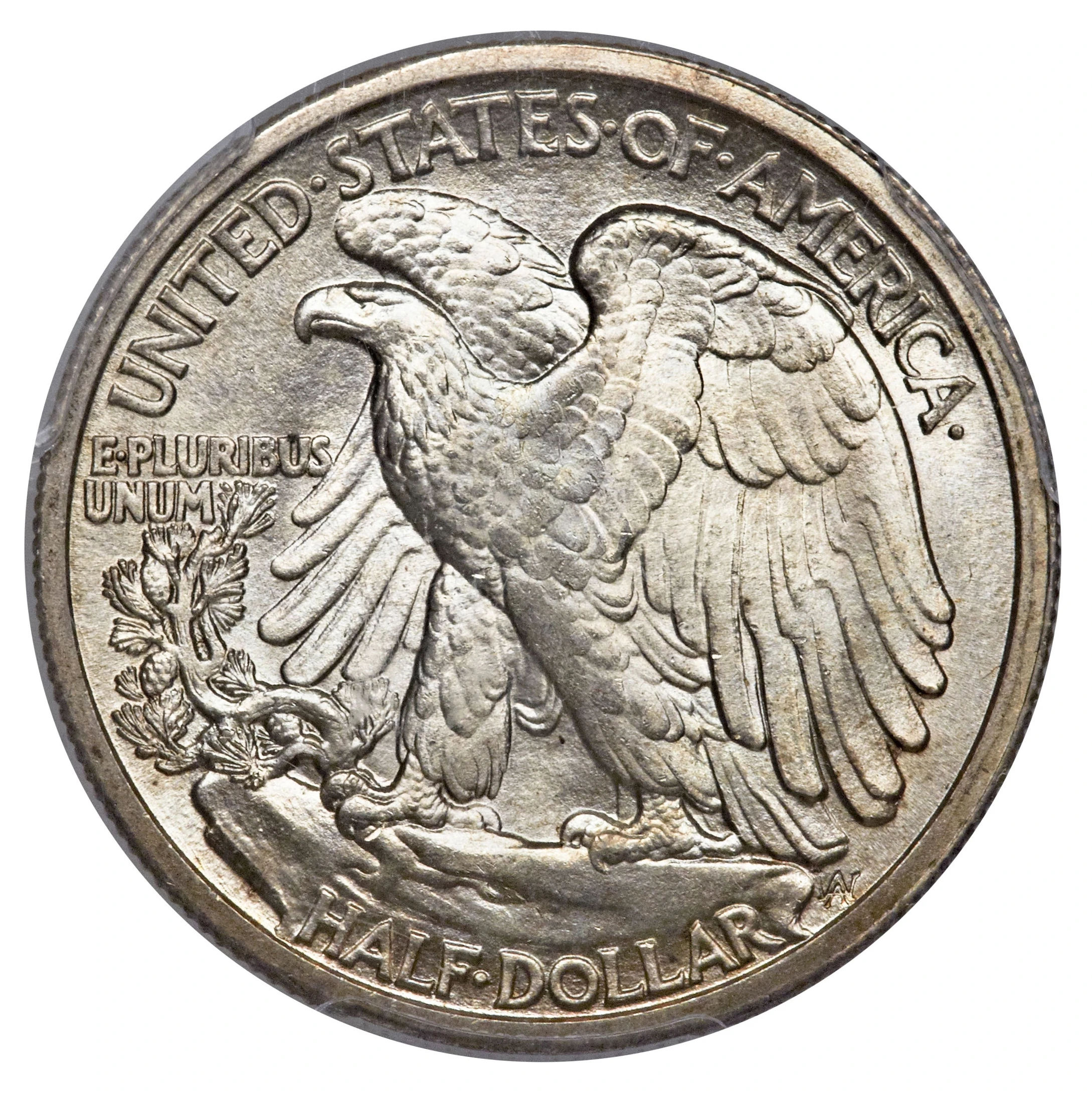
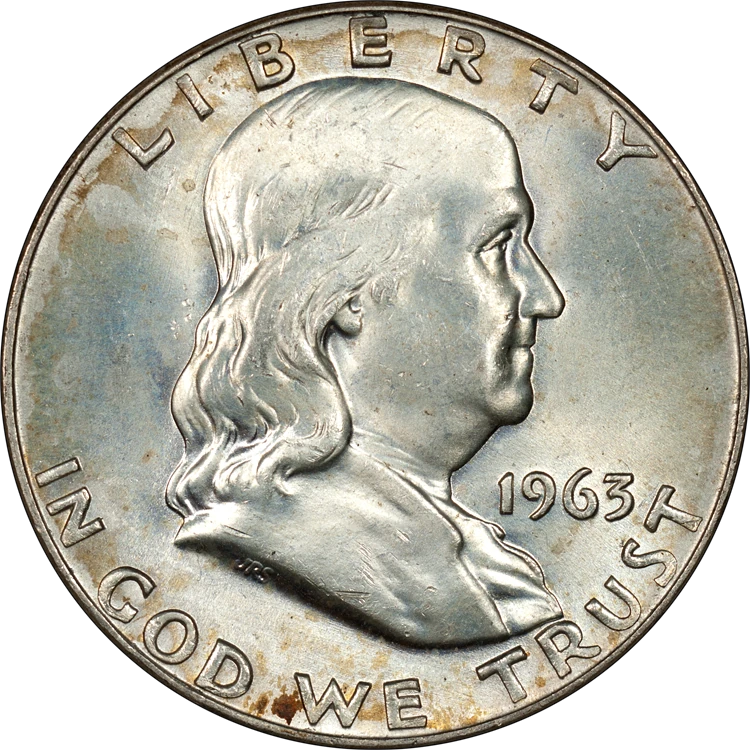
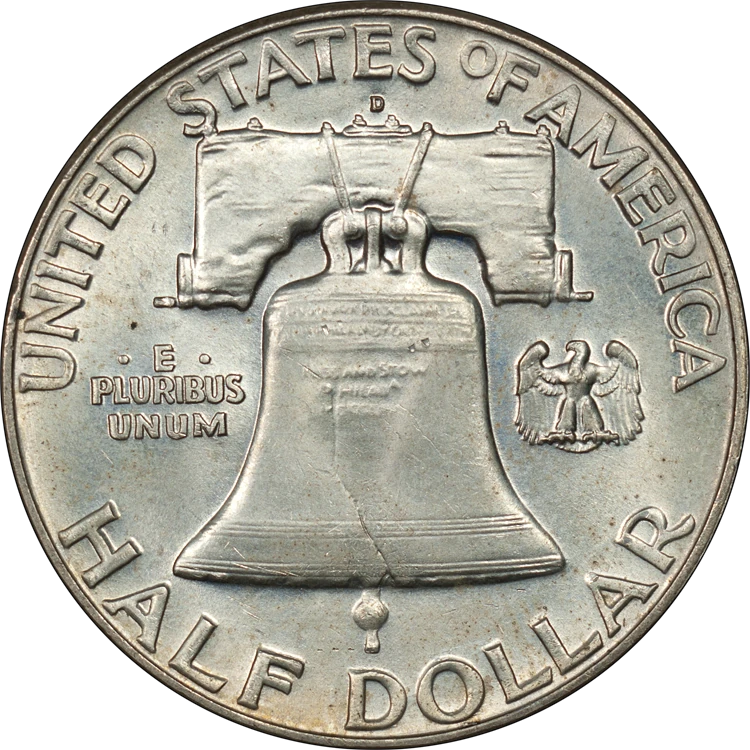
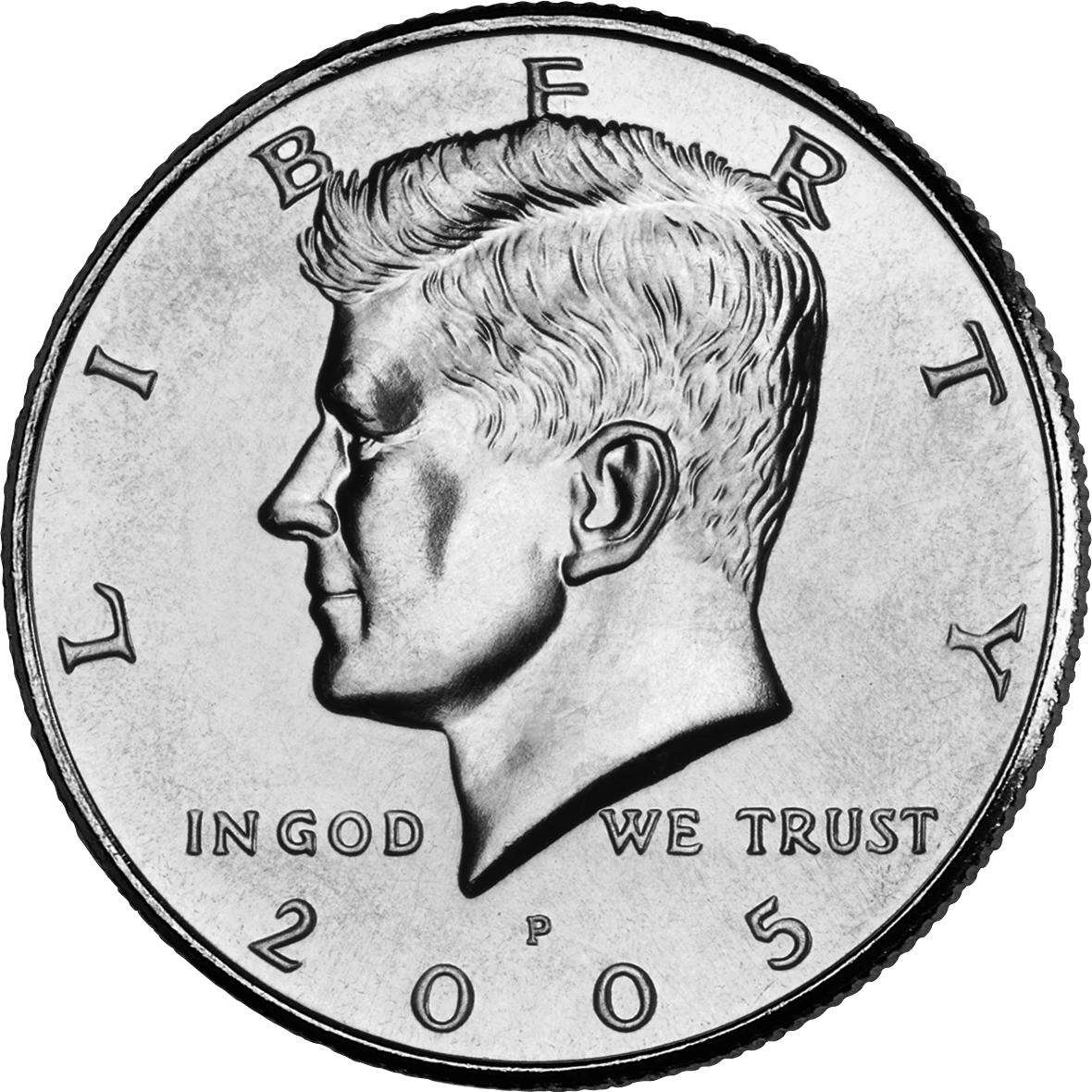
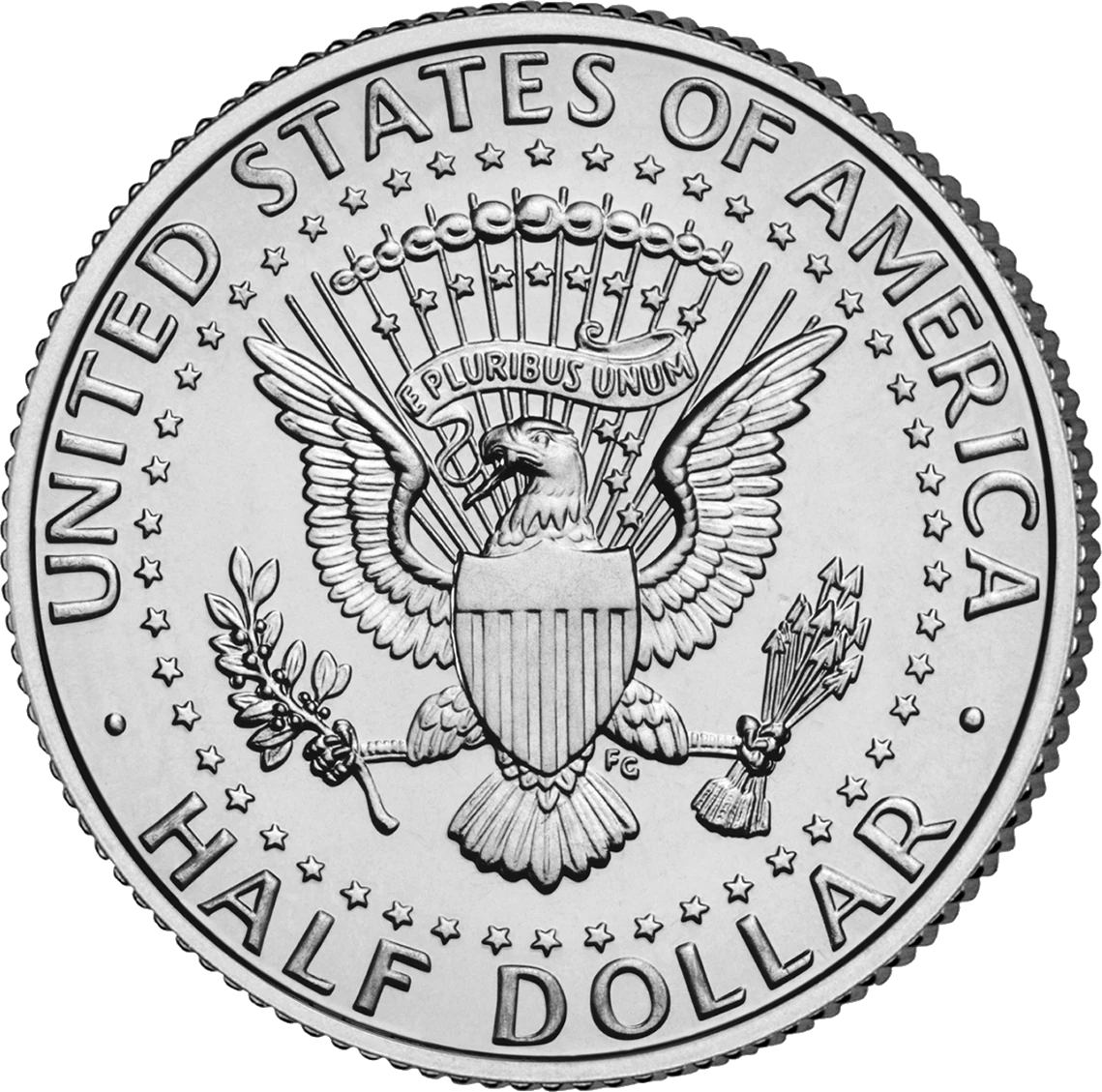
Read the country and denomination, then use both sides to identify the design. The word “Liberty” alone does not tell you the series. A walking figure, a portrait of Benjamin Franklin and a portrait of John F. Kennedy lead to different date lists.
Barber
1892–1915 · Shown: 1907-D
Walking Liberty
1916–1947 · Shown: 1916-S
Franklin
1948–1963 · Shown: 1963-D
Kennedy
1964–2025 · Shown: 2005-P
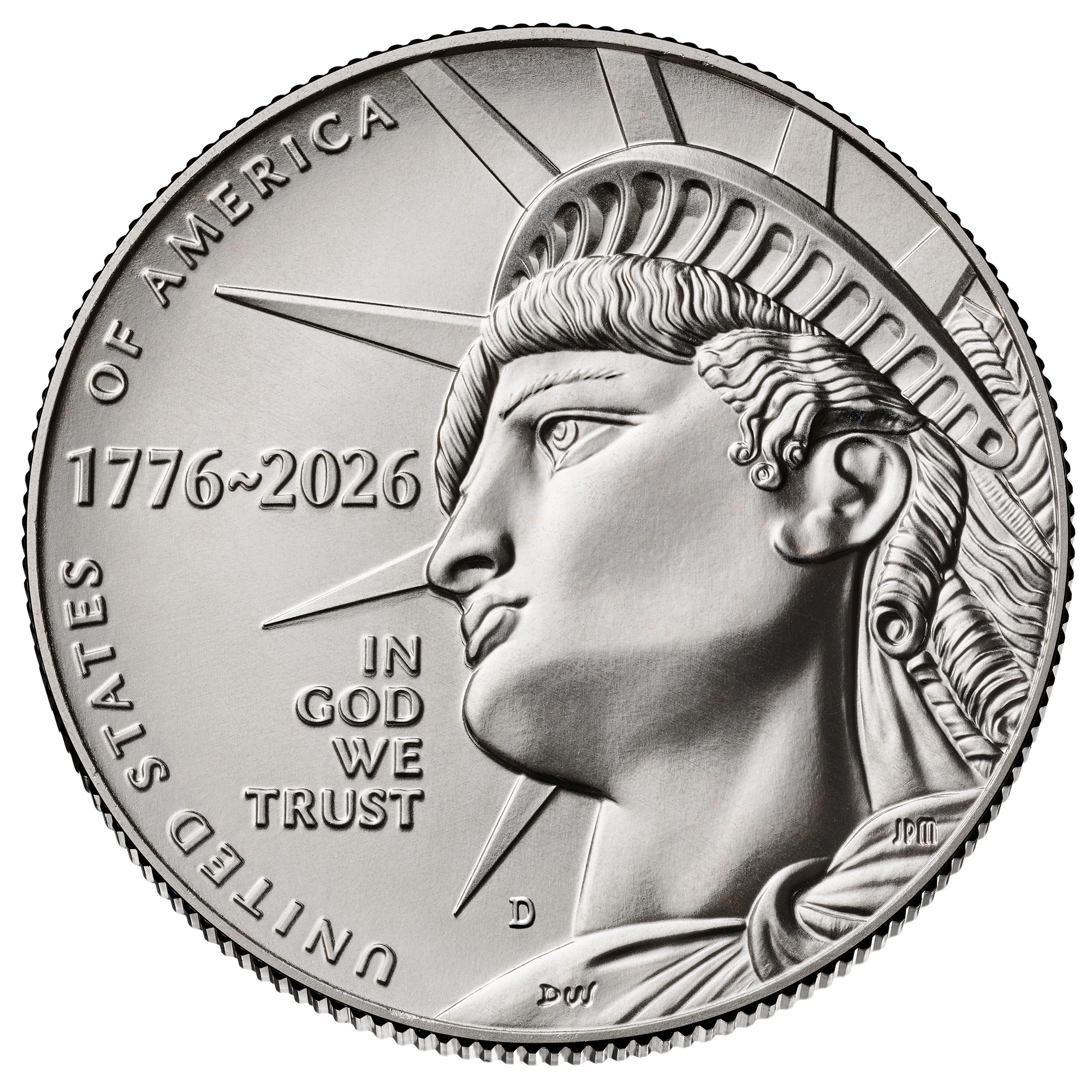
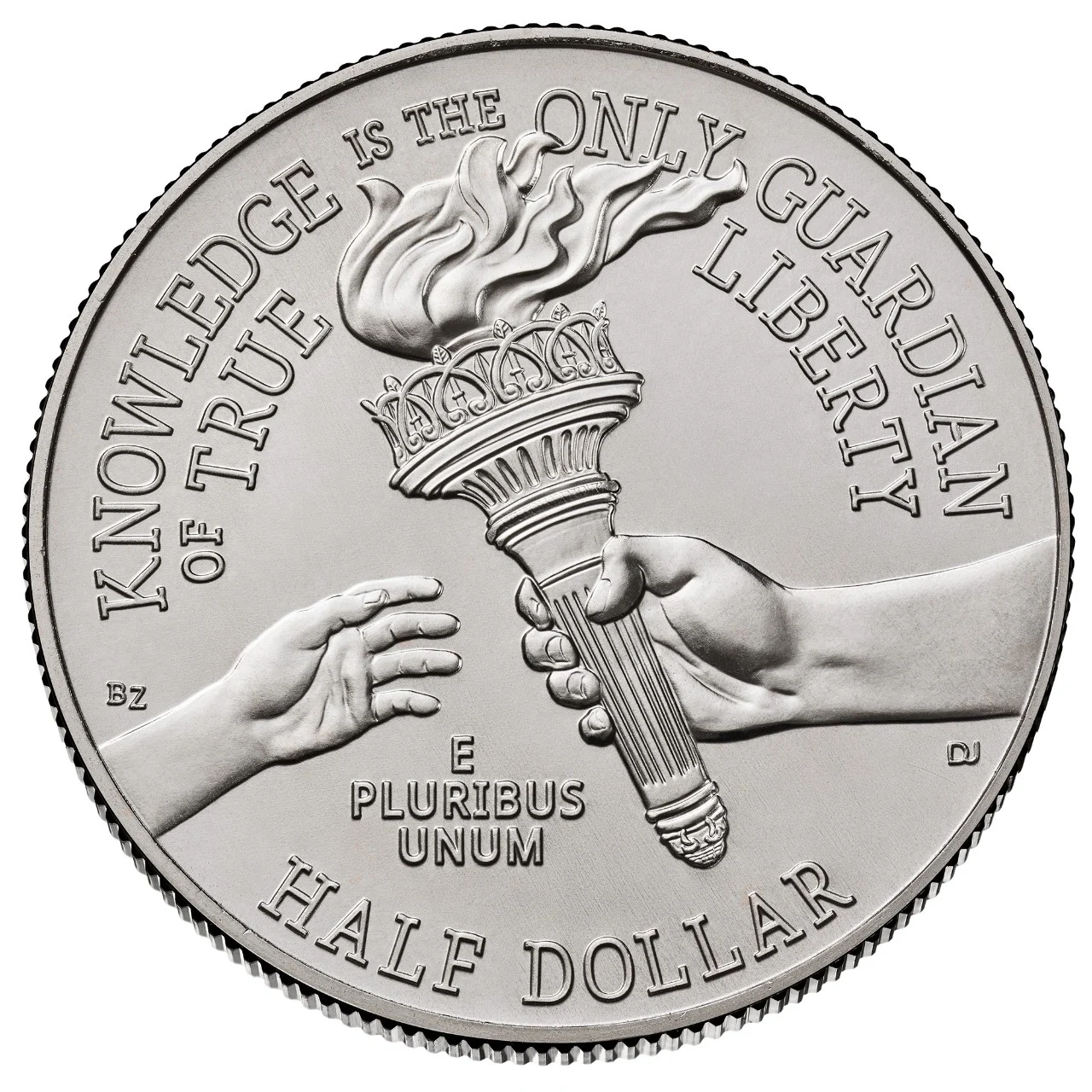
Enduring Liberty
Issued in 2026 · Dual date: 1776–2026 · Shown: 2026-D
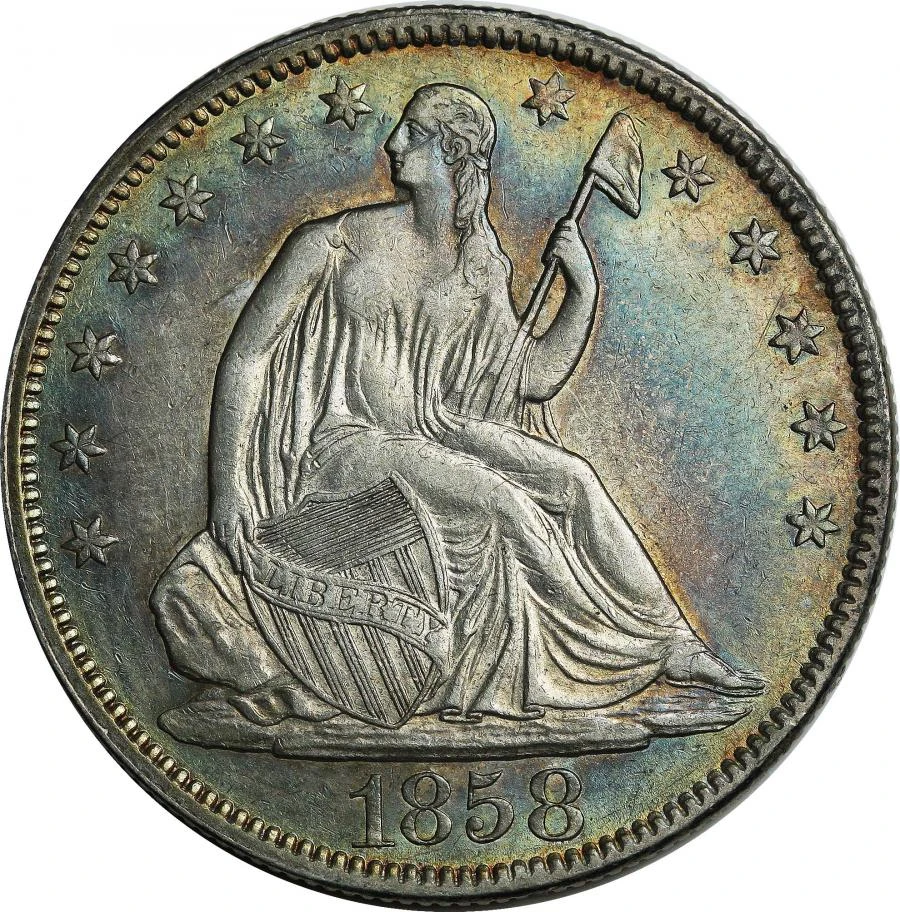
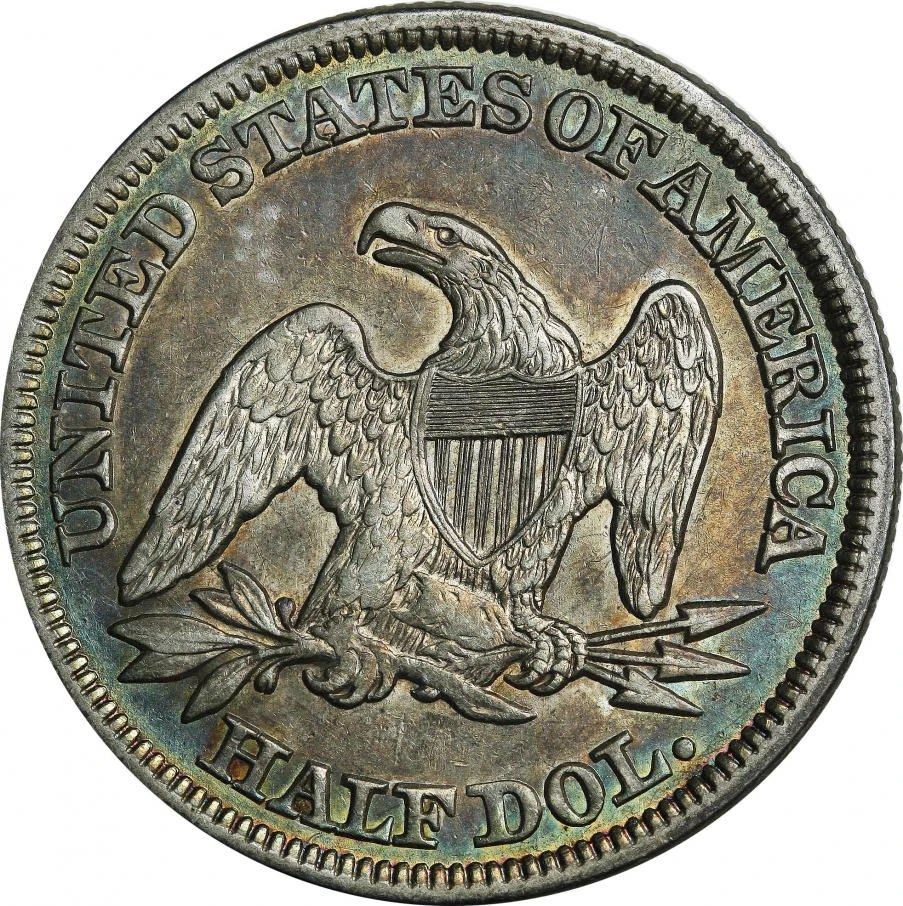
Earlier type: Seated Liberty
1839–1891 · Shown: 1858
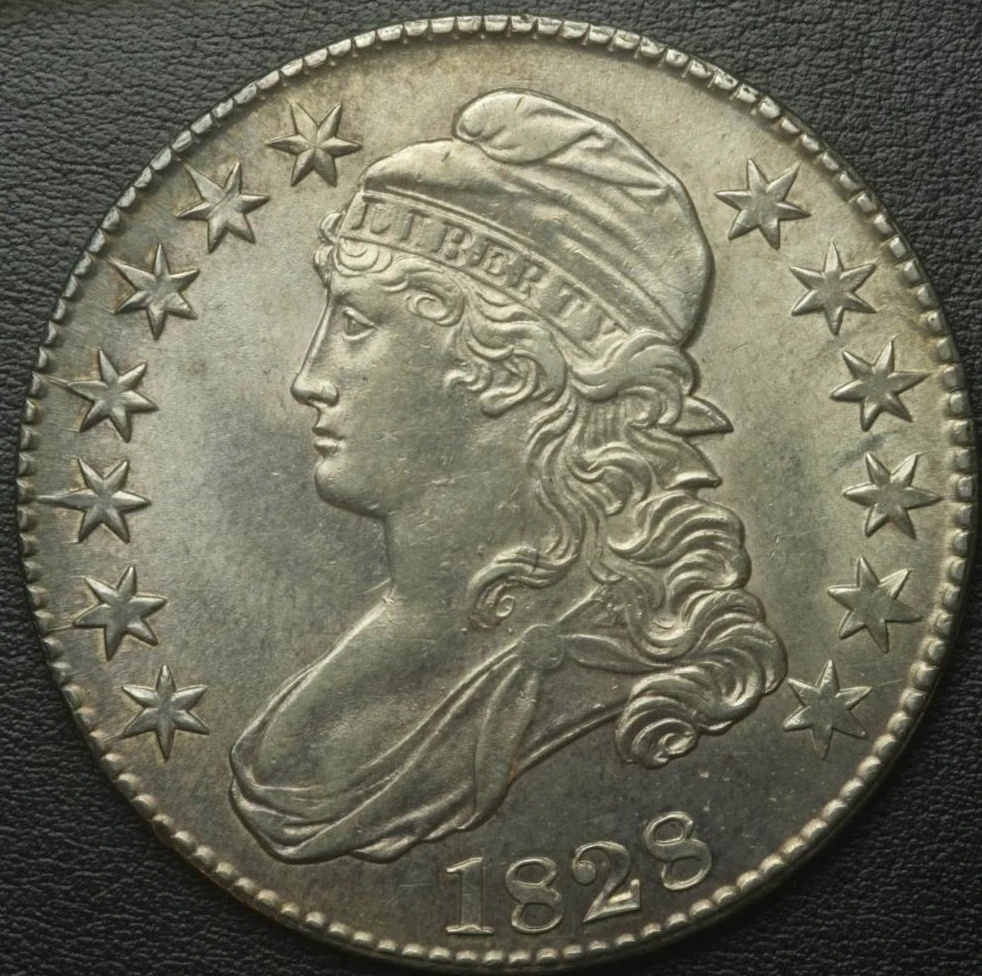
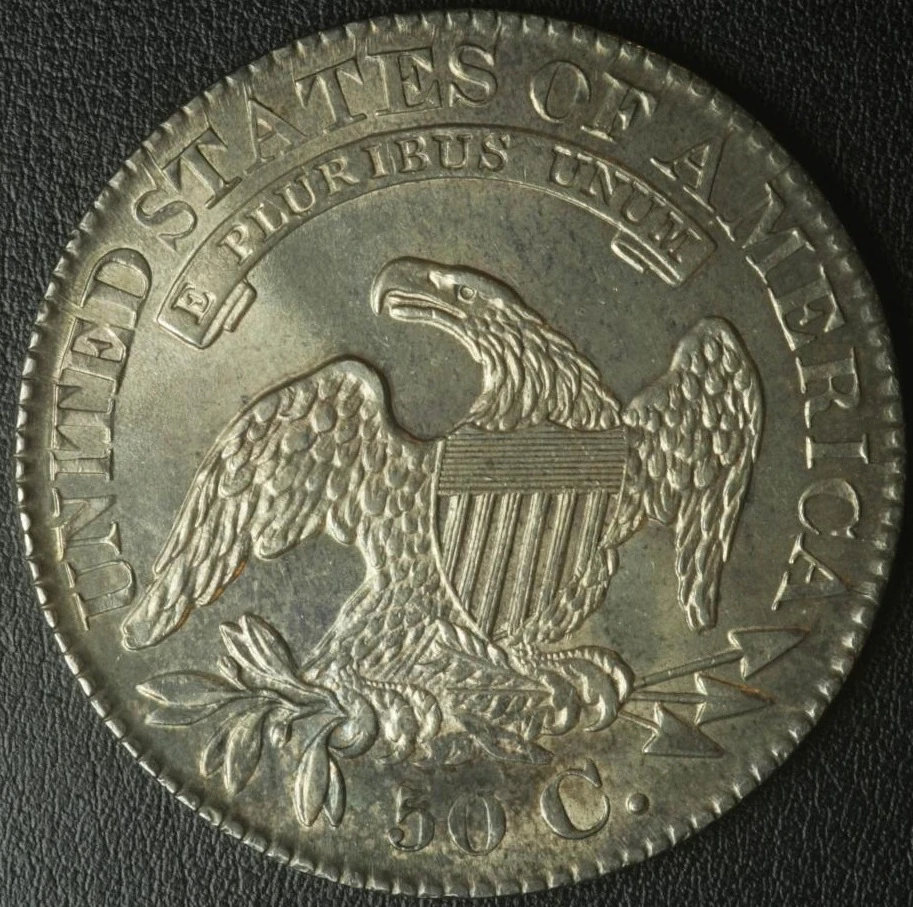
Earlier type: Capped Bust
1807–1839 · Shown: 1828
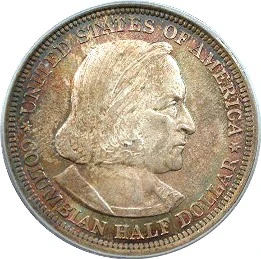
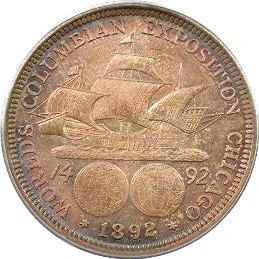
Commemorative: Columbian
1892–1893 · Shown: 1892
The U.S. Mint introduced the Enduring Liberty design for 2026. A different portrait or reverse is therefore not, by itself, a mint error. Confirm the issue before searching for a premium.
Where is the mint mark?
On a 1964 Kennedy half, look on the reverse below the eagle. On Kennedy halves from 1968 onward, look below the portrait and above the date. The 1965–1967 issues have no mint mark by design. Do not treat every missing letter as an error, and do not use the Kennedy location for every older series.
1964-D: look on the reverse
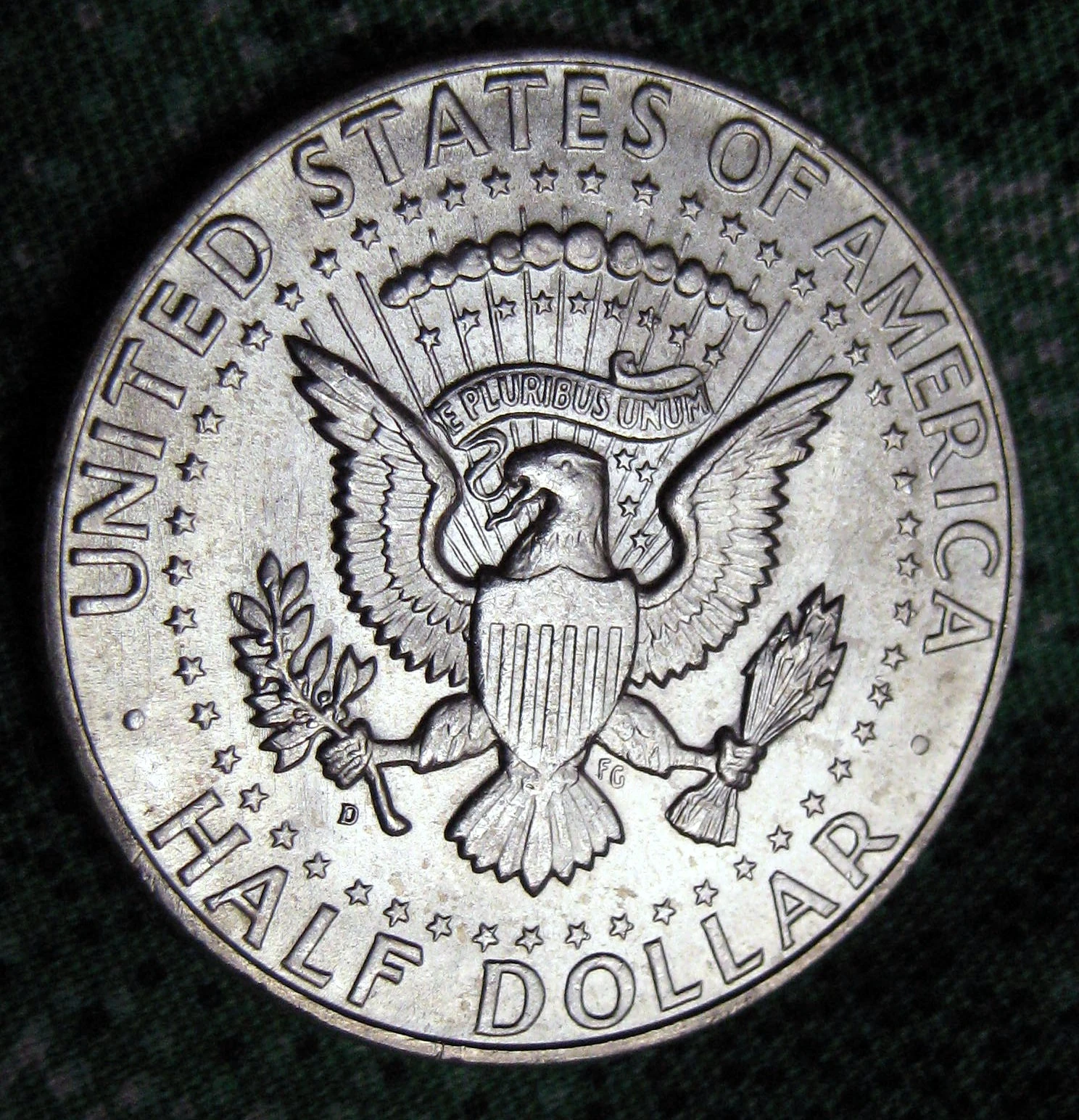
1968 onward: look on the obverse
1965–1967 Kennedy halves have no mint mark. A 1964 Philadelphia half also normally has no letter.
Photograph the complete obverse, reverse and edge. Keep any mint packaging or grading label with the coin; it can identify a finish or metal version that a face-on photograph leaves uncertain.
03 Value by type
The first question is whether the coin is an ordinary clad issue, a silver issue or a distinct collector version. This table gives the next useful comparison. It does not assign one retail price to every grade in a series.
| Your coin | Value starting point | What can change the result? |
|---|---|---|
| Common worn Kennedy, 1971 onward, ordinary copper-nickel issue | Usually $0.50 face value | An identified variety, mint error, special issue or substantially better condition. |
| 1964 Kennedy | $22.18 silver-content benchmark | Mint mark, grade, proof status and varieties. |
| 1965–1970 Kennedy | $9.07 silver-content benchmark | Date, grade, Special Mint Set or proof finish; examine 1970-D as a collector issue. |
| Barber, Walking Liberty or Franklin | Check silver content, then the exact date and mint | Scarcity, wear, surface problems and any grade designation. |
| 1776–1976 Bicentennial | Common worn clad examples are generally face-value coins | Separate clad, silver, proof and uncirculated versions before pricing. |
| Proof, commemorative or special-set half | Use the exact issue’s guide and completed sales | Metal, finish, certification, packaging and condition. |
“Old,” “shiny” and “not often seen in change” are not sufficient reasons for a high valuation. Our guide to what makes a coin valuable explains how scarcity and demand work alongside condition.
04 Kennedy prices by grade
Even within the Kennedy series, a useful price requires a specific grade. The examples below show PCGS guide estimates for ordinary regular strikes at three Mint State grades. MS means no circulation wear; the number distinguishes preservation within that category.
| Date and mint | MS63 | MS65 | MS66 |
|---|---|---|---|
| 1964, Philadelphia | $38 | $60 | $90 |
| 1964-D | $38 | $52 | $150 |
| 1968-D | $16 | $20 | $70 |
| 1970-D | $22 | $46 | $375 |
A worn 1964-D half does not become a $150 coin because it has the same date as the MS66 entry. First establish the condition, then use the matching column. PCGS guide figures describe its graded-coin market; an uncertified coin, a dealer purchase offer and a retail asking price may differ.
The large jump for 1970-D between MS65 and MS66 is a reason to examine condition carefully, not to choose the more attractive number. Use several matching sales before adopting a selling estimate.
05 Silver content and value
Silver content supplies a metal benchmark; collector value is a separate comparison. A standard 90% silver half dollar weighing 12.5 g contains about 0.36169 troy ounce of silver. A 40% silver Kennedy half weighing 11.5 g contains about 0.1479 troy ounce.
Calculate the metal component
Actual silver weight × silver price per troy ounce = approximate silver value.
At a hypothetical $60 per troy ounce, those amounts would be approximately $21.70 and $8.87. This is a worked calculation, not a current silver quote. Wear, market spreads and transaction costs can affect what a buyer pays.
Compare this calculation with a dated melt reference, then check whether the coin has a collector premium. Do not add a full retail guide price to melt value: the retail price already values the coin as a whole.
Do not use the edge alone to decide
A copper-colored band can be a useful clue to copper-nickel clad construction. Surface color, toning or plating can mislead, however. Check the exact date and version, and compare weight with that issue’s specifications. Weight and an edge photograph help identify a mismatch; they do not authenticate a coin on their own.
Early half dollars and later collector products do not all share the two specifications above. For a proof or unusual design, use its own metal and weight specification before calculating.
06 Collector issues and varieties
Set aside an identified collector version before treating it as an ordinary circulation coin. These are useful checks, not a promise that every example is valuable.
1970-D: a Mint Set issue
PCGS records that the 1970-D Kennedy half was sold in that year’s Mint Sets. It contains 40% silver, but the date and condition also matter. The grade table above shows why its silver content alone does not finish the valuation.
1776–1976: the S does not automatically mean silver
The Bicentennial date and Independence Hall reverse identify the design, not the composition. PCGS lists both a 1976-S clad proof and 1976-S silver issues. Check the exact version and any original packaging; the S mint mark alone does not settle it. The silver version uses the 40% silver composition.
Proof and later silver collector issues
Proof describes a method of manufacture, not a silver percentage or a grade above Mint State. Later Kennedy silver proofs exist, including 90% silver issues reintroduced in 1992 and .999 fine silver coins in the 2019 Silver Proof Set. Other proofs are copper-nickel clad. Identify the product and finish before choosing a price column.
Older dates and recognized varieties
An older half needs a date-and-mint comparison even when it contains the same silver as a common date. If you suspect doubling or another variety, match its diagnostic details to a recognized listing. Damage, glare or a faint letter is not enough to establish a mint error.
Keep the surfaces as found. The cleaned-coin guide shows why polishing can make the correct market comparison harder and reduce collector appeal.
07 Condition and actual sales
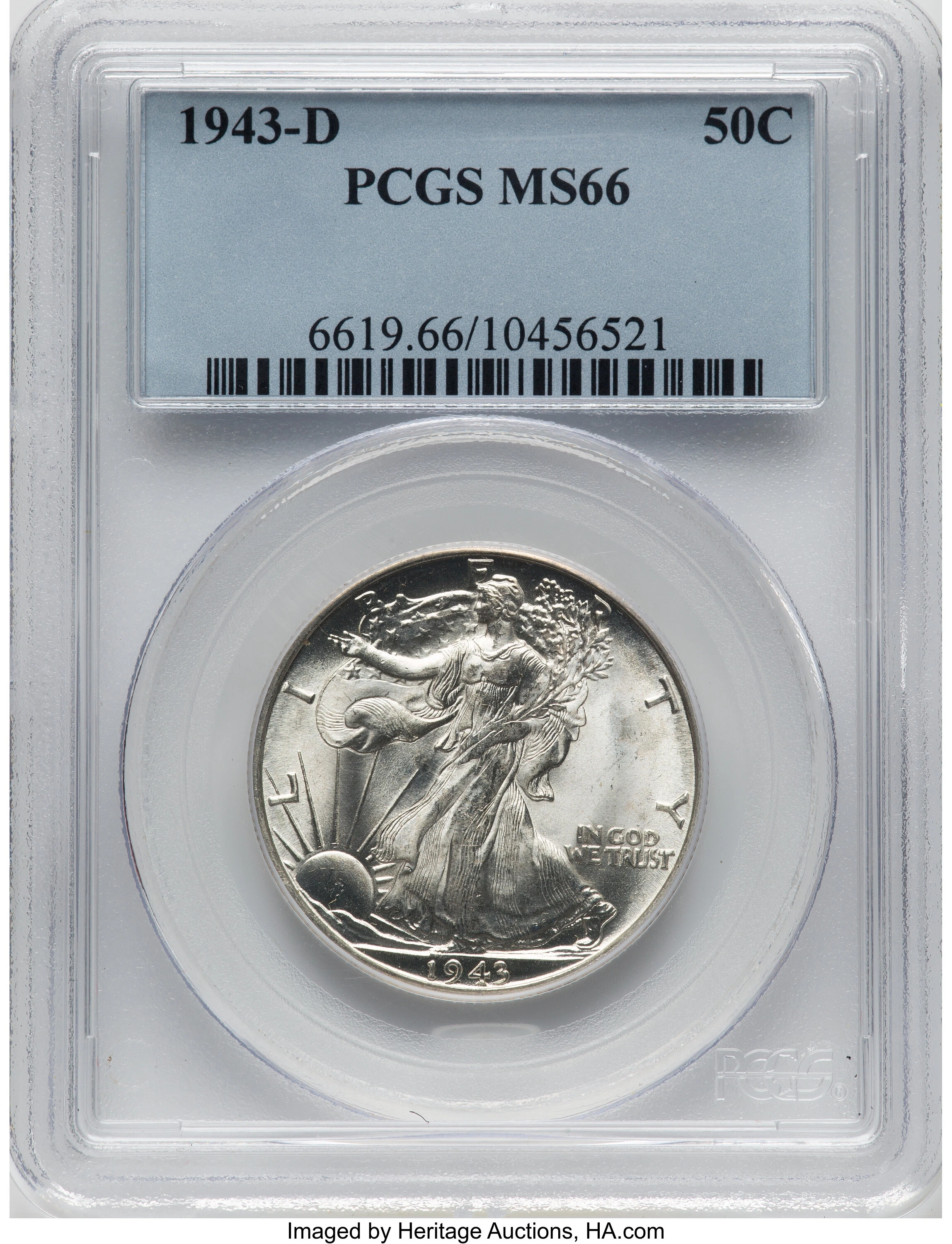
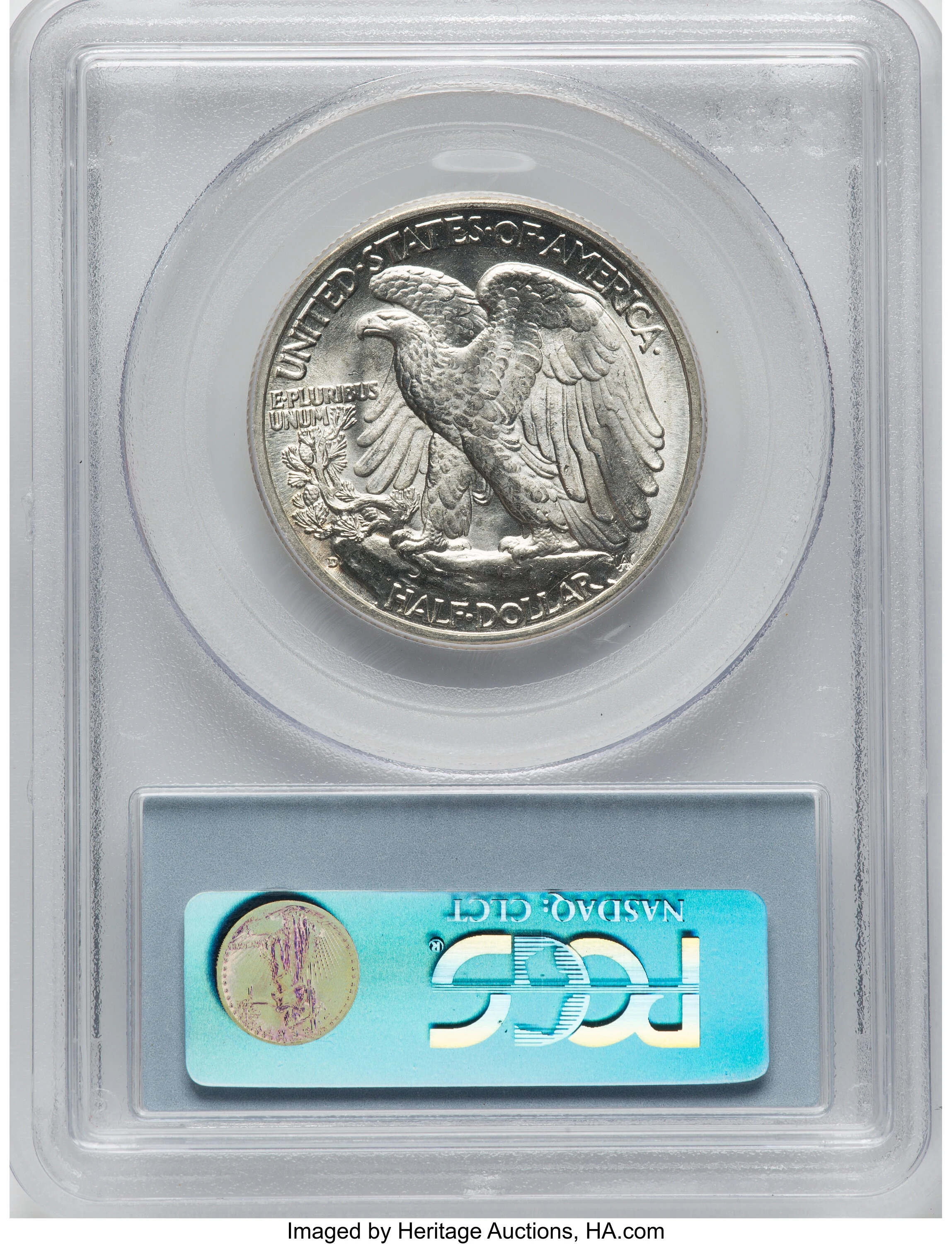
The same date and mint can sell at different prices because the specimens are different. Two 1943-D Walking Liberty halves from our coin grading scale guide provide a concrete comparison. Both sold in Heritage auction 132418 on April 24, 2024; NGC Auction Central reports the following totals including the buyer’s premium.
1943-D · PCGS MS66
$159
Lot 21273 · Certificate 10456521
1943-D · PCGS MS67, CAC
$660
Lot 21274 · Certificate 83734120
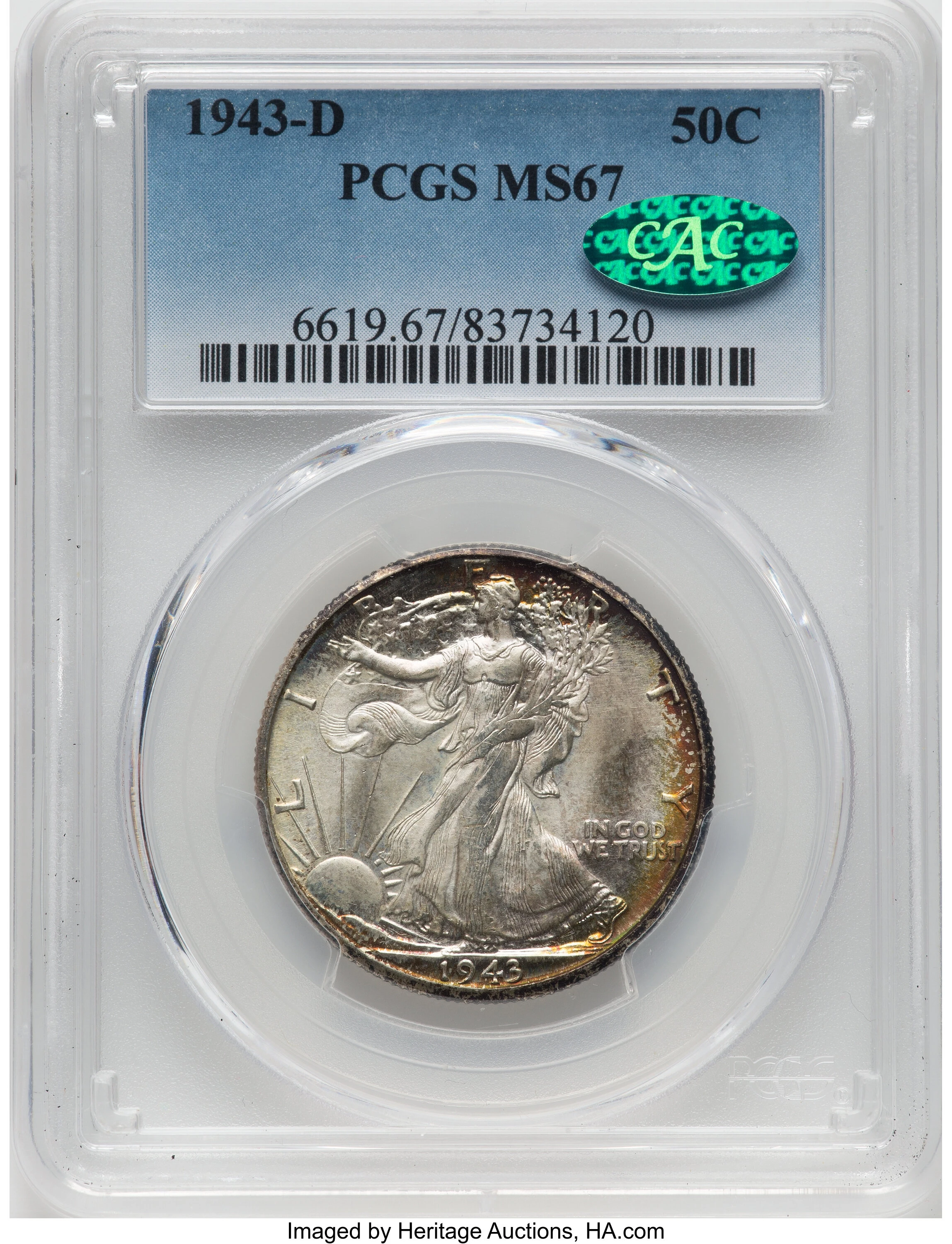
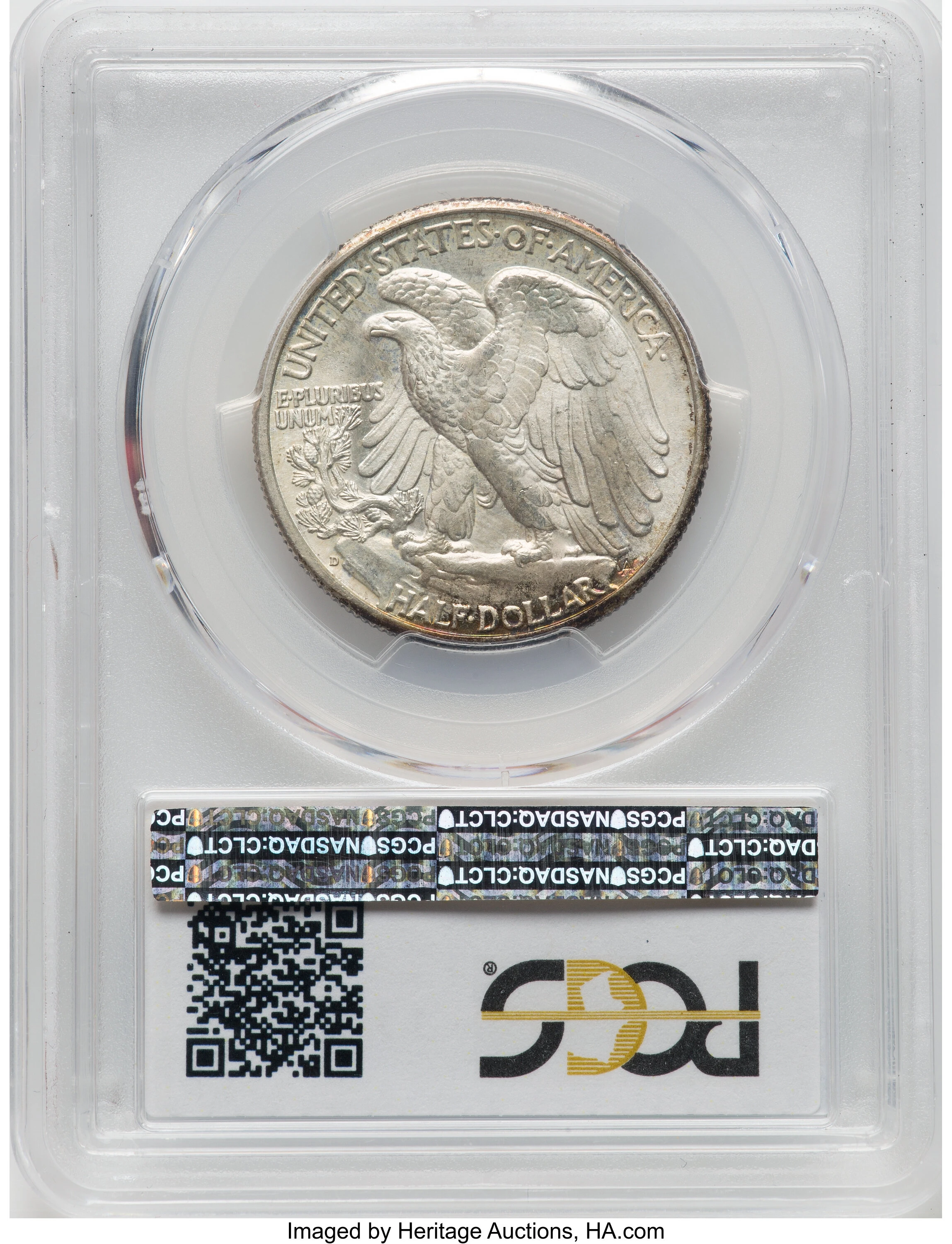
The higher-priced coin also carries a green CAC sticker, so this pair does not isolate the effect of one grade point. The photographs and records let you compare the actual specimens rather than assuming every 1943-D half is worth either amount. These are historical transactions, not today’s prices for an ungraded coin.
Build a comparison that matches your coin
- Match the issue: design, date, mint, composition, strike type and any confirmed variety.
- Match condition: wear, numerical grade if certified, and qualifiers such as cleaned or damaged. Do not use a problem-free sale for a coin with significant surface problems.
- Read the price basis: a guide estimate, seller’s asking price and completed auction total answer different questions. Check whether auction fees are included.
- Use a small group of relevant sales: compare photographs and dates, then form a range. A single record price is not a normal starting point.
A sale total is also not the seller’s net proceeds. Selling fees, shipping and other costs may reduce the amount received. If an uncertain variety or condition would materially change the decision, use the coin appraisal guide to choose the appropriate next assessment.
08 Check your coin with HeriBase
My 1964 Kennedy half dollar check in HeriBase
I checked a 1964 Kennedy half dollar in HeriBase. The result screen displayed “USA ½ dollar Kennedy Half Dollar 1964-Proof-VF” and a $23.26 reference price. Opening Specifications brought the denomination, metal and size together: ½ dollar, Silver 0.900, 12.5 g and 30.6 mm.
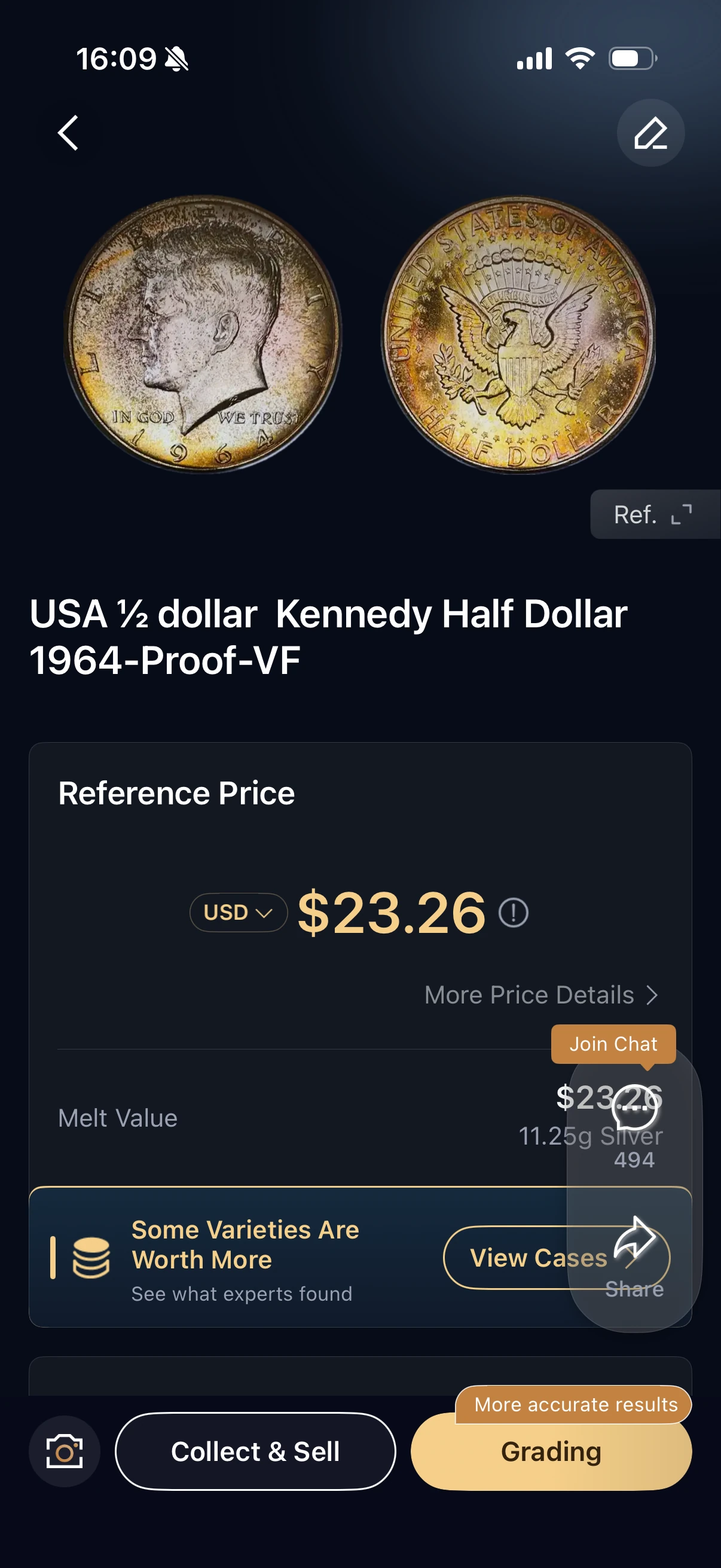
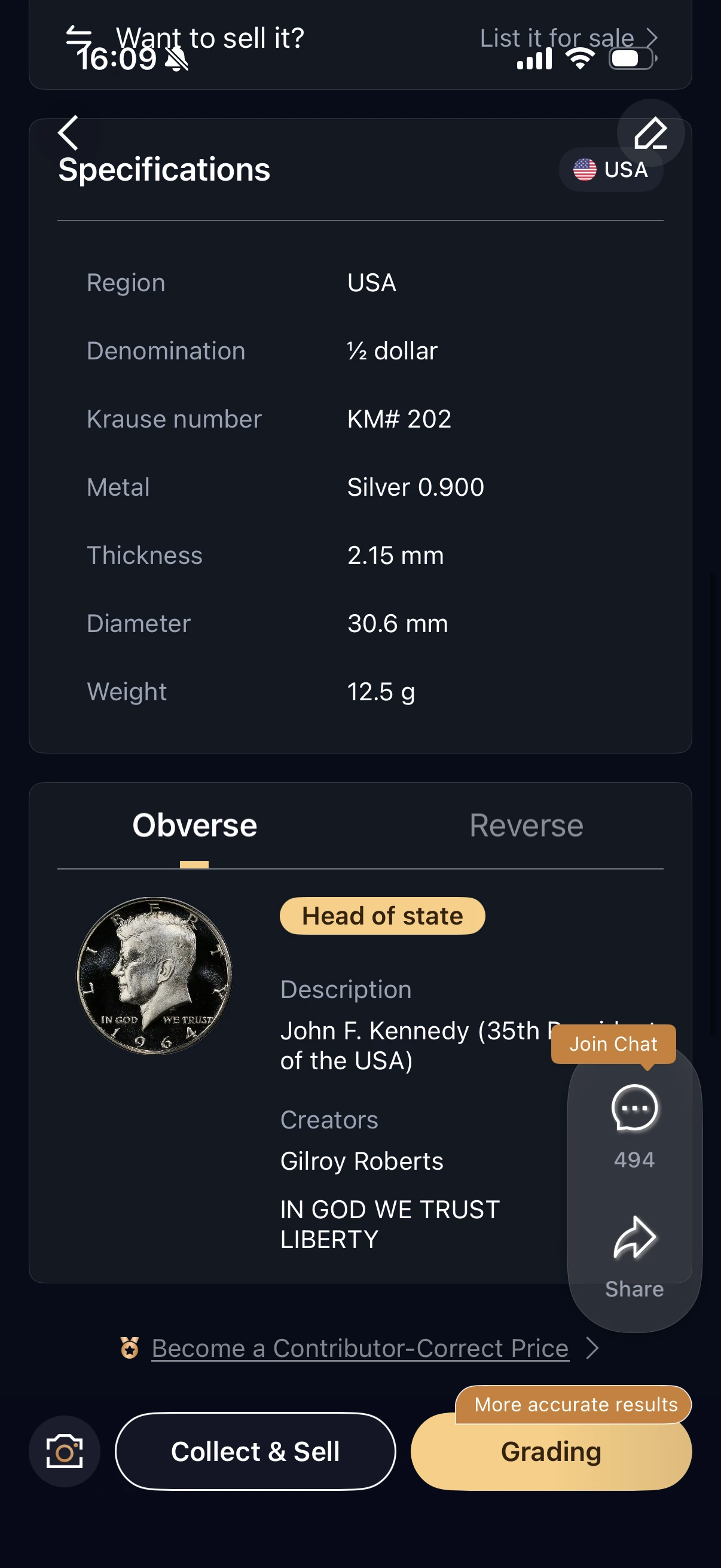
This gave me a useful starting point: the coin belongs in the 1964 silver Kennedy group, rather than the ordinary clad group. The listed weight and fineness imply 11.25 g of silver, which also appears on the result screen. These are the entry’s specifications, rather than measurements taken by the phone.
VF means Very Fine, a circulated condition category; Proof describes how a coin was made. The result also shows $23.26 as Melt Value. I keep that screen’s reference amount separate from the dated NGC benchmark above and from a purchase cost or sale price. Before using a collector-price comparison, I would check the app’s “Proof-VF” classification against the coin’s finish and condition; it is not an MS63, MS65 or MS66 result from the earlier table.
Turn the identification into a useful record
Use identification to choose the right comparison, then save the information needed to repeat it. HeriBase can help organize a suggested identity and reference information; the value check still depends on matching the actual coin.
- Photograph both sides. Include the entire coin in even light. Add a mint-mark close-up and edge photograph where useful.
- Compare the suggested identity. Check country, denomination, date, mint mark and design. For a Bicentennial or proof half, resolve the metal and finish rather than accepting the year alone.
- Check the value category. Use the tables above to separate face value, silver content and a grade-specific collector comparison. Record the source and date beside any estimate.
- Save the record. Keep photographs, identity, purchase cost and reference estimate distinct. If you enter Cost manually, record what you actually paid rather than automatically copying an estimate.
The HeriBase user guide shows the identification and record-editing controls. Start with one well-documented coin; the first-collection guide explains how to connect a saved record to its physical holder or album position.
09 Common questions
Is every half dollar dated before 1971 silver?
The standard Kennedy issues dated 1964–1970 contain silver: 90% in 1964 and 40% in 1965–1970. Barber, Walking Liberty and Franklin halves are also silver issues. Earlier designs have their own specifications, so do not apply one weight or purity to every historic half dollar.
Is a 1971 half dollar worth more than 50 cents?
A common worn copper-nickel 1971 Kennedy half generally has face value. An uncirculated specimen or a confirmed special variety needs its own comparison. A high-grade auction result does not apply to an ordinary worn coin with the same date.
Is a 1776–1976 half dollar rare?
The dual date alone does not make it rare. Common worn clad examples are usually face-value coins. Separate the silver and proof versions, then compare the exact mint, finish and condition.
Does no mint mark mean an error?
No. Kennedy halves from 1965–1967 were made without mint marks, and a 1964 Philadelphia half normally has none. Check the normal marking for the issue before treating an absent letter as unusual.
Should I pay to have my half dollar graded?
First identify what certification could resolve and compare the likely benefit with the full submission cost. A common worn clad half usually does not justify grading for resale. An uncertain valuable variety, authenticity question or unusually well-preserved specimen may warrant specialist advice first.
10 Summary
A useful half-dollar value starts with the right comparison. Most common worn clad Kennedy halves are worth $0.50; 1964 Kennedy halves contain 90% silver, and 1965–1970 halves contain 40% silver. Older designs, proofs and recognized varieties need a closer match by date, mint, composition and condition. Silver value is a starting benchmark, while grade guides and comparable completed sales help establish the collector value.
My HeriBase check brought the 1964 Kennedy identity, $23.26 reference price and silver specifications into one view, making it easier to choose the next comparison. To refine an estimate, check the suggested finish and condition, compare several matching sales, and save both sides with the source and date of the valuation. Keep purchase cost, reference value and a buyer’s offer separate; before selling, account for fees and seek an expert assessment if an unresolved attribute could materially change the price.
11 Sources and further readingOpen references
- U.S. Mint: Half Dollar
- PCGS: Remembering John F. Kennedy with the Half Dollar
- NGC: U.S. Silver Coin Melt Values
- PCGS: Kennedy Half Dollar Price Guide
- PCGS: 1964 Kennedy half
- 1970-D Kennedy half
- 1970-D issue history
- PCGS: 1976 clad
- 1976-S clad proof
- 1976-S silver
- U.S. Mint: Mint Marks Restored to Coins
- U.S. Mint: 2019 Limited Edition Silver Proof Set
- NGC Auction Central: 1943-D Walking Liberty half dollars